Publications
Trilateral Meeting in Sochi: What’s next?  By Benyamin Poghosyan, PhD, Chairman, Center for Political and Economic Strategic Studies
The Russian resort town of Sochi was turned into the spotlight of South Caucasus geopolitics on November 26 as Russian President Vladimir Putin hosted Armenian PM Nikol Pashinyan and Azerbaijani President Ilham Aliyev for the much-anticipated trilateral meeting. The gathering was first announced by the Russian President’s Press-Secretary Dmitri Peskov to be held on November 8–12 to mark the first anniversary of the November 10, 2020, trilateral statement, which fixed the devastating defeat of Armenia in the 2020 Karabakh war. Some Armenian media leaked news about the upcoming meeting even earlier, arguing that another document violating Armenia and Nagorno Karabakh’s vital national interests was in the works. READ MORE
Publications
The Russian-Turkish “Co-opetition” in Eurasia and Beyond 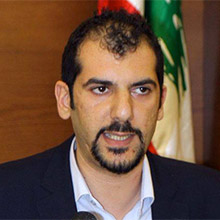 By Yeghia TASHJIAN, Beirut-based regional analyst and researcher, columnist, "The Armenian Weekly”
“Co-opetition” was a term coined by Adam M. Brandenburger and Barry Nalebuff to describe a paradoxical strategy of cooperation among competitors, enabling them to collectively achieve mutual gains. It’s a relatively new term in international relations and used occasionally in international trade. Nevertheless, I will be using co-opetition to explain the current status of Russian-Turkish relations.
In foreign policymaking and geopolitical self-perception, Russia and Turkey resemble each other in many ways. Throughout the course of events in the Middle East and South Caucasus, as the West failed to engage with regional developments to resolve conflicts, other regional states such as Iran, Turkey and Russia filled the political vacuum. Hence, the Turkish-Russian interaction in the Middle East and beyond has been partially facilitated by the military and political withdrawal of the US and the European Union’s absence from the region. READ MORE
Publications
Main Principles of Strategy for New Uzbekistan  By Nilufar Nodirkhonova, Head of Department Development Strategy Center
Reforms of the last five years have indeed marked a new development stage of state and society in the country. The "New Uzbekistan" concept has become a reality. Following significant changes in the country, President Shavkat Mirziyoyev ran his recent victorious election campaign based on a political platform for the coming five years titled "Strategy for the New Uzbekistan". "Over the past five years, we have gained so much experience. Our people believed in us. Now people expect us to implement new plans and programs", said Shavkat Mirziyoyev. To live up to this trust and aspirations of our people, realize their noble hopes, a Strategy of New Uzbekistan has been developed. READ MORE
Publications
The War on Formats in the South Caucasus By Benyamin Poghosyan, PhD, Chairman, Center for Political and Economic Strategic Studies,
On November 10, 2021, the South Caucasus will mark the first anniversary of the tripartite Russia – Armenia – Azerbaijan statement, which ended the 2020 Karabakh war. During the last year, the experts, representatives of civil society, and journalists hotly debated the outcomes of the war and the implications of the trilateral statement. Who benefited more from the war – Russia, Turkey, or Azerbaijan? Has the Karabakh conflict been solved or thrown into the dustbin of history, or will the region face new rounds of negotiations and the possible resumption of hostilities? What is the future of Armenia – Azerbaijan and Armenia – Turkey relations? There are no easy answers to all these questions. However, one thing is clear – a year after the 2020 Karabakh war, the South Caucasus is still in the midst of geopolitical transformation, with regional powers vying for influence. READ MORE
1
...
132
133
134
...
867




