New powers of the parliament of the New Uzbekistan[Over] 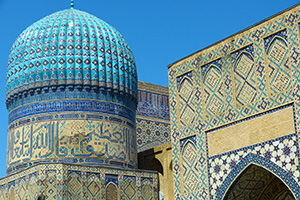 Akilov Alimjon Rakhimovich, Akilov Alimjon Rakhimovich,
Chief Researcher of Department of analyzing the effectiveness of constitutional construction and public administration of Institute of Legislation and Legal Policy under the President of the Republic of Uzbekistan, doctor of legal sciences, professor
The year 2016 for Uzbekistan was marked by the beginning of a fundamentally new in essence and content stage of state and social construction, in which the main strategic goal was proclaimed - the construction of a New Uzbekistan, based on the values that served the greatest flourishing of our statehood in the 9th-10th centuries (known in world history as First Eastern Renaissance) and XIV-XV centuries (Second Eastern Renaissance). As in previous periods, the basis and priorities of the Third Renaissance of our statehood are the development of science and modern technologies, which are intended to become drivers of dramatic development of the country’s economy, a radical improvement in the well-being of the people and the prosperity of the nation. READ MORE
- Friday, 30 August 2024, 18:16
Uzbekistan’s renewed electoral system a key factor in the advancement of representative democracy[Over] Shuhrat Bafayev,
Chairman of the Committee for Democratic Institutions, Nongovernmental Organizations and Citizens’ Self-Government Bodies, Legislative Chamber of the Oliy Majlis of the Republic of Uzbekistan
Over the years of independent development Uzbekistan firmly guided by the principles of universal, equal and direct suffrage in secret voting, has progressively implemented international electoral standards into its electoral legislation. In 2017, in his first Address to the Parliament, the President of Uzbekistan Shavkat Mirziyoyev suggested that the current national electoral legislation does not ensure its harmonization and proposed to develop an Electoral Code that meets international norms and standards. Thus, the Electoral Code was adopted in 2019, incorporating more than 30 new democratic norms for organizing and conducting election processes. The approval of the Code marked the dawn of a new stage in the development of representative democracy in the country. READ MORE
- Monday, 26 August 2024, 10:16
UNESCO General Conference to be held in Samarkand, Uzbekistan[Over] 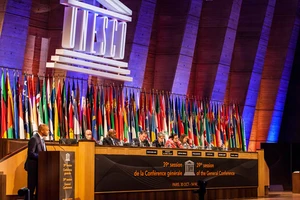 The 43rd UNESCO General Conference is scheduled to take place in Samarkand in 2025. The 43rd UNESCO General Conference is scheduled to take place in Samarkand in 2025.
This marks the first time Uzbekistan will host the biennial event. Historically, these conferences have primarily been hosted at UNESCO's headquarters in Paris since 1986. However, there have been eight exceptions, with meetings held in cities like Mexico City (1947), Beirut (1948), Florence (1950), Montevideo (1954), New Delhi (1956), Nairobi (1976), Belgrade (1980), and Sofia (1985).
READ MORE
- Saturday, 17 August 2024, 08:42
A New and Technological Approach to Elections Begins[Over] The Central Election Commission held a meeting and a series of events today, July 26th. The primary agenda item was the preparation and high-level accomplishment of the upcoming elections for the Legislative Chamber of the Oliy Majlis and the Councils of People's Deputies in full compliance with the Constitution and laws.
According to Article 128 of the Constitution of the Republic of Uzbekistan, elections for the Legislative Chamber of the Oliy Majlis and the Councils of People's Deputies are scheduled to take place on the first Sunday of the third ten-day period of October in the year their term expires. Considering that the term of the deputies of the Legislative Chamber of the Oliy Majlis and the Councils of People's Deputies ends in 2024, the elections will be held on October 27th of this year, and the election campaign will begin on July 26th, as decided by the Central Election Commission. READ MORE
- Friday, 26 July 2024, 15:28
Human dignity and the benefits of the people in New Uzbekistan – high values[Over] Khudoyberdi Khaknazarov
Doctor of History
It is not an exaggeration to say that in the historical conditions where humanity is going through a difficult period, where contradictions and conflicts are intensifying and seriously undermining stability, in the multi-ethnic New Uzbekistan, human dignity and the interests of the people are recognized as the highest values, and in this regard, it is becoming an example and model for many countries of the world.
Because sustainable development can be achieved first of all by valuing and honoring people, creating conditions for the population to live well today, and realizing the high trust and responsibility of the population for the future.
READ MORE
- Friday, 12 July 2024, 09:35
Uzbekistan: civil society institutions — a bridge between society and state[Over] Anvarjon Mirkomilov, Head of Department
Development Strategy Center
Today, civil society institutions, particularly non-governmental non-profit organizations (NGOs), play an active role in Uzbekistan's development and the implementation of the “Uzbekistan – 2030” strategy. It is impossible to build a new Uzbekistan without organizing the activities of NGOs, the most important institution of civil society, according to democratic principles. On this basis, effective work is being done to support NGOs and civil society institutions, strengthen social partnerships with state bodies, implement effective public oversight, and improve the legal framework governing this area.
READ MORE
- Saturday, 29 June 2024, 18:01
Environmental Challenges: The Future of Human Rights and Sustainable Solutions in a Changing World[Over] This is the name of the next topic of the IV Samarkand Forum on Human Rights, a traditional international conference to be held in our country on June 13-14, 2024. It is planned to hold three plenary meetings offline and online within the framework of the forum.
The main goal of this year's Samarkand forum is to discuss issues related to the impact of climate change on human rights on a broad scale and on the basis of information analysis. In addition to gaining the necessary knowledge in this field, the participants of the international conference will have the opportunity to exchange experience and get acquainted with the best practices within the international community.
READ MORE
- Wednesday, 12 June 2024, 23:09
Gender Issues in Contemporary Uzbekistan[Over] Roxila Mardonkulovna Usmanova, Doctoral Student, Institute of Family and Gender Research, Republic of Uzbekistan
Special attention is being paid to further enhancing the status of women in the new Uzbek society and ensuring their rights as a priority value. Gender equality is recognized as a social phenomenon that permeates all aspects of the life and activities of society, encompassing politics, economics, law, ideology, culture, education, and science, shaping the dynamics between women and men. In the words of the President of the Republic of Uzbekistan, Shavkat Mirziyoev, "The stereotype formed in the minds of our people makes me think about many things. Traditionally, we perceive a woman first and foremost as a mother, a keeper of the family hearth. This is undoubtedly true. However, today not every woman should not be just an observer, she should be an active and proactive participant in the democratic changes taking place in the country." Therefore, it can be asserted without exaggeration that in recent years, increasing the political, social, and economic engagement of women in Uzbek society has emerged as a top priority of state policy, driven by the political will of the Uzbekistani leadership.
READ MORE
- Wednesday, 5 June 2024, 22:52
|
|


 Archive