Iran Plays Its Cards in the South Caucasus  By Yeghia TASHJIAN, Beirut-based regional analyst and researcher, columnist, "The Armenian Weekly” By Yeghia TASHJIAN, Beirut-based regional analyst and researcher, columnist, "The Armenian Weekly”
In recent months, Iran has engaged in active foreign policy in the South Caucasus to push its geo-economic interests forward. Meanwhile, Western-led economic sanctions have pushed Russia to realize the significance of the North-South trade route. Iran defused and refreshed its relations with Azerbaijan and by engaging with Armenia it decreased Baku’s political pressure on Yerevan. The following analysis will highlight the recent events and the role Armenia and Azerbaijan play in Iran’s regional trade and economic interests. READ MORE
The Impact of the War in Ukraine on Russian-Turkish Relations 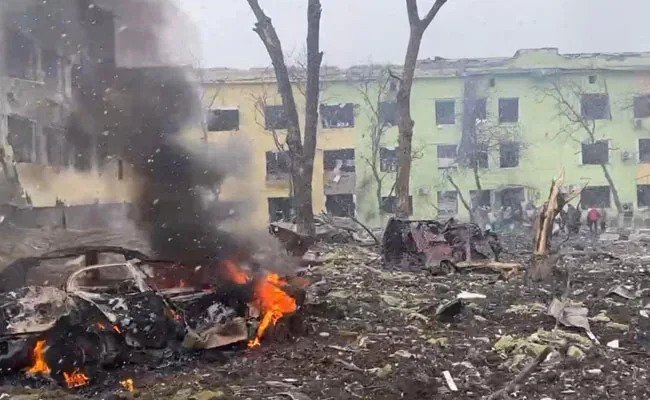 By Eugene KOGAN, Tbilisi-based defence and security expert By Eugene KOGAN, Tbilisi-based defence and security expert
Russian-Turkish relations are in large part based on the personal chemistry, affinity, and trust between Presidents Vladimir Putin and Recep Tayyip Erdoğan. Russia’s invasion of Ukraine has put these personal ties to the test. While President Erdoğan also maintains a close working relationship with Ukrainian President Volodymyr Zelenskyy and Turkish-Ukrainian military ties are strong, it has become clear that Erdoğan is not willing to sacrifice relations with Putin for Zelenskyy’s sake. Moreover, Erdoğan’s efforts to mediate between the two leaders have been either rebuffed or ignored by Putin. As Russia’s war in Ukraine continues, where things go from here is far from certain, but it is worth considering the range of possibilities. READ MORE.
How Azerbaijan Perceives the Russia-Ukraine Conflict By Yeghia TASHJIAN, Beirut-based regional analyst and researcher, columnist, "The Armenian Weekly”
As the “frozen conflict” with Armenia over Nagorno-Karabakh (Artsakh) persists, the Ukrainian crisis poses a different challenge for Azerbaijan. “Neutrality” appears to be the watchword as Baku seeks to preserve its ties with both Moscow and Kyiv. While Baku is concerned about the developing situation, it potentially stands to benefit from the trouble with its gas exports to Europe. Given Azerbaijan’s strategic partnership with Russia after the war on Nagorno-Karabakh and its friendly relations with Ukraine (not to mention its significant gas reserves), some may think that Baku is in a prime position to benefit from the looming energy crisis presented by the region’s unrest. READ MORE
Armenia Faces a Critical Choice in Nagorno-Karabakh  By Benyamin POGHOSYAN, PhD, Chairman, Center for Political and Economic Strategic Studies By Benyamin POGHOSYAN, PhD, Chairman, Center for Political and Economic Strategic Studies
April 2022 was marked by significant developments around the settlement of the Nagorno-Karabakh conflict. When Russia launched a “special military operation” in Ukraine on February 24, it seemed that all other post-Soviet conflicts would enter “silent mode,” as no one would care about Nagorno-Karabakh, Abkhazia, South Ossetia or Transnistria. However, this was not the case, at least for Nagorno-Karabakh. On April 6, 2022, the European Union organized an Armenia–Azerbaijan summit in Brussels. President Aliyev and Prime Minister Pashinyan agreed to form a border demarcation/delimitation commission until the end of April and take concrete steps to start peace talks. The issue of border delimitation and demarcation also was among key priorities during the November 2021 Sochi meeting facilitated by Russian President Putin. However, despite the signature of the trilateral statement, no tangible moves have been made. READ MORE
Quo Vadis Nagorno-Karabakh By Benyamin POGHOSYAN, PhD, Chairman, Center for Political and Economic Strategic Studies
The discussions about possible Armenia – Azerbaijan peace treaty surfaced again during the last Pashinyan – Aliyev meeting held in Brussels on April 6, 2022. At their meeting which was hosted by the European council president, Charles Michel, the two leaders agreed to instruct their foreign ministers to prepare for the start of the negotiations. On April 11, the Armenian and Azerbaijani foreign ministers held a phone talk and discussed the details of the upcoming process. The EU was not the only external actor pushing forward for the peace deal. Before and after the April 6 meeting in Brussels, Aliyev and Pashinyan spoke separately with Russian President Putin, who emphasized the significance of peace and reiterated Russia's willingness to support Armenia and Azerbaijan. The US Secretary of State Blinken also confirmed the US readiness to facilitate the comprehensive settlement between Armenia and Azerbaijan. READ MORE
New Meeting between Pashinyan and Aliyev in Brussels: What next By Benyamin POGHOSYAN, PhD, Chairman, Center for Political and Economic Strategic Studies
On April 6, 2022, Armenian Prime Minister Nikol Pashinyan and Azerbaijani President Ilham Aliyev held a meeting in Brussels mediated by the President of the European Council, Charles Michel. It was the second meeting in Brussels mediated by the European Union. The first took place in December 2021; on February 4, 2022, Armenian and Azerbaijan leaders held an online meeting with the participation of Michel and French President Emmanuel Macron. A week before the April 6 meeting, the EU hosted a meeting of high-level officials from Armenia and Azerbaijan in Brussels to advance joint efforts to find solutions to issues between both countries. The meeting between Secretary of the Security Council of Armenia Armen Grigoryan and assistant to the President of Azerbaijan Hikmet Hajiyev was facilitated by the EU Special Representative for the South Caucasus Toivo Klaar. As a result of the April 6 meeting, Pashinyan and Aliyev agreed to instruct their Ministers of Foreign Affairs to work on the preparation of a future peace treaty, which would address all necessary issues. READ MORE
A Resumption of the Iran Nuclear Deal is also Good for Armenia By Benyamin POGHOSYAN, PhD, Chairman, Center for Political and Economic Strategic Studies
When President Trump pulled the US out of the Iran nuclear deal in May 2018, and launched his “maximum pressure campaign” against Tehran, the other signatories of the nuclear deal did not join the US and took steps to save the deal. The EU even launched a special trade mechanism – INSTEX - to facilitate non-USD and non-SWIFT transactions with Iran, while China continued to buy Iranian oil. The re-imposed US sanctions have significantly worsened the economic situation in Iran but have failed to reach the main goal – to force Tehran to change its regional policy and give up on its ballistic missile program. READ MORE
Could Turkey-Russia Relations Sink over Ukraine? By Yeghia TASHJIAN, Beirut-based regional analyst and researcher, columnist, "The Armenian Weekly”
Neither friend nor foe, Turkey and Russia have backed opposing sides in several regional conflicts, yet managed to avoid direct confrontation. Now the Ukraine crisis poses a serious challenge.
The war in Ukraine has become the latest test for Turkey’s regional ambitions in confronting those of Russia, in what has clearly become a “cooperative rivalry.” This is where both sides, despite their opposite views on various regional conflicts ranging from Libya to Syria to the South Caucasus, have worked to manage these conflicts without directly challenging one another.
The current crisis has raised Turkey’s concerns of being in the firing line of Russia’s hegemonic ambitions. It is important to note that Turkey and Russia are not allies, but bitter ‘frenemies.’ Despite having robust commercial, energy, diplomatic and military ties, Turkey’s President Recep Tayyip Erdogan warned back in 2016 that NATO has to act and increase its presence in the Black Sea. READ MORE
New Escalation in Nagorno Karabakh: Reasons and Implications By Benyamin POGHOSYAN, PhD, Chairman, Center for Political and Economic Strategic Studies
While the world’s attention is focused on the war in Ukraine, tensions are on the rise in Nagorno Karabakh. The 2020 war devastated the region economically and left Karabakh fully encircled by Azerbaijan with only one five-kilometer long corridor connecting it with Armenia. The November 10, 2020, trilateral statement signed by Armenia, Azerbaijan and Russia envisaged the end of hostilities, the deployment of Russian peacekeepers for the initial period of five years and fixed Azerbaijan’s territorial gains. However, the statement did not solve the core issue of the Karabakh conflict – the final status of Nagorno Karabakh. The two additional trilateral statements signed in Moscow on January 11 and November 26, 2021 did not touch the status issue and were focused on restoration of communications and the start of the Armenia-Azerbaijan border delimitation process. READ MORE
The Impact of the Crisis in Ukraine on the Regional Order in the Middle East By Yeghia TASHJIAN, Beirut-based regional analyst and researcher, columnist, "The Armenian Weekly”
On February 21, 2022, Russian President Vladimir Putin officially recognized the Donetsk People’s Republic and the Luhansk People’s Republic, two self-proclaimed states controlled by pro-Russian groups in Donbas, Eastern Ukraine. The next day, Russia’s Federation Council unanimously authorized the use of military force, and Russian soldiers entered both territories. On February 24, President Putin announced a “special military operation” to “demilitarize and de-nazify” Ukraine. Minutes later, missiles struck the military infrastructure across Ukraine, including the capital Kyiv. Russia’s actions received widespread international condemnation, as many Western countries imposed new sanctions, aiming to trigger a financial crisis in Russia. READ MORE
The Regional Implications of the Iranian President’s Visit to Moscow By Yeghia TASHJIAN, Beirut-based regional analyst and researcher, columnist, "The Armenian Weekly”
On January 19, 2022, Iranian President Dr. Ibrahim Raisi travelled to Moscow and met his Russian counterpart Vladimir Putin in an effort to improve bilateral ties between both countries. The leaders discussed regional and international issues, among them the negotiations around Iran’s nuclear program and regional cooperation in Eurasia. However, contrary to expectations and some statements before the meeting, the visit, for now, has failed to achieve a major advance in addressing the Iranian expectations, mostly related to the signing of a strategic agreement like the one between China and Iran a year ago. Nevertheless, the visit pushed the negotiations between both sides to a higher level and facilitated Iran’s economic integration in Russian-Chinese Eurasian architecture. READ MORE
Restoring a Soviet-era Railway Contributes to Regional Dialogue
 By Fuad SHAHBAZOV, Baku-based independent regional security and defence analyst By Fuad SHAHBAZOV, Baku-based independent regional security and defence analyst
At the recent face-to-face meetings of Azerbaijani President Ilham Aliyev and Armenian Prime Minister Nikol Pashinyan in Sochi and Brussels at the end of 2021, the two leaders agreed to restore the Soviet-era Yeraskh- Julfa- Meghri- Horadiz railway connection between the two countries, which has not been in operation for three decades. However, the major expectations regarding the border delimitation/demarcation process and opening of Nakhchivan corridor remained unresolved. The last round of negotiations in Sochi was arranged in the light of deadly border skirmishes which left 13 soldiers killed on each side. While both leaders "agreed to take tangible steps for further de-escalation in the border area" the agreement on the railway connection between Baku and Yerevan was again reaffirmed during the Brussels meeting hosted by European Council President Charles Michel on December 14. READ MORE
- February 22, 2022 15:27PM
Beyond the Rhetoric in Beijing By Benyamin POGHOSYAN, PhD, Chairman, Center for Political and Economic Strategic Studies
Neither Russia nor China are interested in complete decoupling from the West, and both would like to maintain cooperative relations with the EU while fighting back against US pressure. In this context a Russia – China alliance against the 'Collective West" and the establishment of a new “iron curtain” completely separating them from Europe is possibly the worst outcome for Beijing and Moscow.
The end of the "unipolar moment" and the painful process of the emergence of the new world order ushered in a stand-off between Russia and the West around the transformation of the post-cold war European security architecture. On the surface, Russia and the West are arguing about the future of the geopolitical orientation of Ukraine, but the fate of Kyiv is only the tip of the iceberg. The real fight is about the future of European security architecture in a multi-polar, more unstable, and conflict-prone global order. READ MORE
- February 22, 2022 15:24PM
Georgia’s Thorny Path to NATO 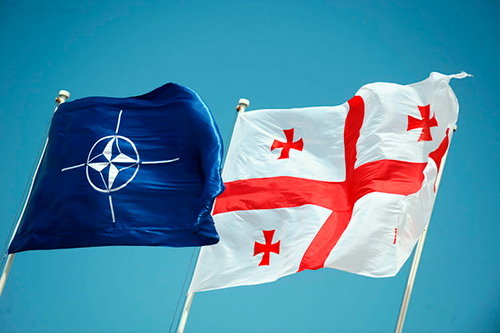 Eugene Kogan, Tbilisi-based defence and security expert Eugene Kogan, Tbilisi-based defence and security expert
Amid heightened tensions between the U.S. and Russia over Ukraine, the issue of Georgia’s path to NATO membership is once again in the spotlight. While Tbilisi has made real progress in its military reform efforts, the major hurdle is political, not military, in nature and until the Alliance can achieve consensus, the future of Georgia’s relationship with NATO will remain uncertain. In March 2019, then-Georgian Defence Minister Levan Izoria heralded a new era in military reform: “In the past we trained our soldiers for external deployment, but the new emphasis is now on self-defence” — or rather territorial defence, a process that began to be addressed by U.S.-based military advisers in July 2016. READ MORE.
- February 22, 2022 15:15PM
Armenia-Turkey Normalization: Who Gets What By Benyamin POGHOSYAN, PhD, Chairman, Center for Political and Economic Strategic Studies
On January 14, 2022, the special representatives of Armenia and Turkey met in Moscow to launch the normalization process between the two countries. The recent turmoil in Kazakhstan and intensive Russia – US, Russia – NATO negotiations on the future of the European security architecture have cast some shadow on the meeting, as the attention of the international media and expert and academic community was focused on more significant issues. Meanwhile, the meeting in Moscow was a remarkable event at the regional level. Turkey refused to establish diplomatic relations with Armenia after the collapse of the Soviet Union, fully aligned itself with Azerbaijan, and imposed an economic blockade on Armenia, seeking to force Yerevan to give up Nagorno Karabakh to Azerbaijan. READ MORE
What next in Armenia – Azerbaijan relations By Benyamin Poghosyan, PhD, Chairman, Center for Political and Economic Strategic Studies
More than one year after the 2020 Artsakh War, the future of Armenia–Azerbaijan relations remains vague. Azerbaijan has put forward two demands: Armenia in written form should recognize Nagorno Karabakh as part of Azerbaijan and provide uncontrolled access to Azerbaijan to reach the Nakhichevan Autonomous Republic via the Syunik province. Simultaneously, Azerbaijan has launched the strategy of coercive diplomacy and military blackmail, refusing to free all remaining Armenian POWs and advancing into Armenian territory. The release of POWs is a clearly articulated agreement fixed in the November 10, 2020 trilateral statement. However, Azerbaijan argues that Armenians still languishing in Azerbaijani jails are POWs and are not covered by that statement. Baku successfully merged the POWs’ issue with maps of mine fields, thus forcing Armenia to accept the humans versus maps bargain. READ MORE
"Summit of Democracy" Puts Smaller States in a Complicated Situation By Benyamin Poghosyan, PhD, Chairman, Center for Political and Economic Strategic Studies
Regardless of the intentions of the US and the future trajectory of the new world order transformation, the democracy vs. authoritarianism vision puts small states located between Russia and Europe in a complicated situation.
As the "Unipolar Moment" started to fade away after the 2008 world financial crisis, political elites, the expert community, and academicians in the different capitals of the world launched discussions and debates about the future of the world order. There was no lack of catchy terms – post-American world, multi-polar world, no polar world, polycentric world, the rise of others – which all have one common feature; there will be many players active on the geopolitical chessboard of the globe, and the US will not be able to impose its vision on all of them. The US political establishment coined its term for the emerging world order – great power competition – which is the prevailing theme in all strategic level documents published by the Trump and Biden administrations. READ MORE
- December 18, 2021 17:39PM
The Russian-Turkish “Co-opetition” in Eurasia and Beyond By Yeghia TASHJIAN, Beirut-based regional analyst and researcher, columnist, "The Armenian Weekly”
“Co-opetition” was a term coined by Adam M. Brandenburger and Barry Nalebuff to describe a paradoxical strategy of cooperation among competitors, enabling them to collectively achieve mutual gains. It’s a relatively new term in international relations and used occasionally in international trade. Nevertheless, I will be using co-opetition to explain the current status of Russian-Turkish relations.
In foreign policymaking and geopolitical self-perception, Russia and Turkey resemble each other in many ways. Throughout the course of events in the Middle East and South Caucasus, as the West failed to engage with regional developments to resolve conflicts, other regional states such as Iran, Turkey and Russia filled the political vacuum. Hence, the Turkish-Russian interaction in the Middle East and beyond has been partially facilitated by the military and political withdrawal of the US and the European Union’s absence from the region. READ MORE
- December 15, 2021 09:23AM
Is Iran making a comeback to the South Caucasus? By Yeghia TASHJIAN, Beirut-based regional analyst and researcher, columnist, "The Armenian Weekly”
Since the collapse of the Soviet Union 30 years ago, Iran has patiently and cautiously followed developments in the South Caucasus. Tehran’s main strategic objective has been to prevent US-Israeli penetration in the region, and it has viewed the Russian political and military presence in the region, particularly in Armenia, as a buffer zone against Western and even Turkish expansionist activities. When Turkey started to follow an independent foreign policy and came to terms with sharing power in the region with Russia, Iranian policymakers thought that Turkey—by cooperating with Russia—would reduce western influence in the region and give up its Pan-Turkic and neo-Ottoman claims. However, Iran was mistaken. READ MORE
- November 24, 2021 21:20PM
The War on Formats in the South Caucasus By Benyamin Poghosyan, PhD, Chairman, Center for Political and Economic Strategic Studies,
On November 10, 2021, the South Caucasus will mark the first anniversary of the tripartite Russia – Armenia – Azerbaijan statement, which ended the 2020 Karabakh war. During the last year, the experts, representatives of civil society, and journalists hotly debated the outcomes of the war and the implications of the trilateral statement. Who benefited more from the war – Russia, Turkey, or Azerbaijan? Has the Karabakh conflict been solved or thrown into the dustbin of history, or will the region face new rounds of negotiations and the possible resumption of hostilities? What is the future of Armenia – Azerbaijan and Armenia – Turkey relations? There are no easy answers to all these questions. However, one thing is clear – a year after the 2020 Karabakh war, the South Caucasus is still in the midst of geopolitical transformation, with regional powers vying for influence. READ MORE
- November 24, 2021 06:33AM
The Great Game in the Levant: Russia’s Interests in Lebanon By Yeghia TASHJIAN, Beirut-based regional analyst and researcher, columnist, "The Armenian Weekly”
Like other regional powers, Russia has taken major steps to advance its geopolitical interests in the Levant. With the goals of expanding its influence and control the vast energy resources in the region. Although it only has a naval military base in Tartus (Syria) and no borders on the Mediterranean Sea, Russia has managed to exert its influence around nearby countries, including Lebanon. The perception of Lebanon as part of its Syrian stake encourages Moscow to strive to capitalize on its influence in the region after intervening in the Syrian conflict. In the last few years, Russia started playing a larger role in Lebanon following the growing civil unrest in Syria and the defeat of ISIS. READ MORE
In the South Caucasus, Tehran has its Red Lines Too By Benyamin POGHOSYAN, PhD, Chairman, Center for Political and Economic Strategic Studies
For 30 years, Iran has adopted a cautious approach to developments in the South Caucasus, wary of the risk of encirclement. Iran's current military drills on the border with Azerbaijan are meant to send a signal that Tehran has its red lines too.
Since the collapse of the Soviet Union 30 years ago, Iran has carefully followed the developments in the South Caucasus. The strategic goal of Iran was not to allow the region to be a launchpad for the US or Israeli-initiated anti-Iranian activities. Due to the constant US pressure, Iran could not significantly increase its influence in the South Caucasus and directly compete with the US. Meanwhile, the US and Israel were not the only sources of concern for Iran. Turkey's intentions to increase its influence in the South Caucasus through the establishment of the Turkey–Georgia–Azerbaijan strategic partnership was another source of concern. READ MORE
Armenian Foreign Policy in the Context of the Transformation of Global Order  By Lilit Galstyan, Senior Research Fellow, Academy of Political Studies, Yerevan By Lilit Galstyan, Senior Research Fellow, Academy of Political Studies, Yerevan
The end of the Cold War and the collapse of the Soviet Union have ushered in hopes of humanity's happy and harmonious future. The ideas such as "End of history" became very popular both within academic circles and with policymakers. There was a widespread belief that the entire planet would live under liberal democracy, and inter-state conflicts will become bad memories from history. However, the beginning of the XXI century crushed these hopes. Russia - West relations started to deteriorate after the 2004 Orange Revolution in Ukraine, while the 2014 Crimean crisis brought bilateral relations to the lowest point since the end of the Cold War. Meanwhile, the astonishing Chinese economic growth and the emergence of the multi-million middle class did not bring about political changes in China. READ MORE
The Inexorable Drive for Socio-Political Reforms in Uzbekistan  By Eldor Tulyakov, Executive Director, Development Strategy Center, Tashkent By Eldor Tulyakov, Executive Director, Development Strategy Center, Tashkent
In 2016, Uzbekistan's reform agenda's fresh and rather sudden trajectory focusing on political and socio-economic development brought a welcome surprise to much of the international community. Newly elected President, Shavkat Mirziyoyev, rapidly initiated policies based upon the principles of pragmatism and transparency — a shift well received by foreign governments, international organizations, and citizens alike and viewed as a watershed change in a country largely closed to the outside world since independence was obtained in 1991. A new vision of what will define Uzbekistan for future generations emerged, new horizons that will bring long-sought-after potential and opportunities to its people. READ MORE
Armenia's June Elections May Lead to Further Uncertainty and Instability By Benyamin Poghosyan, PhD, Chairman, Center for Political and Economic Strategic Studies
Sunday's parliamentary elections in Armenia are hotly contested, and the electorate is actively engaged in the campaigning. But the election is likely to lead to further uncertainty and continued instability.
The official campaign for the 20 June 2021, early parliamentary elections in Armenia started on 7 June 2021. Twenty-five political entities are contesting the elections – 21 parties and four alliances (blocs). No election in the modern history of Armenia has seen such quantity and diversity of contenders. However, despite this impressive number, only a few participants have a real chance to overcome the threshold to enter Parliament – 5 percent for parties and 7 percent for alliances. READ MORE
|
|




 In Progress
