Beyond the Blocking of the Lachin Corridor 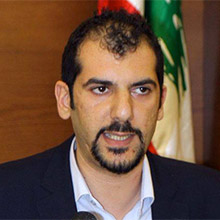 By Yeghia TASHJIAN, Beirut-based regional analyst and researcher, columnist, "The Armenian Weekly” By Yeghia TASHJIAN, Beirut-based regional analyst and researcher, columnist, "The Armenian Weekly”
On December 12, under the pretext of environmentalism, dozens of Azerbaijani state-backed “eco-activists” blocked the only land corridor in the Stepanakert-Shushi section connecting Armenia to Nagorno-Karabakh. As anticipated, the “environmental” slogans were soon politicized, and political demands were raised by enforcing a blockade. A humanitarian disaster was created for the 120,000 Armenians living in Nagorno-Karabakh. The real question is why Azerbaijan went for such a provocation and at what risk? Hence, in this article, I will shed light on the current crisis based on my meetings with Azerbaijani experts (keeping their identities anonymous) on the sidelines of several international conferences and online interviews I have conducted to analyze the Azerbaijani perspective and highlight the threats, arguing that the current humanitarian crisis is much deeper than the conflict in Nagorno-Karabakh, and it is related with the “battle of corridors” and beyond. READ MORE
After Samarkand Summit, the OTS Charts a More Independent Course
 By Fuad SHAHBAZOV, Baku-based independent regional security and defence analyst By Fuad SHAHBAZOV, Baku-based independent regional security and defence analyst
On November 11, a summit of the leaders of the Organization of Turkic States (OTS) convened in Samarkand, Uzbekistan. This major gathering came amid the OTS’s re-emerging significance as a key regional organization and a critical platform for rapprochement between the Central Asia and Caucasus regions. The official Samarkand Declaration, which was signed as a final accord by the attendees, paves the way for a comprehensive partnership format among the OTS member states. The Samarkand meeting represented the major political gathering for the Turkic nations in 2022, and it will further facilitate dialogue and regional interconnectivity between the OTS member states—independent of Russian and Western influence. READ MORE
The Complexities of the Current World Order  By Benyamin POGHOSYAN, PhD, Chairman, Center for Political and Economic Strategic Studies By Benyamin POGHOSYAN, PhD, Chairman, Center for Political and Economic Strategic Studies
The war in Ukraine brought Russia – West relations to the lowest point since the early Cold war years of the 1950s. Discussions about the emergence of Cold War 2.0 were prevalent among experts and the academic community well before February 24, 2022. The starting point was perhaps President Putin's famous 2007 Munich security conference speech. However, the current confusion in global geopolitics is quite different from the original Cold War. In the second part of the 20th century, the world was bipolar, as the US and Soviet Union were fighting each other. Many countries sought to avoid this confrontation through membership in the Non–aligned movement, but it never became a third pole. Now the situation is much more complicated. As the US and Russia are facing each other in a new rendition of a Cold War, the world is far from being bipolar. It may eventually end with a new bipolar system, but Russia will not be among the top two players. If bipolarity ever returns, the US and China will be the building blocks of that system. READ MORE
The SCO Samarkand Summit: Dialogue and Cooperation in an Interconnected World  By Shavkat Mirziyoyev, President of the Republic of Uzbekistan By Shavkat Mirziyoyev, President of the Republic of Uzbekistan
Uzbekistan’s chairmanship in the Shanghai Cooperation Organization (SCO) has fallen on a dynamic period, fraught with various events and trends – the period of the «historical rift», when one era comes to an end and another begins – thus far unpredictable and unknown.
The modern system of international cooperation, based on the universal principles and norms, begins to falter. One of the main reasons for this is a deep crisis of trust at the global level, which, in turn, provokes a geopolitical confrontation and the risk of reviving the bloc thinking stereotypes. This process of mutual alienation complicates the return of the world economy to its former course of development and the restoration of global supply chains.
READ MORE
The Samarkand SCO Summit As A Platform For Dialogue And Fostering Mutual Trust By Faridun Sattarov, PhD, DSc, University of World Economy and Diplomacy, Uzbekistan
On September 15-16 of this year, 14 heads of state are expected to attend the summit of the Shanghai Cooperation Organization (SCO), which will be held in Samarkand, Uzbekistan. This event will be the first face-to-face meeting of SCO leaders since 2019 and will conclude Uzbekistan’s presidency of the organization.
In addition to the leaders of the SCO member states, which include Russia, China, India, Pakistan, Uzbekistan, Kazakhstan, Kyrgyzstan, and Tajikistan, the summit will host the presidents of Iran, Belarus, and Mongolia as observers, as well as the heads of Turkey, Armenia, Azerbaijan, and Turkmenistan as invited guests.
READ MORE
- November 29, 2022 06:38AM
Harmonising the Different Formats in Armenia-Azerbaijan Negotiations By Benyamin POGHOSYAN, PhD, Chairman, Center for Political and Economic Strategic Studies
Over the last year multiple formats have emerged in Armenia-Azerbaijan negotiations, and three main external players: Russia, the EU and the US are involved in the mediation process. This may lead to some confusion. Big power rivalry may also negatively impact the process. Some co-ordinating mechanism is necessary, and a format, at least involving Russia and the EU, could also help to combine their efforts.
While the South Caucasus marked the second anniversary of the 2020 Nagorno Karabakh war, negotiations to sign a peace agreement between Armenia – Azerbaijan have become increasingly complex. If during the first year after the war, it was Russia that almost exclusively controlled the process, now we have many actors with contradicting interests and visions. The EU entered the game first, organizing four summits between Armenian and Azerbaijani leaders in the period of December 2021 – August 2022, simultaneously launching a new format of negotiations between the Secretary of the Armenian security council and top foreign policy aide to President Aliyev. Russia was watching the growing EU involvement in the process, messaging its concerns about the EU's desire to take the initiative from the Kremlin. READ MORE
- November 29, 2022 06:32AM
Iran Seeks to Increase Its Influence in the South Caucasus By Benyamin POGHOSYAN, PhD, Chairman, Center for Political and Economic Strategic Studies
As the South Caucasus becomes increasingly involved in the great power competition, and the US-Russia confrontation impacts regional geopolitics, Iran looks for additional ways to secure its national interests. Iran’s top foreign policy priority remains the Middle East, where Tehran seeks to consolidate its power and influence in Iraq, Syria, and Lebanon. However, Iran views the South Caucasus as a significant region where Tehran should continue its presence and prevent anti-Iranian developments.
Iran is concerned with growing Azerbaijan-Israel political, economic, and military cooperation. Israel was one of the biggest weapons suppliers to Azerbaijan before, during, and after the 2020 Nagorno Karabakh war. According to several sources and reports, Israel’s security services actively use Azerbaijan territory for their anti-Iranian activities. Azerbaijan established control over the 130 km long Nagorno Karabakh-Iran border due to the 2020 war and opened two airports there – Fizuli and Zangelan – located very close to the Azerbaijan-Iran border. READ MORE
- November 19, 2022 06:27AM
Central Asians Are Expanding Strategic Relations with Azerbaijan 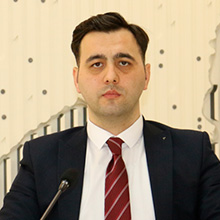 By Ayaz MUSEYIBOV, Adjunct lecturer at Azerbaijan Technical University
In the wake of the recent global geopolitical challenges including the war in Europe, instability in Afghanistan, and many other rapid global changes, Central Asian countries diversify and expand their economic, strategic, and political relations. As Azerbaijan is emerging as a new energy and logistic hub in Euro-Asian value chains, economic relations with Azerbaijan are crucial in regional logistics and energy spheres. Therefore, on April 20th and June 21st, 2022, Kyrgyzstan and Uzbekistan signed the declarations of strategic partnerships with Azerbaijan, respectively. Thereafter, Kazakhstan and Turkmenistan signed cooperation documents with Azerbaijan covering various directions. READ MORE
Is Pashinyan-Erdogan Meeting Enough to Stimulate the Armenia-Turkey Normalisation? By Benyamin POGHOSYAN, PhD, Chairman, Center for Political and Economic Strategic Studies
The first face to face meeting between Armenian prime minister, Nikol Pashinyan, and Turkish President, Recip Tayip Erdogan, took place in Prague on 6 October, on the margins of the summit of the European Political Community. Whilst in the summer there was hope of an early breakthrough in the Armenia-Turkey normalisation, decisions agreed by the special envoys of the two countries have not been implemented. May this latest meeting stimulate normalization, or further work in the process of building confidence and trust is required?
The first week of October 2022 was marked by intensive diplomacy around the geopolitics of the South Caucasus. The September 13-14, 2022, Azerbaijani aggression against Armenia threw the region back to the brink of a new large-scale war. It seemed that months-long Armenia – Azerbaijan negotiations facilitated by the European Council President Charles Michel were fruitless. However, despite bleak predictions, a new wave of diplomatic activity was launched immediately after the ceasefire was reached on September 14. READ MORE
Why is Baku Waging a “War of Words” against Tehran? By Yeghia TASHJIAN, Beirut-based regional analyst and researcher, columnist, "The Armenian Weekly”
During a meeting with Russian President Vladimir Putin and Turkish President Recep Tayyip Erdogan in Tehran on July 19, the Iranian Supreme Leader Ali Khamenei warned against blocking the Armenian-Iranian border, stating, “If there is an effort to block the border between Iran and Armenia, the Islamic Republic will oppose it because this border has been a communication route for thousands of years.” After this warning, Turkish and Azerbaijani media started paying more attention to Iranian officials and launched a “war of words.” In response to media provocations and threats toward Armenia launched by Azerbaijan, Iran facilitated the appointment of a Consulate General in Syunik to redraw its “red lines” in the South Caucasus. READ MORE
- September 27, 2022 08:32AM
Israeli-Turkish Relations: Challenges and Opportunities 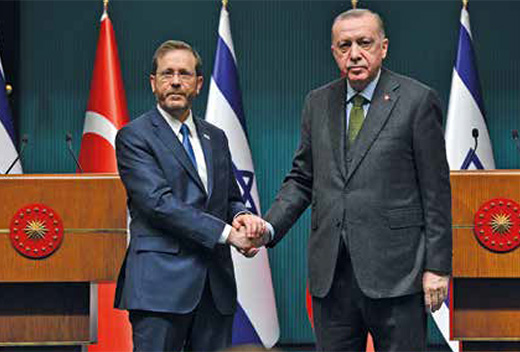 By Eugene KOGAN, Tbilisi-based defence and security expert By Eugene KOGAN, Tbilisi-based defence and security expert
Even though Israel and Turkey normalised relations in June 2016 following the May 2010 Mavi Marmara Flotilla incident when Israeli soldiers killed ten people on board a Turkish vessel and the subsequent diplomatic rupture, Ankara’s support of the Hamas movement situated in the Gaza Strip continues to undermine bilateral relations.
The establishment of an official office in Istanbul in 2012 and its members are perceived as a thorn in the eye by the Israeli Government. Tel Aviv would like Erdoğan to close the Hamas office and expel its members from Turkey; however, this Israeli wish is not going to be granted any time soon since Erdoğan’s words do not translate into deeds. The signature of the Abraham Accords highlighted two divergent trends in the region: Turkey’s continued isolation and Israel’s strengthened position. This resulted in Erdoğan’s intention to improve relations with Israel. READ MORE.
- September 9, 2022 06:38AM
Realism Should Be the Basis for the Armenia-Turkey Normalisation By Benyamin POGHOSYAN, PhD, Chairman, Center for Political and Economic Strategic Studies
There should be realistic expectations of what can result from ongoing discussions on the normalisation of relations between Armenia and Turkey. Given the current situation in the South Caucasus, the region is far away from peace, and no one should have hopes that Armenia – Turkey normalization will solve conflicts and bring an era of peace to the region. However, in the current situation, even a contribution to regional stability is too significant an opportunity to miss.
The 2020 Karabakh war has significantly changed the geopolitics of the South Caucasus and triggered new processes. Turkey’s war involvement seemed to worsen further Armenia – Turkey relations. The Armenian government imposed a ban on imports from Turkey from January 2021 due to Turkey's open and evident promotion and support for the Azerbaijani war effort. However, after the early parliamentary elections in Armenia held in June 2021, Armenian officials started to speak about the necessity to normalize relations with Turkey. These discussions ended with the assignment of a special representatives to start negotiations, and the first meeting took place on January 14, 2022. READ MORE
Restoring Communication Links is an Important Confidence-building Measure By Benyamin POGHOSYAN, PhD, Chairman, Center for Political and Economic Strategic Studies
There is broad consensus in the region and in the international community on the need to restore communications in the South Caucasus and on the possibility of finding mutually accepted solutions for this to be achieved. However the constant focus on the routes passing via the Syunik region and connecting Azerbaijan with Nakhijevan has made the whole process of restoration of communications a bone of contention for both sides. The restoration of communications may still play a positive role in the establishment of good neighbourly relations between Armenia and Azerbaijan, by creating conditions from which both societies can benefit. However, if the sides continue this tit-for-tat discussion around the "Zangezur corridor," blaming each other for violating previous agreements, the restoration of communications issue will only deepen the mistrust between them, he adds. Starting instead with a railway connection between Armenia and Nakhijevan via Yersakh on the other hand, requires only a further 1 km of railroad to be constructed, and will serve as a significant confidence-building measure between Armenia and Azerbaijan and will make it easier for Armenia and Azerbaijan to agree on the modalities for the restoration of other routes. READ MORE
Iran and Turkey Rift Grows Over Dam Construction Projects
By Fuad SHAHBAZOV, Baku-based independent regional security and defence analyst
Tensions between Turkey and Iran were recently rekindled by the latter constructing a dam over transboundary waterways, namely the Aras, Tigris, and Euphrates rivers. Iran is accusing Turkey of intentionally triggering a regional drought and water shortage –– both of which have impacted Iran brutally. Ankara says Iran’s claims are a diversion.
A new round of disagreements between Iran and Turkey began when Iranian Foreign Minister Hossein Amir-Abdollahian criticized Turkey’s dam projects on the Aras and Tigris rivers –– the main transboundary waterways in the region –– citing the threats to water flow in the area and environmental damage to regional states in his speech before Iran’s Parliament on May 10. Abdollahian said he has called on “his Turkish counterpart at least three times over the past months to pay serious attention to the construction of dams on the Aras River.” READ MORE
How Azerbaijan Perceives the Russia-Ukraine Conflict By Yeghia TASHJIAN, Beirut-based regional analyst and researcher, columnist, "The Armenian Weekly”
As the “frozen conflict” with Armenia over Nagorno-Karabakh (Artsakh) persists, the Ukrainian crisis poses a different challenge for Azerbaijan. “Neutrality” appears to be the watchword as Baku seeks to preserve its ties with both Moscow and Kyiv. While Baku is concerned about the developing situation, it potentially stands to benefit from the trouble with its gas exports to Europe. Given Azerbaijan’s strategic partnership with Russia after the war on Nagorno-Karabakh and its friendly relations with Ukraine (not to mention its significant gas reserves), some may think that Baku is in a prime position to benefit from the looming energy crisis presented by the region’s unrest. READ MORE
Armenia Faces a Critical Choice in Nagorno-Karabakh By Benyamin POGHOSYAN, PhD, Chairman, Center for Political and Economic Strategic Studies
April 2022 was marked by significant developments around the settlement of the Nagorno-Karabakh conflict. When Russia launched a “special military operation” in Ukraine on February 24, it seemed that all other post-Soviet conflicts would enter “silent mode,” as no one would care about Nagorno-Karabakh, Abkhazia, South Ossetia or Transnistria. However, this was not the case, at least for Nagorno-Karabakh. On April 6, 2022, the European Union organized an Armenia–Azerbaijan summit in Brussels. President Aliyev and Prime Minister Pashinyan agreed to form a border demarcation/delimitation commission until the end of April and take concrete steps to start peace talks. The issue of border delimitation and demarcation also was among key priorities during the November 2021 Sochi meeting facilitated by Russian President Putin. However, despite the signature of the trilateral statement, no tangible moves have been made. READ MORE
Quo Vadis Nagorno-Karabakh By Benyamin POGHOSYAN, PhD, Chairman, Center for Political and Economic Strategic Studies
The discussions about possible Armenia – Azerbaijan peace treaty surfaced again during the last Pashinyan – Aliyev meeting held in Brussels on April 6, 2022. At their meeting which was hosted by the European council president, Charles Michel, the two leaders agreed to instruct their foreign ministers to prepare for the start of the negotiations. On April 11, the Armenian and Azerbaijani foreign ministers held a phone talk and discussed the details of the upcoming process. The EU was not the only external actor pushing forward for the peace deal. Before and after the April 6 meeting in Brussels, Aliyev and Pashinyan spoke separately with Russian President Putin, who emphasized the significance of peace and reiterated Russia's willingness to support Armenia and Azerbaijan. The US Secretary of State Blinken also confirmed the US readiness to facilitate the comprehensive settlement between Armenia and Azerbaijan. READ MORE
New Meeting between Pashinyan and Aliyev in Brussels: What next By Benyamin POGHOSYAN, PhD, Chairman, Center for Political and Economic Strategic Studies
On April 6, 2022, Armenian Prime Minister Nikol Pashinyan and Azerbaijani President Ilham Aliyev held a meeting in Brussels mediated by the President of the European Council, Charles Michel. It was the second meeting in Brussels mediated by the European Union. The first took place in December 2021; on February 4, 2022, Armenian and Azerbaijan leaders held an online meeting with the participation of Michel and French President Emmanuel Macron. A week before the April 6 meeting, the EU hosted a meeting of high-level officials from Armenia and Azerbaijan in Brussels to advance joint efforts to find solutions to issues between both countries. The meeting between Secretary of the Security Council of Armenia Armen Grigoryan and assistant to the President of Azerbaijan Hikmet Hajiyev was facilitated by the EU Special Representative for the South Caucasus Toivo Klaar. As a result of the April 6 meeting, Pashinyan and Aliyev agreed to instruct their Ministers of Foreign Affairs to work on the preparation of a future peace treaty, which would address all necessary issues. READ MORE
A Resumption of the Iran Nuclear Deal is also Good for Armenia By Benyamin POGHOSYAN, PhD, Chairman, Center for Political and Economic Strategic Studies
When President Trump pulled the US out of the Iran nuclear deal in May 2018, and launched his “maximum pressure campaign” against Tehran, the other signatories of the nuclear deal did not join the US and took steps to save the deal. The EU even launched a special trade mechanism – INSTEX - to facilitate non-USD and non-SWIFT transactions with Iran, while China continued to buy Iranian oil. The re-imposed US sanctions have significantly worsened the economic situation in Iran but have failed to reach the main goal – to force Tehran to change its regional policy and give up on its ballistic missile program. READ MORE
Could Turkey-Russia Relations Sink over Ukraine? By Yeghia TASHJIAN, Beirut-based regional analyst and researcher, columnist, "The Armenian Weekly”
Neither friend nor foe, Turkey and Russia have backed opposing sides in several regional conflicts, yet managed to avoid direct confrontation. Now the Ukraine crisis poses a serious challenge.
The war in Ukraine has become the latest test for Turkey’s regional ambitions in confronting those of Russia, in what has clearly become a “cooperative rivalry.” This is where both sides, despite their opposite views on various regional conflicts ranging from Libya to Syria to the South Caucasus, have worked to manage these conflicts without directly challenging one another.
The current crisis has raised Turkey’s concerns of being in the firing line of Russia’s hegemonic ambitions. It is important to note that Turkey and Russia are not allies, but bitter ‘frenemies.’ Despite having robust commercial, energy, diplomatic and military ties, Turkey’s President Recep Tayyip Erdogan warned back in 2016 that NATO has to act and increase its presence in the Black Sea. READ MORE
New Escalation in Nagorno Karabakh: Reasons and Implications By Benyamin POGHOSYAN, PhD, Chairman, Center for Political and Economic Strategic Studies
While the world’s attention is focused on the war in Ukraine, tensions are on the rise in Nagorno Karabakh. The 2020 war devastated the region economically and left Karabakh fully encircled by Azerbaijan with only one five-kilometer long corridor connecting it with Armenia. The November 10, 2020, trilateral statement signed by Armenia, Azerbaijan and Russia envisaged the end of hostilities, the deployment of Russian peacekeepers for the initial period of five years and fixed Azerbaijan’s territorial gains. However, the statement did not solve the core issue of the Karabakh conflict – the final status of Nagorno Karabakh. The two additional trilateral statements signed in Moscow on January 11 and November 26, 2021 did not touch the status issue and were focused on restoration of communications and the start of the Armenia-Azerbaijan border delimitation process. READ MORE
The Impact of the Crisis in Ukraine on the Regional Order in the Middle East By Yeghia TASHJIAN, Beirut-based regional analyst and researcher, columnist, "The Armenian Weekly”
On February 21, 2022, Russian President Vladimir Putin officially recognized the Donetsk People’s Republic and the Luhansk People’s Republic, two self-proclaimed states controlled by pro-Russian groups in Donbas, Eastern Ukraine. The next day, Russia’s Federation Council unanimously authorized the use of military force, and Russian soldiers entered both territories. On February 24, President Putin announced a “special military operation” to “demilitarize and de-nazify” Ukraine. Minutes later, missiles struck the military infrastructure across Ukraine, including the capital Kyiv. Russia’s actions received widespread international condemnation, as many Western countries imposed new sanctions, aiming to trigger a financial crisis in Russia. READ MORE
Putin and the 2022 Russian Military Conflict in Post-Soviet Lands  By Alan WHITEHORN, Professor Emeritus in Political Science, The Royal Military College of Canada By Alan WHITEHORN, Professor Emeritus in Political Science, The Royal Military College of Canada
Coming to power after the break-up of the Soviet Union in the 1990s, Lukashenko had ruled Belarus in a highly autocratic fashion for almost three decades, while seeking to navigate his country within Moscow’s sphere of influence. However, the aging leader’s arbitrary rule began to teeter and he faced a major challenge in the election of 2020. When skewed and rigged election results were announced, hundreds of thousands of voters of Belarus peacefully protested their strong objections.
The West echoed moral support to the mass of citizens voicing democratic demands on the streets, but provided little material assistance. Somewhat optimistically and naively, the West trusted that the unarmed people would peacefully prevail over the coercive might of the internal and external dictators in Minsk and Moscow. Putin, by contrast, sensing a vulnerable and weakened regime, provided his fellow authoritarian colleague with external assistance to forcefully crush the peaceful demonstrators. READ MORE
The Regional Implications of the Iranian President’s Visit to Moscow By Yeghia TASHJIAN, Beirut-based regional analyst and researcher, columnist, "The Armenian Weekly”
On January 19, 2022, Iranian President Dr. Ibrahim Raisi travelled to Moscow and met his Russian counterpart Vladimir Putin in an effort to improve bilateral ties between both countries. The leaders discussed regional and international issues, among them the negotiations around Iran’s nuclear program and regional cooperation in Eurasia. However, contrary to expectations and some statements before the meeting, the visit, for now, has failed to achieve a major advance in addressing the Iranian expectations, mostly related to the signing of a strategic agreement like the one between China and Iran a year ago. Nevertheless, the visit pushed the negotiations between both sides to a higher level and facilitated Iran’s economic integration in Russian-Chinese Eurasian architecture. READ MORE
Restoring a Soviet-era Railway Contributes to Regional Dialogue
By Fuad SHAHBAZOV, Baku-based independent regional security and defence analyst
At the recent face-to-face meetings of Azerbaijani President Ilham Aliyev and Armenian Prime Minister Nikol Pashinyan in Sochi and Brussels at the end of 2021, the two leaders agreed to restore the Soviet-era Yeraskh- Julfa- Meghri- Horadiz railway connection between the two countries, which has not been in operation for three decades. However, the major expectations regarding the border delimitation/demarcation process and opening of Nakhchivan corridor remained unresolved. The last round of negotiations in Sochi was arranged in the light of deadly border skirmishes which left 13 soldiers killed on each side. While both leaders "agreed to take tangible steps for further de-escalation in the border area" the agreement on the railway connection between Baku and Yerevan was again reaffirmed during the Brussels meeting hosted by European Council President Charles Michel on December 14. READ MORE
- February 22, 2022 15:27PM
|
|




 In Progress
