Who Sets the Rules of Eurasian Connectivity?[Over] 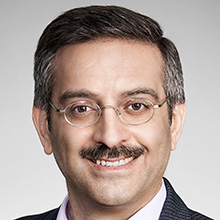 By Elkhan NURIYEV, PhD, Senior Fellow at the Alexander von Humboldt Foundation
As competition over trade corridors intensifies across Eurasia, the South Caucasus and Central Asia are becoming pivotal arenas where the governance of regional connectivity is increasingly contested. In this evolving landscape, proposals emerging from the Armenia–Azerbaijan normalization process highlight a broader shift: connectivity is no longer just about building railways and highways — it is about regulatory alignment, operational standards, and political credibility. One such proposal is the “Trump Route for International Peace and Prosperity” (TRIPP), formally referenced in the U.S.-brokered Armenia–Azerbaijan peace agreement witnessed by President Donald Trump. It envisions a transit corridor linking Azerbaijan with its Nakhchivan exclave through Armenian territory as part of a post-conflict settlement framework. While not a megaproject in financial terms, the corridor carries strategic significance. Properly structured, it could turn diplomatic normalization into economic interdependence — linking political progress to customs harmonization, transit guarantees, and private-sector participation. READ MORE
- Thursday, 19 March 2026, 21:05
Expanding Global Jihadi Footprint: Islamic State and al Qaeda in South Asia and West Africa[Over]  By Bibhu Prasad ROUTRAY, PhD, Director & Shanthie Mariet D’SOUZA, PhD, founder & president, Mantraya Institute for Strategic Studies (MISS) By Bibhu Prasad ROUTRAY, PhD, Director & Shanthie Mariet D’SOUZA, PhD, founder & president, Mantraya Institute for Strategic Studies (MISS)
As the war in Iran and Ukraine rages, together with China’s continued expansion, noticeably in the South China Sea but also in Myanmar/Burma, major global players are preoccupied to the extent that non-state extremist actors have virtually free rein to expand. The global terror groups Islamic State and al Qaeda sense a window of opportunity to consolidate in their current strongholds and push beyond. Much of this organisational expansion and accompanying violence is taking place in Asia and West Africa. However, if the wars drag on, limiting security responses of the major nations to the evolving threats, such violence can potentially spread to Europe and even the United States. READ MORE
- Thursday, 19 March 2026, 21:01
Southern Branch of Middle Corridor Gains Eurasian Connectivity Momentum[Over] 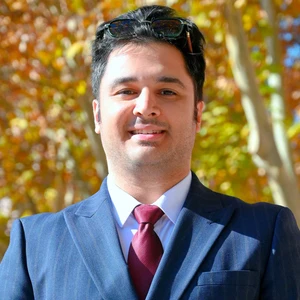 By Vusal GULIYEV, Leading Advisor at the Baku-based Center of Analysis of International Relations (AIR Center) By Vusal GULIYEV, Leading Advisor at the Baku-based Center of Analysis of International Relations (AIR Center)
On February 10, railway officials from Azerbaijan, Georgia, Turkmenistan, and Uzbekistan convened in Ashgabat to strengthen cooperation and accelerate the development of the Trans-Caspian International Transport Route, commonly known as the Middle Corridor. Development of the Middle Corridor continues to gain momentum as Eurasian states seek faster, more geopolitically resilient trade routes linking Asia and Europe. The southern branch of the corridor stretches from the People’s Republic of China (PRC) through Kyrgyzstan, Uzbekistan, and Turkmenistan to the Caspian Sea, and onward via Azerbaijan and Georgia to Türkiye and European markets. This section has emerged as an increasingly important segment of the network. As regional connectivity initiatives accelerate, the southern branch is gradually becoming a key component of the evolving Eurasian transport architecture READ MORE
- Thursday, 19 March 2026, 20:59
Israel War Erodes Iran’s Relations with Azerbaijan[Over]
 By Fuad Shahbazov, Baku-based independent regional security and defence analyst By Fuad Shahbazov, Baku-based independent regional security and defence analyst
The 12-day Israel-Iran war revealed new vulnerabilities in the Islamic Republic and increased tensions between Iran and its neighbour, Azerbaijan. In the aftermath of the strategic setback to Iranian nuclear and military facilities, Iran’s conservative political and security establishment began shifting focus toward perceived “close enemies” said to be complicit in the Israeli attacks. Among the primary targets of this narrative has been Iran’s northern neighbor, Azerbaijan, which Iranian state-run media and channels affiliated with the Islamic Revolutionary Guard Corps (IRGC) accused of providing “intelligence support to Israel” during the strikes on nuclear, military, and civilian sites. While Azerbaijani officials categorically denied any involvement in Israeli military operations and the Iranian government did not present concrete evidence supporting its claims, the media campaign renewed tensions between Tehran and Baku, undermining a period of cautious diplomatic stability that had followed earlier disputes over Armenia and other issues. Indeed, the Iranian criticism of a growing Azerbaijan-Israel alliance is not a new phenomenon and Azerbaijan’s ties with Israel have long been a source of discontent in Azerbaijan-Iran relations. READ MORE
- Thursday, 31 July 2025, 12:19
Uzbekistan: Development of Culture – A Key Tool for Preserving National Identity[Over] 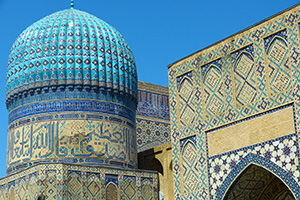 Ozodbek Nazarbekov, Minister of Culture of the Republic of Uzbekistan
Culture and art are the foundation of civilization, national identity, and spiritual perfection, as well as important indicators of a country’s progress. The development of these spheres, reflecting the spiritual growth of the people, their past, present, and future, requires an approach that meets the demands of the times. This is why the reforms aimed at the development of culture and art in Uzbekistan carry profound meaning and are entering a new phase.
READ MORE
- Friday, 20 December 2024, 09:03
In Uzbekistan, strengthening interethnic and interfaith solidarity is always a priority of state policy[Over] 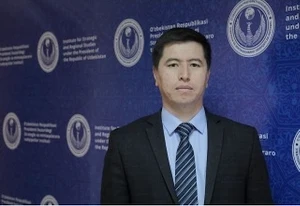 Samariddin Sattorov,
Chief Researcher of the Institute for Strategic and Regional Studies under the President of the Republic of Uzbekistan
In recent years, geopolitical tensions have been increasing in different regions of the world, and interethnic conflicts and contradictions on religious grounds continue to worsen.
In the context of such instability, maintaining an open and constructive dialogue between different religious and cultural groups is becoming vital. Strengthening religious tolerance helps to create an atmosphere of mutual understanding, respect and generosity in society, which in turn alleviates tensions and prevents the escalation of conflicts. READ MORE
- Friday, 6 December 2024, 19:19
Uzbekistan strives to become one of the world leaders in the production and export of agri-food products[Over]
Agriculture is one of the leading sectors of Uzbekistan’s economy.
This sector accounts for more than 24% of the republic's gross domestic product and employs about a quarter of the total workforce. Thus, sustainable development and modernization of agriculture is a key priority of state policy and macroeconomic development strategy of the republic to ensure overall economic growth and improve the population’s welfare. READ MORE
- Wednesday, 16 October 2024, 22:01
New Uzbekistan: human rights and parliamentary elections[Over]
A.Kh. Saidov,
First Deputy Speaker of the Legislative Chamber of the Oliy Majlis of the Republic of Uzbekistan, Director of the National Center of the Republic of Uzbekistan for Human Rights
The modern economic and democratic systems are designed to uphold the rights and freedoms of every individual. As is widely acknowledged, there is no universal model for democratic development; it must evolve based on each country's unique conditions and the needs of its people, avoiding rigid formulas. READ MORE
- Tuesday, 8 October 2024, 13:45
|
|


 Archive