Publications
What Aliyev’s Reaction to the Airplane Crash Tells Us about Azerbaijan’s Relations with the West
 By Vasif HUSEYNOV, PhD, Head of Department, AIR Center, Adjunct Lecturer, ADA and Khazar Universities, Baku By Vasif HUSEYNOV, PhD, Head of Department, AIR Center, Adjunct Lecturer, ADA and Khazar Universities, Baku
On December 30, Germany’s Der Spiegel, a publication often perceived as critical and biased against Azerbaijan – similar to many other German media outlets – reported on Azerbaijani President Ilham Aliyev’s reaction to Russia’s handling of a recent aeroplane crash crisis between the two countries. The publication noted, “Aliyev’s reaction is a testament to the increased weight of his country.” It continued, “Aliyev called the previous statements from the Russian side ‘nonsensical,’ ‘absurd,’ and ‘stupid.’ He spoke of attempts to cover up the situation and made it clear that with his apology, Putin had fulfilled only one of several conditions that Baku had demanded of Moscow.” For Der Spiegel, it appeared surprising that a relatively small country in Russia’s neighbourhood – often dismissed in the West as part of Moscow’s “backyard” – could stand up assertively against perceived injustices and demand its rights. READ MORE
Publications
Uzbekistan: Development of Culture – A Key Tool for Preserving National Identity 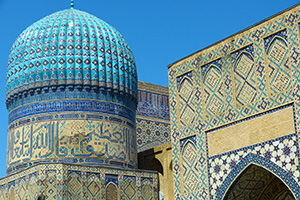 Ozodbek Nazarbekov, Minister of Culture of the Republic of Uzbekistan
Culture and art are the foundation of civilization, national identity, and spiritual perfection, as well as important indicators of a country’s progress. The development of these spheres, reflecting the spiritual growth of the people, their past, present, and future, requires an approach that meets the demands of the times. This is why the reforms aimed at the development of culture and art in Uzbekistan carry profound meaning and are entering a new phase.
READ MORE
Publications
Prospects and Challenges in Armenia–Azerbaijan Peace Talks
 By Benyamin POGHOSYAN, PhD, Chairman, Center for Political and Economic Strategic Studies
Currently, the situation is intriguing. Both sides claim substantial progress in peace talks. At the December 5 Organization for Security and Cooperation in Europe (OSCE) Ministerial Council, Armenia’s foreign minister announced that the preamble to the peace agreement text and 15 out of its 17 articles had been finalized. The Armenian prime minister later stated that 90% of the text was agreed. However, according to the Azerbaijani state-affiliated think tank AIR Center, at least three contentious issues remain unresolved: the presence of the European Union (EU) mission in Armenia, constitutional and legal changes in Armenia, and the withdrawal of Armenia’s legal cases against Azerbaijan in international courts. Baku has also proposed two other preconditions to any peace agreement. These include dissolving the OSCE Minsk Group and establishing a “Zangezur corridor” free of Armenian control.
READ MORE
Publications
Breaking the Present Deadlock in the Armenia-Azerbaijan Peace Process Will Remain a Formidable Task in 2025
By Vasif HUSEYNOV, PhD, Head of Department, AIR Center, Adjunct Lecturer, ADA and Khazar Universities, Baku
On 10 December, the Center for Analysis of International Relations (AIR Center), a Baku-based political think tank closely affiliated with the Azerbaijani government, held a high-level international conference titled “The Main Obstacle to a Peace Agreement Between Azerbaijan and Armenia.” The conference identified the territorial claims in Armenia’s constitution against Azerbaijan as the primary obstacle to peace. Elnur Mammadov, Azerbaijan's Deputy Foreign Minister, contributed to the discussion as keynote speaker, clarifying the position of the Azerbaijani government on the issue. The event also featured James Sharp, former UK Ambassador to Azerbaijan, and Židas Daskalovski, adviser to the North Macedonian president, who shared insights from their countries’ experiences in amending constitutions to resolve interstate disputes. READ MORE
Publications
The Multidimensional Foreign Policy of New Uzbekistan  Bakhram Sotiboldiev,
Head of the Department of the Institute for Strategic and Regional Studies under the President of the Republic of Uzbekistan
In today's rapidly changing world, Uzbekistan confidently positions itself as one of the key players on the international stage. The country’s foreign policy, reinvigorated with the election of Shavkat Mirziyoyev as President in 2016, demonstrates impressive results, transforming the republic into a significant center for regional and global diplomacy. READ MORE
Publications
The Geopolitical Aspects of the India-Armenia Partnership

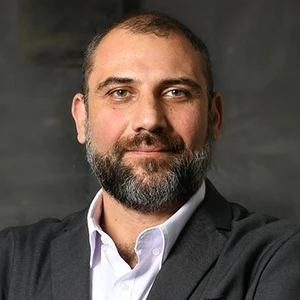 By Nvard CHALIKYAN, Research Fellow, APRI Armenia
Benyamin POGHOSYAN, PhD, Senior Research Fellow, APRI Armenia
Verej ISANIANS, Senior Editor, APRI Armenia
The South Caucasus is an important Eurasian political and economic hub, as its transport networks have the potential to facilitate travel across the continent. Control over the South Caucasus grants access to the Black Sea and the Caspian Sea basin, serving as a gateway to Central Asia and the Greater Middle East. Given its strategic importance, regional powers such as Russia, Türkiye, and Iran have vied for influence in the South Caucasus for centuries. In recent years, the demand for alternative transport corridors has surged amid the ongoing Ukraine war, sanctions on Russia, conflicts in the West Asia (Middle East) region, and the resulting difficulties with traditional supply routes such as the Suez Canal. Consequently, the South Caucasus has become increasingly important as a link between Asia, Europe, and Russia.
READ MORE
Publications
In Uzbekistan, strengthening interethnic and interfaith solidarity is always a priority of state policy 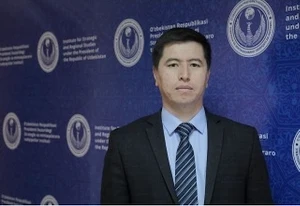 Samariddin Sattorov,
Chief Researcher of the Institute for Strategic and Regional Studies under the President of the Republic of Uzbekistan
In recent years, geopolitical tensions have been increasing in different regions of the world, and interethnic conflicts and contradictions on religious grounds continue to worsen.
In the context of such instability, maintaining an open and constructive dialogue between different religious and cultural groups is becoming vital. Strengthening religious tolerance helps to create an atmosphere of mutual understanding, respect and generosity in society, which in turn alleviates tensions and prevents the escalation of conflicts. READ MORE
|
|