Publications
“Green” development of New Uzbekistan and the fight against climate change  Lola Rakhmanbaeva,
Advisor to the Minister of Ecology, Environmental Protection, and Climate Change on Information Policy- Press Secretary
Lola Rakhmanbaeva,
Advisor to the Minister of Ecology, Environmental Protection, and Climate Change on Information Policy- Press Secretary
Agriculture is one of the leading sectors of Uzbekistan’s economy.
As a country with unique natural resources and rich cultural heritage, Uzbekistan is increasingly aware of the need for active action in the fight against climate change. The country is taking a number of measures and initiatives aimed at achieving sustainable and green development, which plays a key role in global efforts to mitigate the effects of climate change. READ MORE
Publications
Azerbaijan Applies for BRICS Membership  By Vasif HUSEYNOV, PhD, Head of Department, AIR Center, Adjunct Lecturer, ADA and Khazar Universities, Baku By Vasif HUSEYNOV, PhD, Head of Department, AIR Center, Adjunct Lecturer, ADA and Khazar Universities, Baku
On August 20, the Ministry of Foreign Affairs of Azerbaijan declared the country had officially applied for membership in BRICS. BRICS is an intergovernmental cooperation platform that originally comprised Brazil, Russia, India, China, and South Africa, and now includes five new members that include Saudi Arabia, Egypt, Ethiopia, Iran, and the United Arab Emirates. This announcement followed Azerbaijan’s initial declaration of its desire to join the bloc, revealed in the China-Azerbaijan joint declaration on establishing a strategic partnership. This was adopted by the two countries’ leaders on July 3 during the Shanghai Cooperation Organization (SCO) Summit in Astana, Kazakhstan. The declaration highlights Azerbaijan’s intent to join BRICS and emphasizes China’s support for this initiative. Azerbaijan’s bid has also been backed by Russia, with the Kremlin expressing support for Baku’s application on several occasions over the past two months.
READ MORE
Publications
Strengthening the rights of citizens in the area of freedom of receiving and disseminating information in the new Uzbekistan
Karine Javakova,
Head of the Department of State and Legal Disciplines and Ensuring Human Rights of the Academy of the Ministry of Internal Affairs of the Republic of Uzbekistan, Doctor of Philosophy, Professor
Uzbekistan has created a solid legal framework to ensure freedom of speech and information, as well as the development of the media, improvement of the legal basis for the activities and protection of the professional rights of journalists. Considering that the liberalization of the information sphere and its development are priority tasks in the construction of the New Uzbekistan, after the constitutional reform, the articles devoted to these rights were significantly expanded. READ MORE
Publications
New Uzbekistan: human rights and parliamentary elections
A.Kh. Saidov,
First Deputy Speaker of the Legislative Chamber of the Oliy Majlis of the Republic of Uzbekistan, Director of the National Center of the Republic of Uzbekistan for Human Rights
The modern economic and democratic systems are designed to uphold the rights and freedoms of every individual. As is widely acknowledged, there is no universal model for democratic development; it must evolve based on each country's unique conditions and the needs of its people, avoiding rigid formulas. READ MORE
Publications
Armenia’s Constitutional Court Dismantles One Barrier to Peace with Azerbaijan, While Erecting Others  By Tabib Huseynov, independent policy analyst and researcher By Tabib Huseynov, independent policy analyst and researcher
In a move that has left many in Armenia, Azerbaijan, and beyond scratching their heads, the Armenian Constitutional Court adopted on September 26 a landmark ruling No. 1749, greenlighting the border delimitation process with Azerbaijan. The text of the ruling (henceforth referred to as Ruling 1749 or simply, the ruling) was published three days later over the weekend, which invites questions about whether this delay was intended to minimize scrutiny as the initial news cycle on the decision faded and public attention shifted elsewhere. Some Armenian commentators hailed the ruling, claiming it invalidates Baku's criticism that Armenia's Constitution harbours territorial claims against Azerbaijan. On October 4, Armenian foreign ministry spokesperson Ani Badalyan echoed this argument, claiming the ruling proves Armenia’s Constitution contains no territorial claims. READ MORE
Publications
Important Migration Agreement Signed Between Uzbekistan and Germany 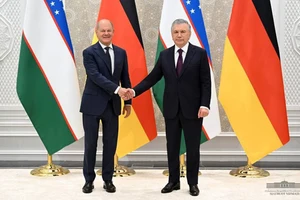 On the invitation of President of the Republic of Uzbekistan, Shavkat Mirziyoyev, Federal Chancellor of the Federal Republic of Germany Olaf Scholz arrived in Uzbekistan for an official visit on September 15. On the invitation of President of the Republic of Uzbekistan, Shavkat Mirziyoyev, Federal Chancellor of the Federal Republic of Germany Olaf Scholz arrived in Uzbekistan for an official visit on September 15.
In recent years, labor migration has emerged as a promising area of cooperation with Germany. At the same time, multifaceted and mutually beneficial relations in the field of healthcare are also developing consistently. READ MORE
Publications
From Armenia to the EU: Stay Strong on the South Caucasus  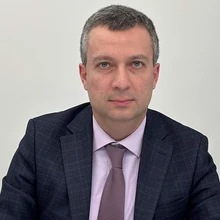 By Anahide PILIBOSSIAN, Vice President of Strategy and Development, APRI Armenia By Anahide PILIBOSSIAN, Vice President of Strategy and Development, APRI Armenia
Benyamin POGHOSYAN, PhD, Chairman, Center for Political and Economic Strategic Studies
The events of the year 2022 led the European Union to build up its foreign and security policy efforts. Its unprecedented actions in the South Caucasus since then include: The EU and Azerbaijan signed a Memorandum of Understanding on a Strategic Partnership in the Field of Energy in July 2022; in late 2022, a short-term EU civilian observer mission was established in Armenia (despite Armenia being a member of the Collective Security Treaty Organization [CSTO]), followed by a two-year mission, the EU Mission to Armenia, in February 2023; a new Partnership Agenda was announced in February 2024; Georgia received EU candidate status in December 2023; European Council President Charles Michel initiated the Brussels format to facilitate peace negotiations between Armenia and Azerbaijan.
While the EU’s intention of being a constructive neighbour and a foreign policy powerhouse in the region is commendable, regional events have stress-tested its strength, signalling the limits of its engagement.
READ MORE
Publications
The issue of the “Zangezur Corridor” is back — can Iran provide an alternative? 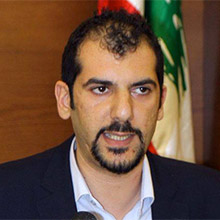 By Yeghia TASHJIAN, Beirut-based regional analyst and researcher, columnist, "The Armenian Weekly” By Yeghia TASHJIAN, Beirut-based regional analyst and researcher, columnist, "The Armenian Weekly”
On August 7, 2024, Elchin Amirbayov, President Ilham Aliyev’s senior envoy for special assignments, told Radio Free Europe/Radio Liberty that Baku had agreed to withdraw the issue of the “Zangezur Corridor” from Armenia-Azerbaijan negotiations and “refer it to a later stage.” This statement put Russia in a difficult position, as it had aimed to control the transit routes between Armenia and Azerbaijan, according to the November 10, 2020 trilateral statement signed by the heads of state of Armenia, Azerbaijan and Russia. As such, Russia attempted to revive the issue but met Iranian opposition. This article will highlight U.S. involvement in containing Russia’s influence in the South Caucasus, Russia’s objective behind bringing back the corridor issue and Tehran’s harsh stance against Moscow.
READ MORE
|
|