
On Karabakh the Focus should Be on Confidence-Building Measures  By Benyamin Poghosyan, PhD, Executive Director, Political Science Association of Armenia
The Karabakh conflict settlement process continues to interest regional security pundits. Yet, despite the growing optimism after the "Velvet revolution" in Armenia, in recent months, the prevailing mood has been more pessimistic. The two meetings between the leaders of Armenia and Azerbaijan at the beginning of 2019, and negotiations at the level of the foreign ministers, did not result in any breakthrough. The significant decrease in the number of incidents along the line of contact and on the Armenia-Azerbaijan international border since October 2018 is a positive step, although one can also see recent increases in clashes resulting in casualties on both sides. READ MORE
- EGF Editor |
Published on EGF: 16.10.2019
| Security
-
Gulf Tensions May Spill Over into the Caucasus By Benyamin Poghosyan, PhD, Executive Director, Political Science Association of Armenia
The September 14th attacks against Saudi Arabia's oil facilities have dangerously increased tensions in the Middle East. Regardless of the author of these actions - the Houthi rebels from Yemen or the Islamic Revolutionary Guard Corps using Iraqi or Iranian territories - a clear message was sent to the Gulf monarchies and the US: Iran on its own or through its proxy forces is capable of inflicting serious damage to the Gulf States’ vital interests, and the "maximum economic pressure" campaign led by the US since May 2018 has as yet failed to change Iranian regional policy. READ MORE
- EGF Editor |
Published on EGF: 01.10.2019
| Security
-
Pashinyan's New Tactic: 'Tougher in Public, Softer at the Negotiation Table' 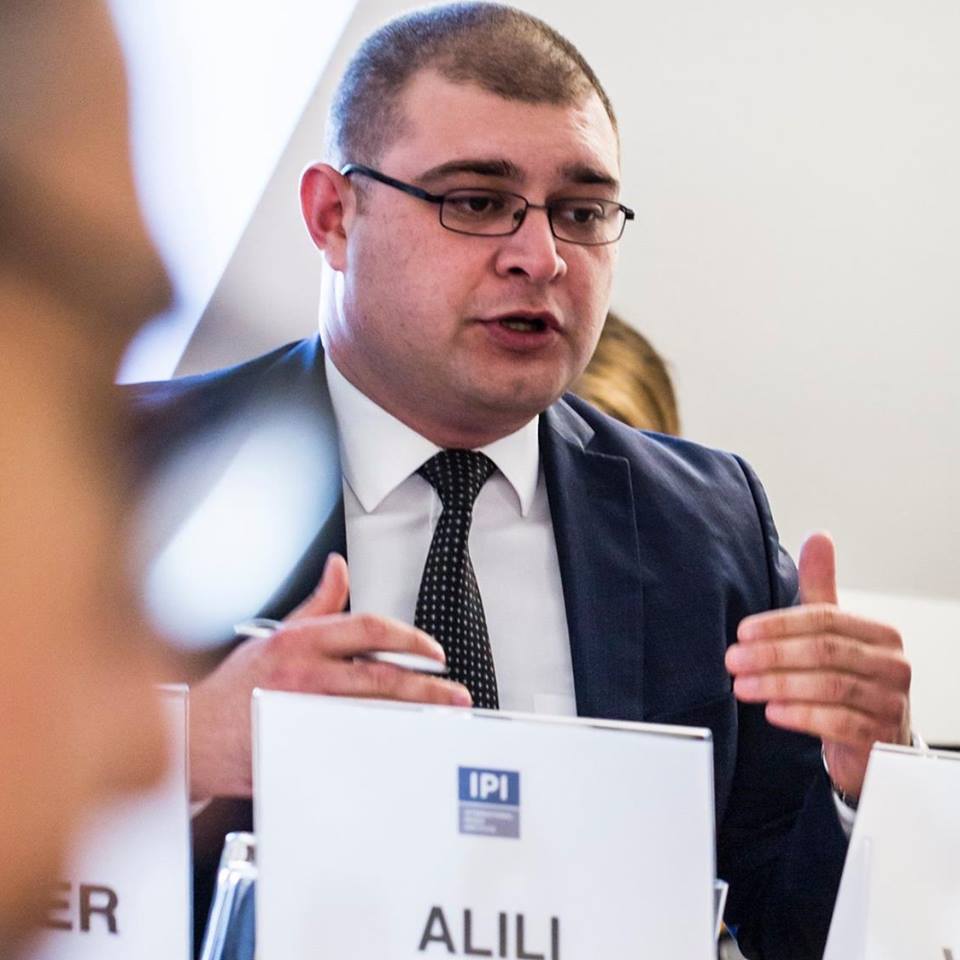 By Ahmad Alili, Head of Research, Caucasus Policy Analysis Center, Baku
The next meeting between the Ministers of Foreign Affairs of Armenia and Azerbaijan will be held in the upcoming days, most likely during the UN General Assembly in New York. This is the first meeting following Armenian Prime Minister Nikol Pashinyan's "Unification" speech on 5 August in Nagorno-Karabakh, which contained an unprecedented hardline rhetoric, hurting both 'Track1' and 'Track2' processes, which shocked Baku. Following the speech, Azerbaijani officials called for a reaction from the OSCE Minsk Group co-chairs. READ MORE
- EGF Editor |
Published on EGF: 24.09.2019
| Security
-
NATO’s Strategy Towards the Black Sea Region  By Eugene Kogan, Tbilisi-based defence and security expert
Although the pursuit of compromises and negotiations with Russia are an unwritten rule for countries such as Bulgaria and Turkey, such pursuits damage NATO as a whole. Bulgaria, Romania and Turkey remind us of the famous fable ‘Swan, Pike and Crawfish’- by Ivan Krylov: “When partners can’t agree their dealings come to a naught and trouble is their labor’s only fruit,” while Russia is joyfully rubbing its hands and laughing behind NATO’s back. READ MORE
- EGF Editor |
Published on EGF: 09.09.2019
| Security
-
‘Game of Thrones Moment' for Azerbaijan in Nagorno-Karabakh
By Ahmad Alili, Head of Research, Caucasus Policy Analysis Center, Baku
In the real world, we do not have dragons, faceless men, red woman, white walkers or resurrection from the dead. Yet, the public policy challenges facing advisers in the famous Game of Thrones (GoT) TV show mirror those that political advisors to real governments face. We draw parallels to the real world in the way the show's decision-makers and advisers face the same limitations of time, resources and information bias. READ MORE
- EGF Editor |
Published on EGF: 01.07.2019
| Security
-
Is Russia Cultivating ‘Symmetric Separatism’ in Karabakh?  By Eduard Abrahamyan, Wider Black Sea & Central Asia regional security analyst
Moscow’s mistrust of the Armenian government headed by Prime Minister Nikol Pashinyan dates all the way back to his rise to power last year in the so-called “Velvet Revolution.” And that mistrust has persisted despite Pashinyan’s various foreign policy gambits designed to win Russia’s confidence (see EDM, March 21). At the same time, Pashinyan’s domestic agenda—specifically, his determination to dismantle the previous regime’s oligarchic/kleptocratic order, including by prosecuting former president Robert Kocharyan for abuses of power—seems to be increasingly irking Moscow as well. READ MORE
- EGF Editor |
Published on EGF: 13.06.2019
| Security
-
NATO and Georgian–American Military Relations  By Eugene Kogan, Tbilisi-based defence and security expert
Since the 2003 Rose Revolution, Georgia has become a staunch and dependable non-NATO ally of the United States in the South Caucasus. Georgian-American bilateral military relations have become stronger and have climaxed in November 2017. With 870 soldiers per capita, Georgia is the leading donor of troops in Afghanistan. This is highly appreciated by the United States. READ MORE
- EGF Editor |
Published on EGF: 13.06.2019
| Security
-
Romania Faces the Militarization of the Black Sea Region  By Greta K. Wagner, Student, University of Glasgow, Intern, The European Geopolitical Forum
Russia’s annexation of Crimea in 2014 has profoundly impacted the military balance in the Black Sea. Amidst mutual distrust and conflicting insecurity perceptions, militarization has become the dominant security paradigm. Both Moscow and the NATO members in the region are steadily building up their military capacities and engaging in tit-for-tat defense enhancements. READ MORE
- EGF Editor |
Published on EGF: 21.05.2019
| Security
-
THAAD in Romania: Bucharest on the Moving Sands of Great Powers’ Competition  By George Vlad Niculescu, Head of Research, the European Geopolitical Forum
On 11 April 2019, NATO confirmed US plans to deploy of the Terminal High Altitude Area Defense (THAAD) system to Romania. According to NATO officials, the United States will fulfil its commitment to NATO’s Ballistic Missile Defence by the temporary deployment of a THAAD system to Deveselu in Romania. The scheduled work is part of the United States European Phased Adaptive Approach to ballistic missile defence, which has been implemented since September 2009. In response, Russian Deputy Minister of Foreign Affairs Alexander Grushko said: “Russia is “closely following” the temporary deployment of a THAAD system to the Deveselu base in Romania.” READ MORE.
- EGF Editor |
Published on EGF: 02.05.2019
| Security
-
Can Azerbaijan Afford a Change of Format in the Peaceful Resolution of the Nagorno-Karabakh Conflict?
By Ahmad Alili, Head of Research, Caucasus Policy Analysis Center, Baku
Baku softened its rhetoric on Karabakh following the Velvet Revolution in
Armenia. Nikol Pashinyan's statements however have disappointed Baku at a
time when its room for manoeuvre is limited.
For some time over the last months, it was noticeable that the Azerbaijani authorities were being careful in their speeches when commenting on developments with regard to the peaceful resolution of the Nagorno-Karabakh conflict, choosing accommodating rhetoric toward the new government in Armenia. At their first informal meeting in Dushanbe, during the CIS summit in late September, Armenian prime minister Nikol Pashinyan and Azerbaijani president Ilham Aliyev verbally agreed to reduce tensions on the line of contact, including by re-establishing the military-to-military hotline, something which the Azerbaijani side had previously rejected as a measure that strengthened the status quo. READ MORE
- EGF Editor |
Published on EGF: 21.03.2019
| Security
-




