Representative of Uzbekistan elected to UN Human Rights Committee for the first time in history 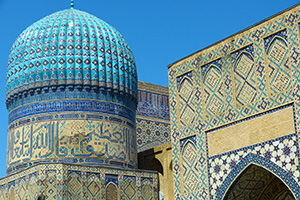 On May 29, at the UN headquarters in New York, during the 40th session of the states parties to the International Covenant on Civil and Political Rights (ICCPR), elections were held for nine members of the Human Rights Committee (HRC) for the 2025-2028 term. On May 29, at the UN headquarters in New York, during the 40th session of the states parties to the International Covenant on Civil and Political Rights (ICCPR), elections were held for nine members of the Human Rights Committee (HRC) for the 2025-2028 term.
Representatives from 16 states, including Burundi, Georgia, Egypt, India, Spain, Cameroon, Côte d'Ivoire, Lithuania, Morocco, Paraguay, the Republic of Korea, North Macedonia, Togo, Uzbekistan, Croatia, Ethiopia, and South Africa, competed for the nine seats in the HRC.
READ MORE
- Monday, 3 June 2024, 22:30
Eco-Tourism in Uzbekistan: A Journey Towards Sustainability In the heart of Central Asia, Uzbekistan, a country known for its dazzling architecture and rich history, is emerging as a promising eco-tourism destination.
Eco-tourism in Uzbekistan presents an opportunity to explore the country’s natural beauty while contributing to its sustainable development. As more travelers seek out eco-friendly travel options, Uzbekistan stands as a testament to the power of eco-tourism to transform not just the landscape, but also the lives of the people who call it home.
READ MORE
- Thursday, 14 March 2024, 17:13
The main directions of the state policy of Uzbekistan in the context of improving the country's position in international rankings and indices Tokhir Khasanov, Academy of Public Administration under the President of the Republic of Uzbekistan, DSc. in Economics, Associate Professor
Uzbekistan, nestled in the heart of Central Asia, has historically been a melting pot of cultures and civilizations, thanks to its pivotal role in the Silk Road. Its rich tapestry of history reflects a blend of empires, nomads, and diverse cultures that have left their mark over millennia.
READ MORE
- Tuesday, 28 November 2023, 07:45
The efficiency of organization of measures to ensure public safety based on the principle of “Serving human interests” Umidjon Qodirov,
Independent researcher of the Academy of the MIA of the Republic of Uzbekistan, cand.of law sciences, associate professor
Special attention is being paid to ensuring a peaceful and tranquil life of the population and to forming a culture of law-abidingness and public safety as part of the large-scale reforms implemented in our country. In particular, completely new mechanisms and procedures for organizing work in the direction of public safety on the basis of the principle of “Serving the interests of the people” are introduced, and mutual purposeful cooperation of state bodies with public structures is established.
READ MORE
- Tuesday, 28 November 2023, 07:25
Georgia is Losing, and Losing Badly 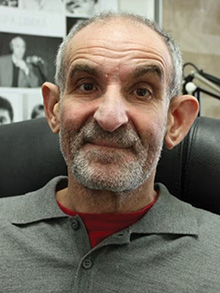 Interview by “Georgia Today” with Eugene KOGAN, Tbilisi-based defence and security expert Interview by “Georgia Today” with Eugene KOGAN, Tbilisi-based defence and security expert
Georgia is not ready to defend itself if Moscow decides to invade again. And this is a very big weakness, one which should have been solved years ago and remains unresolved to this day…In Georgia, they don’t bother to ask themselves difficult questions…it’s something Georgian politicians seem to be averse to – Eugene Kogan, a researcher at the Vienna Institute of International Politics, an expert on defence and security issues in Eastern Europe and the Middle East, who has been living in Georgia for the past 10 years, told RFE/RL’s Georgian Service. We spoke to him about the role of Georgia in the region, territorial integrity, Karabakh, and the new war in the Middle East. We started with the Israel-Hamas conflict. READ MORE
- Thursday, 26 October 2023, 08:30
Putin and the 2022 Russian Military Conflict in Post-Soviet Lands 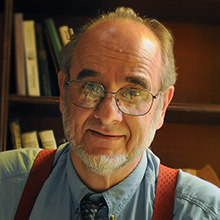 By Alan WHITEHORN, Professor Emeritus in Political Science, The Royal Military College of Canada By Alan WHITEHORN, Professor Emeritus in Political Science, The Royal Military College of Canada
Coming to power after the break-up of the Soviet Union in the 1990s, Lukashenko had ruled Belarus in a highly autocratic fashion for almost three decades, while seeking to navigate his country within Moscow’s sphere of influence. However, the aging leader’s arbitrary rule began to teeter and he faced a major challenge in the election of 2020. When skewed and rigged election results were announced, hundreds of thousands of voters of Belarus peacefully protested their strong objections.
The West echoed moral support to the mass of citizens voicing democratic demands on the streets, but provided little material assistance. Somewhat optimistically and naively, the West trusted that the unarmed people would peacefully prevail over the coercive might of the internal and external dictators in Minsk and Moscow. Putin, by contrast, sensing a vulnerable and weakened regime, provided his fellow authoritarian colleague with external assistance to forcefully crush the peaceful demonstrators. READ MORE
- Thursday, 17 March 2022, 07:54
The Russian-Turkish “Co-opetition” in Eurasia and Beyond 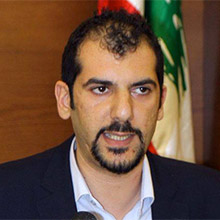 By Yeghia TASHJIAN, Beirut-based regional analyst and researcher, columnist, "The Armenian Weekly” By Yeghia TASHJIAN, Beirut-based regional analyst and researcher, columnist, "The Armenian Weekly”
“Co-opetition” was a term coined by Adam M. Brandenburger and Barry Nalebuff to describe a paradoxical strategy of cooperation among competitors, enabling them to collectively achieve mutual gains. It’s a relatively new term in international relations and used occasionally in international trade. Nevertheless, I will be using co-opetition to explain the current status of Russian-Turkish relations.
In foreign policymaking and geopolitical self-perception, Russia and Turkey resemble each other in many ways. Throughout the course of events in the Middle East and South Caucasus, as the West failed to engage with regional developments to resolve conflicts, other regional states such as Iran, Turkey and Russia filled the political vacuum. Hence, the Turkish-Russian interaction in the Middle East and beyond has been partially facilitated by the military and political withdrawal of the US and the European Union’s absence from the region. READ MORE
- Wednesday, 15 December 2021, 09:23
|
|


 In Progress
