Armenia's choice of the Eurasian Union: A stunning end to its European integration?  George Vlad Niculescu,
Head of Research, The European Geopolitical Forum
The announcement at the beginning of September 2013, in Moscow, by President Serzh Sargsyan of Armenia's decision to join the Russia-led Eurasian Customs Union (ECU) apparently took many by surprise. Firstly, because in July 2013 Armenia concluded a lengthy four years negotiation on essential agreements, meant to upgrade its ties with the European Union (EU), which would be incompatible with joining the ECU. Secondly, because until recently (i.e. the run-up to the Vilnius Eastern Partnership summit to be held this fall) enlargement didn't seem a top priority for the ECU, the focus being more on making the customs union mechanisms effectively work for the existing membership. READ MORE
- Friday, 27 September 2013, 10:54
Russian Problem: Russia's Place in the World - an Attempt at Historical and Geopolitical Analysis  by Prof. Andrej Kreutz,
EGF adviser for Trans-Atlantic security
A Long Western Debate and its Political Consequences
Although Russia has been part of the European system since the Westphalian Treaty of 1648, and after its victory in the Northern War with Sweden and the Nystad Treaty in 1721 started to be seen as of he major powers on the continent, both its internal nature and its role in international politics have often suffered Western doubts and uncertainties. READ MORE
- Thursday, 19 September 2013, 12:42
Guest contribution: Gazprom is still relevant to the EU market, but for how long?
 by Professor Natasha Udensiva by Professor Natasha Udensiva
The U.S. shale gas revolution is spreading: more and more countries are talking about developing their own shale gas resources. How is this relevant for Gazprom? It is relevant because, with more countries developing their natural gas resources, Gazprom’s once-powerful monopoly may soon lose its hold on the European market. So far, the company’s strategy has relied on the exclusiveness of its vast resources. But shale development is undermining this very quickly. Soon, access to technology will trump resource access. Then, Gazprom’s only chance of reasserting its presence will be to lower its prices. READ MORE
Europe embraces Nord Stream expansion
 By Igor Alexeev By Igor Alexeev
Russian journalist and blogger for Strategic Culture Foundation and Route Magazine. He writes on the oil and gas sector, Eurasian energy security and shipping industries in the Arctic.
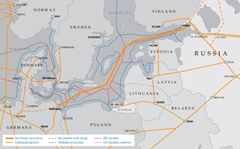
European countries, including the Netherlands, Finland and the United Kingdom expressed their interest in the expansion of Nord Stream. The third and fourth strings of the pipeline enjoy the highest level of political support in Europe. As a result Nord Stream will be the cornerstone of European energy security in the decades to come.
Nord Stream Fact Sheet
- Nord Stream is a twin pipeline system through the Baltic Sea transporting natural gas from Russia to Europe;
- It runs across the Baltic Sea waters from the Portovaya Bay (near Vyborg) to the German coast (near Greifswald) stretching over 1224 kilometers;
- The third and fourth lines are planned for annual capacities of 27.5 billion cubic meters each;
- The stakes in Nord Stream AG are distributed as follows: Gazprom holds 51%, Wintershall Holding and E.ON Ruhrgas – 15.5% each, Gasunie and GDF Suez – 9% each;
- Nord Stream will export gas from the Yuzhno-Russkoye oil and gas field, the Yamal Peninsula, Ob and Taz Bays and in perspective Shtokman field;
- The cost of construction of the first two sections was $7.4 billion.
READ MORE
- Tuesday, 7 May 2013, 07:58
South Stream Shapes European Energy Security, Nabucco Falls Behind 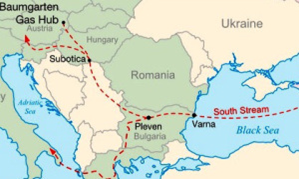 By Igor Alexeev By Igor Alexeev
Russian journalist and blogger for Strategic Culture Foundation and Route Magazine. He writes on the oil and gas sector, Eurasian energy security and shipping industries in the Arctic.
South Stream is an ambitious endeavor of Russia’s energy giant Gazprom to get direct access to the EU energy market. It is portrayed and criticized by some politicians in Europe as a “dangerous” gateway to a broader economic relationship with Moscow. Remarkably enough, Bulgaria, Serbia, Croatia, Slovenia and Hungary have one-by-one opted for the project.
The South Stream Fact Sheet
- Gas pipeline will be 1455 km long in Southern and Central Europe;
- 8500 people will be employed in its construction, with 770 at the operational level;
- Eight compression stations are to be set up in the main transit countries;
- The South Stream planned transport capacity may reach 63 billion cubic meters;
- The overall cost of the project is approximately $39 billion.
READ MORE
- Tuesday, 7 May 2013, 07:57
Political Advisory Briefing: Egypt 
By Claudia Nocente,
Research Associate Global Security
February 2013
Key points:
- Egypt’s new administration between international praise and domestic unrest
- Morsi assumes pharaonic powers in an attempt to rid Egypt of Mubarak judges
- The felool take another shot in Egyptian politics
- The generals remain silent
- The Egyptian economy sinks. READ MORE
- Tuesday, 12 February 2013, 14:21
The evolution of European and Euro-Atlantic policy making in the wider Black sea: EU and NATO attempts at strenghening regionalism in an area of strategic interest 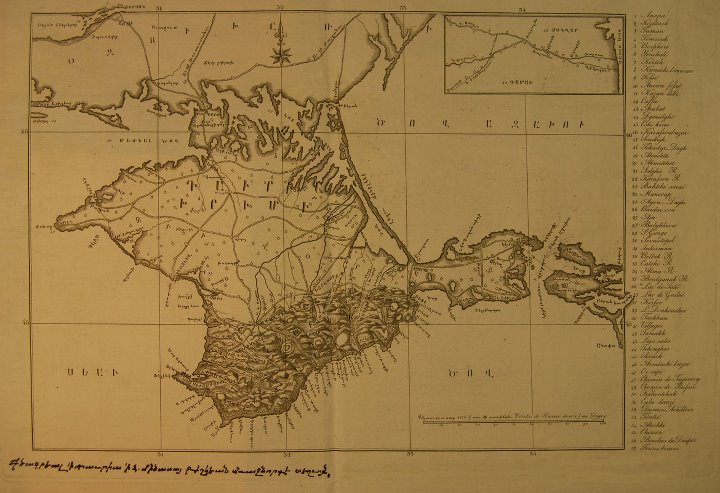
Debates about the geopolitical, geo-economic and strategic significance of the wider-Black Sea (WBS) region have become fashionable amongst Western policy makers and the international scholarly community since the end of the Cold War. While the Black Sea represented a “front line” in the stand-off between rival superpower blocks during an age which now seems to have slipped into the bygone days of our youth, the major geopolitical realignments which have taken place in Eurasia during the last two decades have evidently led to our “re-discovery” of one of the world’s most historically significant geostrategic playing fields. To read more click here.
- Wednesday, 1 August 2012, 20:27
|
|


 In Progress

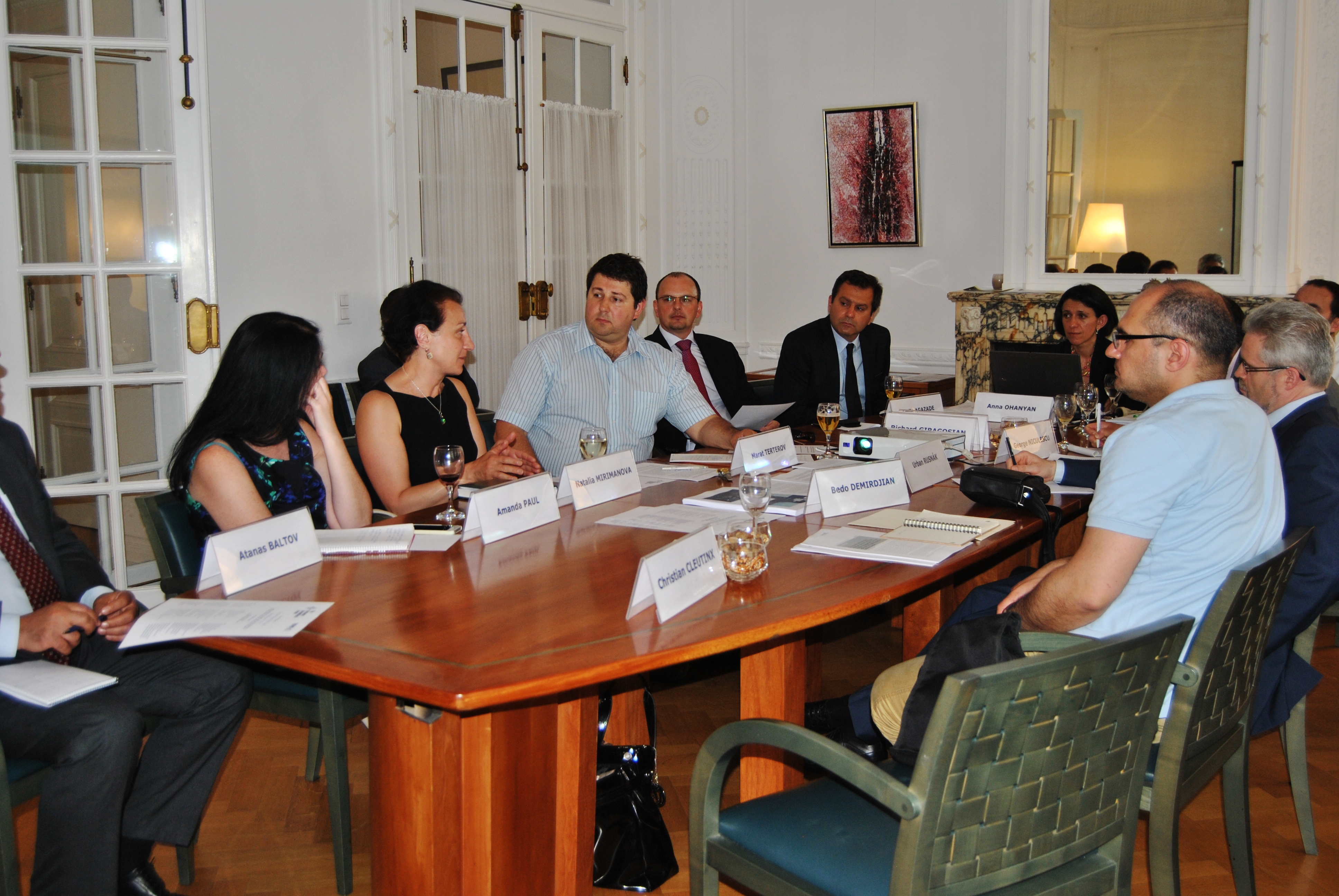 Interactive discussion hosted by the European Geopolitical Forum