Ukrainian Gas Transit: Still Vital for Russian Gas Supplies to Europe  By Jack Sharples, Research Fellow of the Oxford Institute of Energy Studies and EGF Associate Researcher on the External Dimensions of Russian Gas By Jack Sharples, Research Fellow of the Oxford Institute of Energy Studies and EGF Associate Researcher on the External Dimensions of Russian Gas
With European gas import demand having risen substantially since 2014, Gazprom has dramatically increased its sales on the European market. In Q1 2018, Gazprom reported record daily gas exports to Europe in late February and early March. This Comment addresses the question of how those volumes were delivered to the market, and the extent to which the infrastructure for delivery of those volumes was used, highlighting that, in times of peak European gas import demand, full utilisation of the Nord Stream and Yamal-Europe pipelines left Ukraine as the only transit route with spare capacity. READ MORE
- Wednesday, 16 May 2018, 20:57
Armenia’s “Velvet Revolution” and the Karabakh Conflict Resolution  By George Vlad Niculescu, Head of Research, the European Geopolitical Forum
On 17 April 2018, Armenia’s National Assembly overwhelmingly voted to install Serzh Sargsyan -former president of the country- as prime minister. They unequivocally ignored the “voice of the street” calling for a change of face at the helm of this rather small, but ambitious post-Soviet state. This vote was supposed to conclude a power capture scheme started back in 2015.[…] Under pressure from independent civil society, then president Sargsyan had promised not to turn up as candidate for the prime-ministerial post. READ MORE
- Wednesday, 9 May 2018, 20:20
Armenia’s U-turn back to ‘multi-vector foreign policy’  By Stepan Grigoryan, Head, Analytical Centre for Globalisation and Regional Cooperation, Armenia
The statement from the President of Armenia in September 2013 sounded like a bolt from the blue. He would not sign the Association Agreement with the European Union at the planned November Eastern Partnership Summit in Vilnius, he said. Instead, Armenia would be joining the Russian led Eurasian Economic Union (EAEU). This signified Armenia's departure from a multi-vector foreign policy. READ MORE
- Wednesday, 17 January 2018, 09:54
The South-West Transport Corridor Project and the Geopolitical Reshaping of the South Caucasus
 By Fuad Shahbazov, Expert-advisor, Center for Strategic Studies under the President of the Azerbaijan Republic By Fuad Shahbazov, Expert-advisor, Center for Strategic Studies under the President of the Azerbaijan Republic
Baku hosted the first joint gathering of the heads of the railway administrations of Iran, Azerbaijan, Georgia, Ukraine and Poland, on June 19. The meeting was dedicated to the newly-launched “South-West Transport Corridor,” which links into the broader Trans-Caspian International Route project launched in 2016. READ MORE
- Thursday, 20 July 2017, 13:21
Any Optimism in the Chinese ‘Rooster Year'?  Mehmet Ogutcu
EGF Affiliated Expert
LONDON - As the world is preparing to leave 2016 behind as a year fraught with political surprises, financial crises and market volatility, governments and businesses including those in Turkey have started to set their eyes on what the next 12 months have in store for them politically and economically.
Clearly, global risks are more elevated and more interconnected than we have ever seen before and demand a proactive and integrated response to address potential impacts. To refresh your memory, since the end of the Bretton Woods order in the 1970s, there have been serious financial crises every seven years over the past 40 years: 1987, 1997, 2007. If you ask me whether the global crisis which has been brewing in the last few years could erupt in 2017, my answer would be yes. READ MORE
- Tuesday, 7 March 2017, 10:09
Turkey will reconcile with Syria
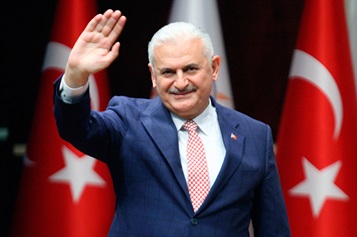
Prime Minister Binali Yildirim said that Turkey is heading to restore relations with Damascus. "We will expand our circle of friends. We have already begun to do so. We normalized our relations with Israel and Russia, and now, I am sure, we will do the same with Syria. We need it to be done", - said Yildirim, speaking on Turkish television. READ MORE
- Tuesday, 7 March 2017, 10:09
Turkey-Armenia Relations after Turkey’s Elections  Armen Grigoryan, Armen Grigoryan,
EGF Guest Contributor
The outcome of Turkey’s recent parliamentary elections may partly reduce tensions in relations with Armenia, stopping the mounting hostile rhetoric of recent months. A normalization of bilateral relations should not be expected at this stage, but the trend of increasing cooperation in the humanitarian area, and in culture, tourism, and the media in recent years will likely continue. At the same time, some policies may need READ MORE
This article was first published by the "Central Asia-Caucasus Analyst, Central Asia-Caucasus Institute & Silk Road Studies Program Joint Center" which holds the copyright for it.
- Wednesday, 8 February 2017, 12:51
“Towards Europe?! Straddling Fault Lines and Choosing Sides in the South Caucasus” 10th Workshop of the PfP Consortium’s “Regional Stability in the South Caucasus” Study Group (RSSC SG)
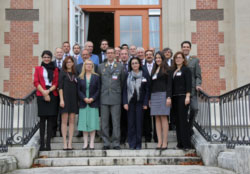 On 6-8 November, 2014, the PfPC and the Austrian National Defense Academy jointly organized the 10th Workshop of the RSSC SG at “Schloss Rothschild” in Reichenau (Austria). This workshop offered a platform for constructive dialogue among government and academic experts on the prospective roles of the EU and the Eurasian Economic Union (EEU) in breaking the current deadlocks in the resolution of the protracted conflicts in Abkhazia, South Ossetia and Nagorno-Karabakh. During this workshop, a panel moderated by George Niculescu, the Head of Research of EGF, examined the background and the potential implications from the perspectives of South Caucasus (SC) states of having to make undesirable choices between the EU and the EEU. The panelists’ presentations and the ensuing discussion highlighted that, against the backdrop of the Ukrainian crisis, maintaining freedom of choice on the ways and levels of engagement with both the EU and the EEU is a critical interest for each SC state, and a prerequisite for effective conflict resolution. In this context, Mr Niculescu thought that “the EU might work towards developing options for harmonizing the European and Eurasian integration normative systems. One of the options to be explored might involve sustaining post-conflict regional economic cooperation as a way to circumvent the dilemma of the states caught in-between competing European and Eurasian integration processes.” READ MORE. Please see the relevant post on Facebook here. On 6-8 November, 2014, the PfPC and the Austrian National Defense Academy jointly organized the 10th Workshop of the RSSC SG at “Schloss Rothschild” in Reichenau (Austria). This workshop offered a platform for constructive dialogue among government and academic experts on the prospective roles of the EU and the Eurasian Economic Union (EEU) in breaking the current deadlocks in the resolution of the protracted conflicts in Abkhazia, South Ossetia and Nagorno-Karabakh. During this workshop, a panel moderated by George Niculescu, the Head of Research of EGF, examined the background and the potential implications from the perspectives of South Caucasus (SC) states of having to make undesirable choices between the EU and the EEU. The panelists’ presentations and the ensuing discussion highlighted that, against the backdrop of the Ukrainian crisis, maintaining freedom of choice on the ways and levels of engagement with both the EU and the EEU is a critical interest for each SC state, and a prerequisite for effective conflict resolution. In this context, Mr Niculescu thought that “the EU might work towards developing options for harmonizing the European and Eurasian integration normative systems. One of the options to be explored might involve sustaining post-conflict regional economic cooperation as a way to circumvent the dilemma of the states caught in-between competing European and Eurasian integration processes.” READ MORE. Please see the relevant post on Facebook here.
- Friday, 20 February 2015, 18:32
|
|


 In Progress
