No War, No Peace in the South Caucasus  By Benyamin POGHOSYAN, PhD, Chairman, Center for Political and Economic Strategic Studies By Benyamin POGHOSYAN, PhD, Chairman, Center for Political and Economic Strategic Studies
Since 2020, the South Caucasus has entered an active era of turbulence. The primary reason was the Azerbaijani decision to use military force to “solve the Nagorno-Karabakh conflict.” Azerbaijan started the 2020 Nagorno-Karabakh war, launched incursions into Armenia proper in May, November 2021, and September 2022, and imposed a blockade on Nagorno-Karabakh in December 2022. The culmination of this strategy was the September 2023 military attack against Nagorno-Karabakh, which resulted in the forced displacement of around 105,000 Armenians and the dissolution of the self-proclaimed Nagorno Karabakh Republic.
Even after the complete takeover of Nagorno-Karabakh, Azerbaijan continues its policy of threats and pressure towards Armenia with an ever-changing shopping list of demands. Baku supports the concept of so-called “Western Azerbaijan” at the highest level. It expects an extraterritorial corridor from Armenia. It states that it will not pull away its troops from occupied Armenian territories, rejects Armenia’s offer to sign a non-aggression pact and continues to demand changes in the Armenian constitution and other laws.
READ MORE
- February 24, 2024 10:16AM
As of January 1, 2024, 766 industrial zones have been created in Uzbekistan 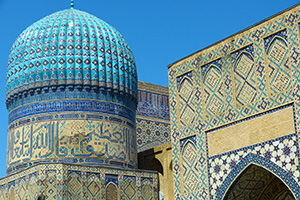 Ministry of Investment, Industry and Trade: In 2023, enterprises located in industrial zones manufactured products totaling 53.4 trillion soums and exported $972 million. Ministry of Investment, Industry and Trade: In 2023, enterprises located in industrial zones manufactured products totaling 53.4 trillion soums and exported $972 million.
In 2024, 841 projects are planned to be launched in industrial zones in Uzbekistan.
In recent years, the country has been implementing a number of consistent, irreversible reforms aimed at creating an open, competitive economy, investment and industrial development, expanding foreign trade relations, and creating an attractive business environment for domestic and foreign investors.
READ MORE
- February 24, 2024 09:11AM
The Groundwork of Economic Reforms in 2024. On the situation in the economy and the tasks set 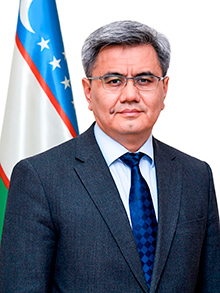 Obid Khakimov, director of the Center for Economic Research and Reforms under the Administration of the Republic of Uzbekistan
The dynamic growth of the population of Uzbekistan requires at least high outstripping economic growth rates in order to adequately meet the growing needs and improve the standard of living of people. But this requires new, more balanced and verified approaches to ensure timely achievement of the set goals.
And these new approaches to economic policy were clearly manifested in the decisions taken at the important meetings held at the beginning of the year under the chairmanship of the President of Uzbekistan Shavkat Mirziyoyev on the situation in the economy and the tasks assigned to the economic divisions for 2024.
READ MORE
- February 16, 2024 07:50AM
Does the EU Have any Strategy in the South Caucasus?  By Yeghia TASHJIAN, Beirut-based regional analyst and researcher, columnist, "The Armenian Weekly” By Yeghia TASHJIAN, Beirut-based regional analyst and researcher, columnist, "The Armenian Weekly”
From November 27-29, 2023, a delegation of the European External Action Service (EEAS) and the European Commission visited Yerevan. The EU Delegation to Armenia said the purpose of the trip was to “explore possibilities to deepen and strengthen EU-Armenia relations.” Ideas were exchanged on “how to best leverage investments to address the immediate needs and enable integration of displaced Karabakh Armenians.” They agreed to “explore areas to strengthen cooperation between the EU’s Border and Coast Guard Agency (Frontex) and Armenia” and continue dialogue on matters of security and defence, such as the EU’s promise to explore non-lethal support to the Armenian military via the European Peace Facility. The EU representatives announced their support for the “normalization of relations between Armenia and Azerbaijan based on the principles of mutual recognition of territorial integrity and inviolability of borders based on the 1991 Almaty Declaration.
READ MORE
Why It Is Important to Diversify Armenia’s Foreign Policy By Benyamin POGHOSYAN, PhD, Chairman, Center for Political and Economic Strategic Studies
In recent years, perhaps the most discussed topic by international scholars, experts and politicians is the gradual transformation of the post-Cold War unipolar world order. There are different opinions about the process of transformation, the timing, and the main elements of this newly emerging world order. However, almost everyone agrees on one issue: the unipolar world is gradually becoming history, and before the final formation of the new world order, the next decade will be characterized by instability, conflicts, and economic shocks. Climate change and the ever-increasing role of digital technologies, including artificial intelligence, are additional factors of instability that make it even more difficult to assess, predict and formulate policies based on geopolitical developments in the coming years.
READ MORE
Armenia between Russia and the West By Benyamin POGHOSYAN, PhD, Chairman, Center for Political and Economic Strategic Studies
The war in Ukraine has significantly impacted the geopolitics of the former Soviet space. As Russia – West relations have hit the lowest point since the end of the Cold War, or perhaps even since the Caribbean nuclear crisis of 1962, the newly independent states face tough choices in their foreign policy. Can they find a balance between Russia and the West, and if not, should they choose Russia or the West? It seemed that this conundrum should not apply to Armenia. The country is a member of all Russian-led organizations in the post-Soviet space – Collective Security Treaty Organization, Eurasian Economic Union, and Armenia hosts a Russian military base and Russian border troops. Thus, many may argue that Armenia has already chosen to be with Russia, and the war in Ukraine would complicate Armenian efforts to develop relations with the West, which Yerevan has done quite successfully in the last three decades.
READ MORE
- December 20, 2023 16:30PM
The Choice in the South Caucasus Should Not Be Either Or  By Vasif HUSEYNOV, PhD, Head of Department, AIR Center, Adjunct Lecturer, ADA and Khazar Universities, Baku By Vasif HUSEYNOV, PhD, Head of Department, AIR Center, Adjunct Lecturer, ADA and Khazar Universities, Baku
On 15 November, during a hearing before the United States Congressional Committee on Foreign Affairs regarding the future of Karabakh, James O’Brien, Assistant Secretary of State for European and Eurasian Affairs, made a statement that stirred significant concern in Azerbaijan. While addressing the Armenia-Azerbaijan disputes and developments in the South Caucasus, he asserted, “A future that is built around the access of Russia and Iran as the main participants in the security of the region, the South Caucasus, is unstable and undesirable including both for the governments of Azerbaijan and Armenia. They have the opportunity to make a different decision now”. This statement comes in the wake of a series of developments indicating a shift towards a new security order in the South Caucasus.
READ MORE
EU-Azerbaijan Relations Are Important for Both Sides By Vasif HUSEYNOV, PhD, Head of Department, AIR Center, Adjunct Lecturer, ADA and Khazar Universities, Baku
EU-Azerbaijan relations are important for both sides, and the Brussels format of the Armenia-Azerbaijani peace talks, are likewise important to reach negotiated solutions over the remaining unresolved questions between Baku and Yerevan. The reactivation of the Brussels format and the revitalization of the constructive role of the EU in the South Caucasus should happen sooner rather than later. A balanced approach by the EU and its leading member states vis-à-vis the countries of the region is of utmost necessity towards this end.
On 25 October, Toivo Klaar, the EU Special Representative for the South Caucasus, announced that the scheduled meeting between Armenian Prime Minister Nikol Pashinyan and Azerbaijani President Ilham Aliyev with the mediation of the European Council President Charles Michel in Brussels [known as the Brussels format of the Armenia-Azerbaijan peace talks] had been postponed due to scheduling problems. Previously, another EU-brokered summit between these two leaders from the South Caucasus, originally planned to take place on the sidelines of the European Political Community gathering on 5 October, was cancelled by the Azerbaijani side.
READ MORE
- November 28, 2023 07:30AM
The efficiency of organization of measures to ensure public safety based on the principle of “Serving human interests” Umidjon Qodirov,
Independent researcher of the Academy of the MIA of the Republic of Uzbekistan, cand.of law sciences, associate professor
Special attention is being paid to ensuring a peaceful and tranquil life of the population and to forming a culture of law-abidingness and public safety as part of the large-scale reforms implemented in our country. In particular, completely new mechanisms and procedures for organizing work in the direction of public safety on the basis of the principle of “Serving the interests of the people” are introduced, and mutual purposeful cooperation of state bodies with public structures is established.
READ MORE
- November 28, 2023 07:25AM
Azerbaijan Advocates for Regional Solutions to Regional Problems in the South Caucasus By Vasif HUSEYNOV, PhD, Head of Department, AIR Center, Adjunct Lecturer, ADA and Khazar Universities, Baku
On October 4, Azerbaijani President Ilham Aliyev cancelled a meeting with Armenian Prime Minister Nikol Pashinyan, European Council President Charles Michel, French President Emmanuel Macron, and German Chancellor Olaf Scholz that was meant to take place at the European Political Community summit in Granada, Spain, on October 5. The Granada summit was a long-awaited occasion in the context of the Armenian-Azerbaijani peace talks, particularly against the backdrop of the collapse of the separatist regime in Azerbaijan’s Karabakh region. Baku has instead voiced its support for more regionally centric negotiating formats for solving disputes in the South Caucasus.
READ MORE
- November 13, 2023 07:03AM
Georgian–Turkish Relations and their Impact on Russia 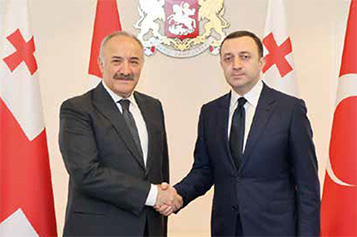 By Eugene KOGAN, Tbilisi-based defence and security expert By Eugene KOGAN, Tbilisi-based defence and security expert
In a nutshell, friendly relations between Georgia and Turkey are not a deterrent against potential Russian aggression against Georgia. Russia can always impose a blockade of Georgia’s Black Sea coast by using its naval assets in Sevastopol, Crimea and Ochamchire in occupied Abkhazia, thereby effectively ‘strangling’ the nascent Georgian Coast Guard. However, despite being somewhat politically marginalised by the West, Turkey remains a crucial partner for Georgia.
Georgian–Turkish relations are in essence cordial but not equal. Georgia’s Prime Minister, Irakli Garibashvili, is viewed as a junior partner in the relationship with President Recep Tayyip Erdoğan. For Georgia, Turkey represents an important partner in the volatile South Caucasus region. At the same time, enjoying friendly relations with Georgia as a transit country for oil, gas and cargo trains from Azerbaijan to Turkey, known as the Baku-Tbilisi-Kars (BTK) railway, is important for Turkey. Moreover, cargo transferred by road from Russia and Azerbaijan via Georgia to Turkey is a basic necessity. Bilateral relations are mainly focused on the economy and, occasionally, the Turkish military donates or sells military equipment to the Georgian Defence Forces (GDF). READ MORE
US-Turkey Relations: Biden Navigates Difficulties with Erdogan 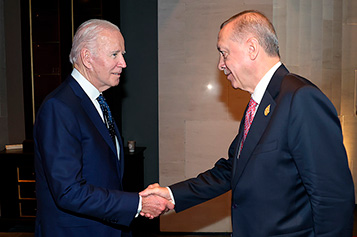 By Eugene KOGAN, Tbilisi-based defence and security expert By Eugene KOGAN, Tbilisi-based defence and security expert
Since the inauguration of President Biden in January 2021, the US administration has kept its relationship with Turkey to a bare minimum. For the Biden administration, the issue of human rights in Turkey remains very much on the agenda while for President Erdoğan, the issue seems to be a lower priority for his administration. Such behaviour infuriates not just Biden administration officials but also members of the House and the Senate. This has resulted in the Turkish president not being invited to Washington. Perhaps the two sides can each be blamed for their current relationship; however, Erdoğan is maintaining his course and appears unbothered by the consequences. For his part, Biden is keeping his cool despite a number of divergences in interests of the US and Turkey. READ MORE
Turkey’s Pivot West Disrupts Relations With Russia
 By Fuad SHAHBAZOV, Baku-based independent regional security and defence analyst By Fuad SHAHBAZOV, Baku-based independent regional security and defence analyst
On July 9, Turkey freed the commanders of the well-known Ukrainian Azov regiment after months of hosting them as a part of a deal with Russia. The fighters surrendered to Russian forces after weeks of brutal siege and resistance at the Azovstal Iron and Steel Works in Mariupol, even after the rest of the city had fallen following Russia’s devastating and relentless assaults. Ankara’s surprise move came during Ukrainian President Volodymyr Zelenskyy’s first official visit to Turkey since the Russian invasion in February 2022 to meet his counterpart, President Recep Tayyip Erdogan, and discuss the possibilities of deepening their strategic partnership. Amid rhetoric on expanding the two countries’ cooperation in defense and security, Erdogan also declared, “Ukraine deserves to be a NATO [North Atlantic Treaty Organization] member”.
READ MORE
Iran and Saudi Arabia in SCO: A Strategic Shift in Gulf Alliances
By Fuad SHAHBAZOV, Baku-based independent regional security and defence analyst
Despite international pressure and sanctions, Iran has leveraged its strategic alliances with Russia and China to secure membership in the SCO, providing an additional platform to mitigate isolation and strengthen ties. This development, coupled with the potential inclusion of Saudi Arabia following its diplomatic normalization with Iran, signifies a strategic shift in Eurasian alliances with broader implications for global geopolitics and the balance of power.
On July 4, 2023, the Shanghai Cooperation Organization (SCO) leaders held a virtual summit focusing on multipolarity and territorial sovereignty. A significant summit highlight was Iran’s induction into the organization after months of negotiations. Iran had been keen to join the SCO despite escalating international pressure and sanctions due to its failure to finalize a new nuclear deal and its open alignment with Russia during the Ukraine invasion. Although not officially involved in the military offensive, Iran supported Russia by providing indigenously manufactured Shaheed loitering munitions known as kamikaze drones.
Iran’s support for Russia arrived at a pivotal time, considering Russia’s tactical setbacks in Ukraine. However, this assistance placed Tehran under increased strain from Western powers, significantly impacting ongoing nuclear negotiations. Despite this, the strong partnership between Moscow and Tehran facilitated Iran’s full membership in the SCO.
READ MORE
Voices from the Saint Petersburg International Economic Forum 2023  By Yeghia TASHJIAN, Beirut-based regional analyst and researcher, columnist, "The Armenian Weekly” By Yeghia TASHJIAN, Beirut-based regional analyst and researcher, columnist, "The Armenian Weekly”
I had the opportunity to participate in a program organized by the “Friends for Leadership” to attend the 2023 Saint Petersburg International Economic Forum. Thousands of delegates mostly from Latin America, Africa, and Asia attended the forum alongside heads of state, diplomats, and businessmen. Interestingly, the UAE had the “special guest” status and anyone could feel its cultural, economic, and political presence in the forum. Delegates were anxious to be informed of the details of the new agreements signed between Russia and other countries, Russia’s President Vladimir Putin’s remarks and attend dozens of sessions and panels related to the BRICS, Eurasian Economic Union (EAEU), International North-South Transport Corridor, and North-South trade. I had the opportunity to closely identify Russia’s post-Ukraine war foreign policy priorities, its geo-economic interests in the Middle East, and the challenges of the emerging multipolar world system.
READ MORE
Escalation of Water Conflict: Iran and Afghanistan on the Brink
By Fuad SHAHBAZOV, Baku-based independent regional security and defence analyst
Rising tensions between Iran and Afghanistan, sparked by territorial and water disputes, are at a critical juncture following a border incident resulting in deaths on both sides. While armed conflict seems unlikely due to the two nations’ relative military strength and political instability, the water scarcity problem, and the possible intervention of external actors like China underscore the necessity for diplomatic dialogue.
On May 27, 2023, a volatile situation erupted along the Iran-Afghanistan border, leading to the unfortunate deaths of two Iranian border guards and one Taliban fighter. This incident, near a border post, drastically intensified the already burgeoning tensions between these two nations Following contentious border incidents, both sides voiced solid and bitter accusations. However, several experts have interpreted this ongoing discord’s root cause as territorial and water disputes. The issue of water scarcity has steadily morphed into a significant challenge for Iran, causing friction with its neighbours. READ MORE
Russia, INSTC and Regional Trade Interconnectivity By Yeghia TASHJIAN, Beirut-based regional analyst and researcher, columnist, "The Armenian Weekly”
The International North-South Transport Corridor (INSTC), a 7,200 kilometre model of ship network, rail and road project, was initiated in 2000 by Russia, Iran and India to facilitate trade between India, Russia and Europe. Azerbaijan, Armenia and other countries joined the initiative in 2005. This transport corridor aims to reduce the delivery time of cargo from India to Russia and Northern Europe to the Persian Gulf and beyond. Compared to the sea route via the Suez Canal, this route’s distance shrinks by more than half, which brings the term and cost of transportation down. If the present delivery time on this route is over six weeks, it is expected to decrease to three weeks through this corridor.
In my March 2021 analysis “Armenia and India’s Vision of ‘North-South Corridor’: A Strategy or a ‘Pipe Dream?’” I warned that Armenia’s inability to play an active transit role between Russia/Europe and Iran/India will isolate the republic from regional trade. Between 2005-2018, Armenia did little to finalize the north-south strategic highway connecting its northern border to the southern border, mainly due to public corruption and carelessness.
READ MORE
What Next after Erdogan’s Victory? By Benyamin POGHOSYAN, PhD, Chairman, Center for Political and Economic Strategic Studies
The presidential and parliamentary elections in Turkey were perhaps the most anticipated political events of 2023. There was a feeling among politicians, experts, and academicians that the 21-year rule of Erdogan may end. Given the transition of the global order, the Russia–West confrontation, and the prominent role of Turkey in shaping the balance of power in multiple regions stretching from the Middle East to Central Asia and the Eastern Mediterranean, the foreign policy choices of Turkey are of utmost importance for all global actors.
Erdogan’s efforts to pull Turkey out from its usual role of junior partner of the US and transform the country into an independent regional player has significantly deteriorated Turkey – West relations. The US support to Kurdish forces in northeastern Syria, the purchase of Russian S-400 air defense systems, the suspicions in Turkey about potential American involvement in the July 2016 botched military coup attempt, rejection of Turkey’s request to extradite Fethullah Gülen, and Turkey’s reluctance to agree to the NATO membership of Sweden and Finland, brought US–Turkey relations to their lowest point since the end of the Cold War. Turkey’s position on the Russia – Ukraine war also did not fully satisfy the Americans. Turkey supports Ukraine economically and militarily, but Turkey rejects calls to decrease its economic relationship with Russia, while playing a crucial role simultaneously in organizing exports to Russia.
READ MORE
Azerbaijan’s energy diplomacy pivots to the Balkans
By Fuad SHAHBAZOV, Baku-based independent regional security and defence analyst
Azerbaijan has adjusted its foreign policy agenda to target the Balkan region that is more vulnerable to the energy crisis than the states of Central and Western Europe.
Energy has long been the core element of Azerbaijan's pragmatic foreign policy, and recently it gained more impetus as European nations sought additional energy suppliers to replace Russian fossil fuel exports. Although the EU’s leading member countries are able to compensate for energy shortages by using energy reserves, employing alternative energy sources and importing additional gas volumes from alternative suppliers, the less developed Balkan states are struggling to adapt to the energy deficit. Azerbaijan has adjusted its foreign policy agenda to target the Balkan region that is more vulnerable to the energy crisis than the states of Central and Western Europe. READ MORE
Israel and Azerbaijan: Trusted Friends and Reliable Partners 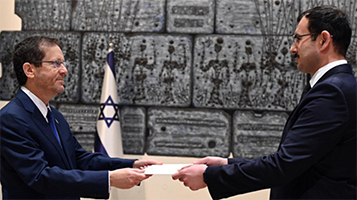 By Eugene KOGAN, Tbilisi-based defence and security expert By Eugene KOGAN, Tbilisi-based defence and security expert
Israeli-Azerbaijani relations are based on two main pillars: patient and cordial political relations as well as defence cooperation and arms sales. While the former reached a more intensive level this year, with the opening of an Azerbaijani embassy in Tel Aviv in late March, the latter pillar of the relationship was well developed long before, as Israel became Azerbaijan’s largest weapons supplier.
After decades of keeping a low diplomatic profile vis-à-vis Israel, in November 2022 the Azerbaijani parliament approved a bill on opening an embassy in Tel Aviv. This was a historic decision as, until then, Azerbaijan had consistently rejected Israeli overtures to send a permanent ambassador, despite the opening of an Israeli embassy in Baku in August 1993. It took almost 30 years for Azerbaijan to reciprocate since the country’s leadership did not want to alienate other Muslim-majority states or provoke the Iranian authorities, who blamed Israel for worsening relations along the Baku-Tehran axis. However, in the wake of the 2020 signing of the Abraham Accords on diplomatic normalization between Israel and Bahrain, Morocco, Sudan, and the United Arab Emirates, followed by the exchange of Israeli and Turkish ambassadors two years later, Azerbaijan’s President Ilham Aliyev felt that the time was right to follow suit. READ MORE
A Political DEPREM? The Impact of the Earthquake on Turkiye’s Domestic Politics By Yeghia TASHJIAN, Beirut-based regional analyst and researcher, columnist, "The Armenian Weekly”
2023 marks the centennial of the establishment of the Republic of Turkey, when the Turkish Grand National Assembly led by Mustafa Kemal Atatürk proclaimed the establishment of the republic and the abolishment of the Caliphate that ruled Ottoman Turks for six centuries. For decades, the Kemalists and military-backed governments ruled Türkiye with a secular iron hand. It wasn’t until 2002, when the conservative Justice and Development Party (AKP) came to power that Kemalists’ monopoly on power was challenged, ending decades of unstable coalition governments. AKP’s early years were relatively peaceful, as the country experienced fast economic growth and continued openness to the West. However, as the authorities began facing domestic and regional challenges, illiberal democracy started to consolidate itself in Türkiye. In 2013, protests erupted in opposition to building a shopping mall in Istanbul’s Gezi Park. The government violently cracked down on the movement and began limiting civil liberties and curtailing press freedoms. Moreover, a failed coup attempt in 2016 consolidated authoritarianism in the country.
READ MORE
The Georgian Perspective on Geopolitical Changes in the Caucasus  By Eugene KOGAN, Tbilisi-based defence and security expert By Eugene KOGAN, Tbilisi-based defence and security expert
Georgia borders Armenia, Azerbaijan, Russia, and Turkey. It remains a transit hub for oil and gas pipelines originating in Azerbaijan and a road hub for goods coming from Iran via Armenia to the European Union (EU), from Armenia and travelling to Russia, and from Turkey and travelling to Russia and Azerbaijan. As a result, changes that are taking place in the Caucasus due to the Russian war against Ukraine are directly affecting Georgia. Russia as a gatekeeper in the South Caucasus is less able to defend its interests in the region and that results in the ongoing skirmishes between Armenia and Azerbaijan, Iranian military exercises on the border with Azerbaijan, and reciprocal Azerbaijani-Turkish exercises. Thus far, Georgia has kept itself out of the conflict and has even tried to play the role of mediator in the conflict between Armenia and Azerbaijan, but to no avail, since Georgia is not considered a powerful enough conflict mediator. READ MORE
From Syria to Nagorno-Karabakh: Assessing Russo-Turkish ‘Co-opetition’ By Yeghia TASHJIAN, Beirut-based regional analyst and researcher, columnist, "The Armenian Weekly”
On a diplomatic level, Turkey tried to launch “Astana style” diplomatic measures to address Nagorno-Karabakh. However, given the fact that the conflict was taking place in the post-Soviet space, Russia failed to see much incentive in engaging in a bilateral track with Turkey in the form of a new “Astana style” process where Turkey and Russia were going to be equal partners, addressing a conflict in Russia’s “backyard”.
The year 2022 witnessed intensified dialogues between top Syrian and Turkish officials. These kicked off with an August meeting in Damascus between Ali Mamlouk, the Head of the National Security Bureau of the Ba’ath Party and a Special Security Advisor to Syrian President Bashar al-Assad, and Hakan Fidan, the Head of Turkiye’s National Intelligence Organization (MIT). They concluded with a tripartite December meeting in Moscow, where Russian Defence Minister Sergei Shoigu hosted his Syrian and Turkish colleagues Ali Mahmoud Abbas and Hulusi Akar (remarkably, Ali Mamlouk and Hakan Fidan were also present). Those meetings prompted world media and political experts to speculate about an “unthinkable” Syrian-Turkish rapprochement becoming “thinkable”.
READ MORE
Baku-Tbilisi-Kars Railway: An Example of “Matching Model Relations”  By Nuray Alekberli, Researcher, Strategic Studies Consulting Company, Baku By Nuray Alekberli, Researcher, Strategic Studies Consulting Company, Baku
In August 2022, Azerbaijan, Turkey and Georgia have signed an "Agreement amongst three countries on preliminary information exchange for the facilitation of transit customs procedures within the framework of the Baku-Tbilisi-Kars (BTK) railway project" (az.trend.az, 19 August). This agreement aimed at simplifying customs procedures and accelerating border crossing procedures within the framework of the BTK railway project through organizing an electronic exchange of initial information about goods (report.az, 18 August 2022). Therefore, somehow it plays the role of a new breath from a technical point of view to remove obstacles and speed up trade and economic relations between Asian markets and Europe. READ MORE.
Lachin Remains an Obstacle for the Resumption of Armenia-Azerbaijan Negotiations By Benyamin POGHOSYAN, PhD, Chairman, Center for Political and Economic Strategic Studies
For the last weeks Armenia-Azerbaijan negotiations on a peaceful normalisation of relations appeared stalled. The stand-off with Azerbaijani activists on the Lachin Corridor continues to hinder progress. The US initiative to organize a Pashinyan – Aliyev meeting at the latest Munich Security Conference was "a step in the right direction". It gave a new breath of life to the negotiation process, and efforts are underway to revive the Brussels format and organize the fifth Pashinyan – Aliyev meeting in Brussels with the participation of the President of the European Council, Charles Michel.
After the brief momentum in Armenia – Azerbaijan negotiations in late September - early October 2022, the peace process seemed to stall. Assessing what went wrong after the 6 October 2022 Prague meeting is challenging. However, the Sochi summit held on 31 October and the meeting between foreign ministers held in Washington on 7 November did not add optimism to the future of the negotiation process. […]
Nevertheless, Armenia and Azerbaijan continued to work on the draft of the peace treaty, exchanging suggestions and ideas, and Yerevan sent its version of the final document to Azerbaijan and the OSCE Minsk Group co-chair states in mid-February. READ MORE
|
|




 In Progress
