What Aliyev’s Reaction to the Airplane Crash Tells Us about Azerbaijan’s Relations with the West
 By Vasif HUSEYNOV, PhD, Head of Department, AIR Center, Adjunct Lecturer, ADA and Khazar Universities, Baku By Vasif HUSEYNOV, PhD, Head of Department, AIR Center, Adjunct Lecturer, ADA and Khazar Universities, Baku
On December 30, Germany’s Der Spiegel, a publication often perceived as critical and biased against Azerbaijan – similar to many other German media outlets – reported on Azerbaijani President Ilham Aliyev’s reaction to Russia’s handling of a recent aeroplane crash crisis between the two countries. The publication noted, “Aliyev’s reaction is a testament to the increased weight of his country.” It continued, “Aliyev called the previous statements from the Russian side ‘nonsensical,’ ‘absurd,’ and ‘stupid.’ He spoke of attempts to cover up the situation and made it clear that with his apology, Putin had fulfilled only one of several conditions that Baku had demanded of Moscow.” For Der Spiegel, it appeared surprising that a relatively small country in Russia’s neighbourhood – often dismissed in the West as part of Moscow’s “backyard” – could stand up assertively against perceived injustices and demand its rights. READ MORE
Georgia’s Post-Election Turmoil: Scenarios for the Future and Regional Consequences  By Eugene KOGAN, Tbilisi-based defence and security expert By Eugene KOGAN, Tbilisi-based defence and security expert
Georgian parliamentary elections on 26 October 2024 have been highly contested with the opposition claiming that their win was stolen from them by the incumbent Georgian Dream party. As a result, the opposition initiated a legal procedure, demanded new elections and started peaceful protests against the election result, apparently to no avail. On 16 November, Georgia’s Central Election Commission validated the results of October’s highly contested elections, despite weeks of protests by the opposition and accusations of widespread fraud and Russian interference that were refuted by the Kremlin. This AIES Comment provides a perspective based on a combination of issues that highlight not just a divided but also a traumatised Georgian society that remembers the August 2008 war and is not ready to fight Russia again nor to deal with potential Russian interference.
READ MORE
New Azerbaijan-Iran Railway Agreement Grapples With Regional Tensions
 By Fuad Shahbazov, Baku-based independent regional security and defence analyst By Fuad Shahbazov, Baku-based independent regional security and defence analyst
On October 15, Chairman of Azerbaijan Railways Rovshan Rustamov arrived in Tehran to meet his Iranian counterpart Jabbar Ali Zakeri Sardroudi to discuss the construction of a railway line linking Azerbaijan’s East Zangezur region and its Nakhchivan exclave through Iran. The meeting came amid intensive diplomatic negotiations between Azerbaijan and Iran regarding the Aras Corridor transit route linking Azerbaijan to Nakhchivan and further to Türkiye via Iran after a period of silence and diplomatic rifts between the two neighbors. The Aras Corridor project, strategically significant for both Baku and Tehran, emerged following Azerbaijan’s persistent efforts after the 2020 Karabakh War to establish regional communication lines, particularly a land route, through Armenia’s Syunik province to Nakhchivan and Türkiye, known as the Zangezur Corridor. The ongoing confrontation between Azerbaijan and Armenia over the land route through Syunik province has been a major point of contention, delaying the signing of a final peace treaty between Baku and Yerevan. READ MORE
- December 20, 2024 09:14AM
The Geopolitical Aspects of the India-Armenia Partnership

By Nvard CHALIKYAN, Research Fellow, APRI Armenia
Benyamin POGHOSYAN, PhD, Senior Research Fellow, APRI Armenia
Verej ISANIANS, Senior Editor, APRI Armenia
The South Caucasus is an important Eurasian political and economic hub, as its transport networks have the potential to facilitate travel across the continent. Control over the South Caucasus grants access to the Black Sea and the Caspian Sea basin, serving as a gateway to Central Asia and the Greater Middle East. Given its strategic importance, regional powers such as Russia, Türkiye, and Iran have vied for influence in the South Caucasus for centuries. In recent years, the demand for alternative transport corridors has surged amid the ongoing Ukraine war, sanctions on Russia, conflicts in the West Asia (Middle East) region, and the resulting difficulties with traditional supply routes such as the Suez Canal. Consequently, the South Caucasus has become increasingly important as a link between Asia, Europe, and Russia.
READ MORE
- December 20, 2024 09:08AM
The Multidimensional Foreign Policy of New Uzbekistan 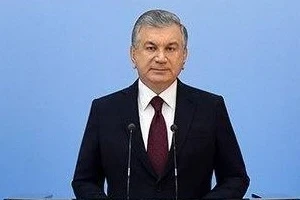 Bakhram Sotiboldiev,
Head of the Department of the Institute for Strategic and Regional Studies under the President of the Republic of Uzbekistan
In today's rapidly changing world, Uzbekistan confidently positions itself as one of the key players on the international stage. The country’s foreign policy, reinvigorated with the election of Shavkat Mirziyoyev as President in 2016, demonstrates impressive results, transforming the republic into a significant center for regional and global diplomacy. READ MORE
- December 16, 2024 08:56AM
In Uzbekistan, strengthening interethnic and interfaith solidarity is always a priority of state policy  Samariddin Sattorov,
Chief Researcher of the Institute for Strategic and Regional Studies under the President of the Republic of Uzbekistan
In recent years, geopolitical tensions have been increasing in different regions of the world, and interethnic conflicts and contradictions on religious grounds continue to worsen.
In the context of such instability, maintaining an open and constructive dialogue between different religious and cultural groups is becoming vital. Strengthening religious tolerance helps to create an atmosphere of mutual understanding, respect and generosity in society, which in turn alleviates tensions and prevents the escalation of conflicts. READ MORE
Uzbekistan exports its products to 115 countries 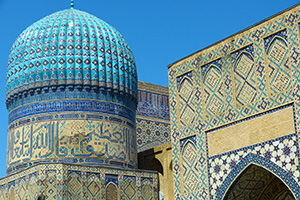 Export is a key driver of the economy, enabling the development of production, the creation of new jobs, and the growth of GDP. For this reason, every state seeks to support enterprises aiming to expand their exports to international markets. This article explores the comprehensive measures of direct support for exporters in Uzbekistan.
Export support in Uzbekistan is carried out systematically, strictly adhering to the goal set in the Uzbekistan 2030 Strategy — increasing the share of the private sector in exports to 60%.
Here are some indicative figures: from 2017 to 2023, Uzbekistan’s total exports reached $120 billion. In 2023 alone, export volumes amounted to $24 billion, marking a 64% increase compared to 2017.
READ MORE
Uzbekistan exports its products to 115 countries
Export is a key driver of the economy, enabling the development of production, the creation of new jobs, and the growth of GDP. For this reason, every state seeks to support enterprises aiming to expand their exports to international markets. This article explores the comprehensive measures of direct support for exporters in Uzbekistan.
Export support in Uzbekistan is carried out systematically, strictly adhering to the goal set in the Uzbekistan 2030 Strategy — increasing the share of the private sector in exports to 60%.
Here are some indicative figures: from 2017 to 2023, Uzbekistan’s total exports reached $120 billion. In 2023 alone, export volumes amounted to $24 billion, marking a 64% increase compared to 2017.
READ MORE
The Middle East Viewed from Eurasia: It’s All about Realpolitik  By Yeghia TASHJIAN, Beirut-based regional analyst and researcher, columnist, "The Armenian Weekly” By Yeghia TASHJIAN, Beirut-based regional analyst and researcher, columnist, "The Armenian Weekly”
In his book “The Tragedy of Great Power Politics” one of the world’s leading realist scholars John J. Mearsheimer argues that in an unbalanced multipolarity, the balance of power is so asymmetrically distributed in favour of one side, that other great powers have no choice but to come together to balance the hegemonic power. This is the only rational choice among other great powers. As such, this kind of international order is fragile and always prone to wars. Within this logic, many would assume that Eurasian powers such as Russia and China should have fully backed Iran or its non-state allies in the Middle East to defeat Israel, or at least contain US interests in the region. Interestingly, this is not the case. Moscow, Beijing, and New Delhi (another rising Eurasian power) are engaging in strategic balance and realpolitik to assess the situation, waiting for the outcome of the US presidential elections, and aiming to contain any spillover effect to their zone of influence.
READ MORE
- November 21, 2024 08:53AM
Türkiye-Russia Trade Declines Amid Western Sanctions
By Fuad Shahbazov, Baku-based independent regional security and defence analyst
Türkiye’s Statistics Department reported in July that exports to Russia had shrunk by 28 percent from the previous year due to continuous pressure from US sanctions against Russia. The value of these exports reached only $4.16 billion in the first quarter of 2024, representing a decline from a peak of $5.80 billion the previous year. Imports surged in 2021 to a peak of $27.7 billion just before the outbreak of Russia’s war in Ukraine, and have since fallen, though they still remain far above 2020 levels. Since Russia’s invasion, the West has imposed harsh economic sanctions on the country to exert pressure on the country. Since then, however, Moscow has gone to enormous effort to circumvent those sanctions and maintain international trade. In this regard, Türkiye, a long-time Russian energy importer, has become an outlet for the Russian global economy. Turkish-Russian relations have fluctuated over the course of the war, as Türkiye tries to maintain a balanced position between the West and Russia, as well as with other regional players in the Middle East. READ MORE
- November 21, 2024 08:51AM
The Geopolitical Future of the South Caucasus Benyamin POGHOSYAN, PhD, Chairman, Center for Political and Economic Strategic Studies
APRI Armenia, in cooperation with the Friedrich Naumann Foundation for Freedom Yerevan Office, conducted a research project from July to September 2024 to assess the geopolitical future of the South Caucasus. The report analysed the primary external factors influencing regional geopolitics. It assessed possible future developments in the South Caucasus, focusing on Armenian foreign policy diversification, the prospects of Armenia–Azerbaijan negotiations, the possible future of Georgian foreign policy, and Azerbaijan’s quest for a new foreign policy vision after the military takeover of Nagorno-Karabakh and the forced displacement of its Armenian population in September 2023.
READ MORE
- November 21, 2024 08:47AM
Uzbekistan on the way to a sustainable future: environmental initiatives and international cooperation
On November 11-13, President of Uzbekistan Shavkat Mirziyoyev is taking part in the World Summit on Combating Climate Change at the 29th session of the Conference of the Parties to the UN Framework Convention on Climate Change, which will be held in Baku.
Delegations from almost 200 countries at the level of heads of state, government and ministers, representatives of international organizations, NGOs, expert, scientific and social circles are expected to participate in the conference. READ MORE
- November 12, 2024 07:25AM
What the President of Uzbekistan regularly talks about with entrepreneurs of the country
Dilafruz Khusanova,
Head of the Press Service of the Chamber of Commerce and Industry of Uzbekistan
Agriculture is one of the leading sectors of Uzbekistan’s economy.
The annual open Dialogue of President Shavkat Mirziyoyev with entrepreneurs, which has already become a tradition, once again gave impetus to new ideas and projects for representatives of all business categories. This year, discussions at the main platform in the world of Uzbek business took place on August 20 in Nukus. At the event, the Head of State announced new initiatives in five areas. READ MORE
“Green” development of New Uzbekistan and the fight against climate change
Lola Rakhmanbaeva,
Advisor to the Minister of Ecology, Environmental Protection, and Climate Change on Information Policy- Press Secretary
Agriculture is one of the leading sectors of Uzbekistan’s economy.
As a country with unique natural resources and rich cultural heritage, Uzbekistan is increasingly aware of the need for active action in the fight against climate change. The country is taking a number of measures and initiatives aimed at achieving sustainable and green development, which plays a key role in global efforts to mitigate the effects of climate change. READ MORE
Putin’s Visit to Baku Stirs up Iran-Russia Tensions on Zangezur Corridor  By Vasif HUSEYNOV, PhD, Head of Department, AIR Center, Adjunct Lecturer, ADA and Khazar Universities, Baku By Vasif HUSEYNOV, PhD, Head of Department, AIR Center, Adjunct Lecturer, ADA and Khazar Universities, Baku
On August 18–19, Russian President Vladimir Putin paid a two-day visit to Azerbaijan. This marked the first state visit by a Russian president to the South Caucasian republic and only the second visit in the bilateral relationship since former Azerbaijani President Heydar Aliyev’s trip to Moscow in 2002. Contrary to expectations from local observers, the visit did not yield any significant agreements or binding political and economic arrangements. A few announcements were made regarding future joint initiatives, including cooperation on food security, labour inspections, the establishment of a Russian-Azerbaijani university, and the joint production of oil tankers. An agreement was also reached to expand the partnership between Russia’s public joint-stock company (PJSC) Gazprom and the State Oil Company of the Republic of Azerbaijan (SOCAR) . Gazprom CEO Alexey Miller revealed that the two sides agreed to broaden their “multifaceted strategic partnership,” particularly concerning the International North-South Transportation Corridor (INSTC) project. He also mentioned the planned signing of a comprehensive scientific and technical cooperation program in September. While few details were disclosed, this marked their first public reference to the INSTC project, about which little is currently known. Putin’s visit to Azerbaijan demonstrates how Russia seeks to maintain its influence in the region, which could lead to neighbouring states, such as Iran and Armenia, feeling threatened.
READ MORE
Is the Balkan Region Israel’s Newfound Interest?
By Fuad Shahbazov, Baku-based independent regional security and defence analyst
Israeli President Isaac Herzog concluded his historic first visit to Albania in September, shortly after his first-ever trip to Serbia, where both sides agreed to deepen bilateral cooperation amid Israel's extending military campaign against Hamas and Hezbollah in Southern Lebanon. Although the recent intensive diplomatic dialogue between Israel and Balkan states is gaining more impetus, it is not a new phenomenon. In the last five years, much has been done to ensure Israel’s expanding diplomatic, security, and economic ties with the Balkans, particularly with Albania and Serbia. In light of the worsening geopolitical tensions in the Middle East after the Hamas attack on Israel in October 2023 and Israel’s large-scale military campaign in Gaza and Southern Lebanon, Tel Aviv sought to build new alliances and partnerships at a critical time. READ MORE
Türkiye Demonstrates Increased Interest in BRICS Membership
By Fuad Shahbazov, Baku-based independent regional security and defence analyst
On June 11, Turkish Foreign Minister Hakan Fidan attended a session of the BRICS group (a loose political-economic grouping originally consisting of Brazil, Russia, India, China, and South Africa) in Moscow. While there, he met with Russian President Vladimir Putin, Foreign Minister Sergei Lavrov, and Russian Security Council Secretary Sergei Shoigu. During the face-to-face meeting with Putin, Fidan discussed bilateral economic and political relations, focusing on the geopolitical turmoil in the Middle East caused by the war in Gaza. Putin vowed to “fully support” Turkish membership in BRICS and build stronger ties to facilitate further economic cooperation. Fidan’s visit to Russia came shortly after he visited China, where he reiterated Ankara’s willingness to join BRICS and the Shanghai Cooperation Organization (SCO). These pronouncements have raised eyebrows in the West. US Ambassador to Türkiye Jeff Flake declared that Türkiye’s place is “in the West” and voiced his hope that Ankara would decide against joining the bloc. READ MORE
Strengthening the rights of citizens in the area of freedom of receiving and disseminating information in the new Uzbekistan
Karine Javakova,
Head of the Department of State and Legal Disciplines and Ensuring Human Rights of the Academy of the Ministry of Internal Affairs of the Republic of Uzbekistan, Doctor of Philosophy, Professor
Uzbekistan has created a solid legal framework to ensure freedom of speech and information, as well as the development of the media, improvement of the legal basis for the activities and protection of the professional rights of journalists. Considering that the liberalization of the information sphere and its development are priority tasks in the construction of the New Uzbekistan, after the constitutional reform, the articles devoted to these rights were significantly expanded. READ MORE
New Uzbekistan: human rights and parliamentary elections
A.Kh. Saidov,
First Deputy Speaker of the Legislative Chamber of the Oliy Majlis of the Republic of Uzbekistan, Director of the National Center of the Republic of Uzbekistan for Human Rights
The modern economic and democratic systems are designed to uphold the rights and freedoms of every individual. As is widely acknowledged, there is no universal model for democratic development; it must evolve based on each country's unique conditions and the needs of its people, avoiding rigid formulas. READ MORE
US and EU in the South Caucasus: Active Engagement, Uncertain Future By Benyamin POGHOSYAN, PhD, Chairman, Center for Political and Economic Strategic Studies
The 2020 Nagorno-Karabakh war and the onset of the Russia-Ukraine conflict in February 2022 have dramatically disrupted the status quo in the South Caucasus, thrusting the region into the center of regional and global power rivalries. To varying degrees, Russia, the United States, the European Union, Turkey, Iran, Israel, France, India, China, and Pakistan are involved in the South Caucasus, creating a complex nexus of overlapping and diverging interests shaping the region’s geopolitical present and future. In recent years, the United States and the European Union have increased their presence in the South Caucasus. However, potential change in leadership in Washington and the shifting priorities in the forthcoming EU legislative cycle could significantly alter their engagement in the region. The Biden Administration has pursued active engagement in the South Caucasus. The United States has been one of the main mediators in Armenia-Azerbaijan negotiations, organizing several meetings between Armenian and Azerbaijani foreign ministers in Washington from 2022-2024 and the meeting between Prime Minister Nikol Pashinyan and President Ilham Aliyev in February 2023 in Munich.
READ MORE
Uzbekistan’s renewed electoral system a key factor in the advancement of representative democracy Shuhrat Bafayev,
Chairman of the Committee for Democratic Institutions, Nongovernmental Organizations and Citizens’ Self-Government Bodies, Legislative Chamber of the Oliy Majlis of the Republic of Uzbekistan
Over the years of independent development Uzbekistan firmly guided by the principles of universal, equal and direct suffrage in secret voting, has progressively implemented international electoral standards into its electoral legislation. In 2017, in his first Address to the Parliament, the President of Uzbekistan Shavkat Mirziyoyev suggested that the current national electoral legislation does not ensure its harmonization and proposed to develop an Electoral Code that meets international norms and standards. Thus, the Electoral Code was adopted in 2019, incorporating more than 30 new democratic norms for organizing and conducting election processes. The approval of the Code marked the dawn of a new stage in the development of representative democracy in the country. READ MORE
The awakening lion: the era of renewal  Hey, great Turan, land of lions! Hey, great Turan, land of lions!
What has become of you? What are these days you endure now?
Oh, glorious cradle of Genghis, Timur, Oghuz, and Attila!
Where have the esteemed seats you once held gone?..
Abdurauf Fitrat
An American politician once said of the current life and fate of the Central Asian region: ‘They are neither post-Soviet nor post-communist countries now’.
Today no specialist knowledge is needed to understand this idea, which suggests that such labels are outdated in the research community. For example, ten to fifteen years ago the political behaviour of Central Asian societies – neighbours for thousands of years – was prone to national separatism, mutual dislike and latent hostility, but today they have undergone a remarkable transformation. Ideologues and ordinary Central Asians only a couple years ago endeavoured to prove their superiority, their antiquity and, for these very reasons, their greater belonging to the historical and cultural heritage of the region. Though they still might hurl some sharp insults at each other, now they have become united neighbours.
READ MORE
UNESCO General Conference to be held in Samarkand, Uzbekistan 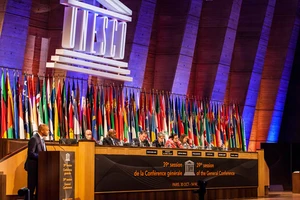 The 43rd UNESCO General Conference is scheduled to take place in Samarkand in 2025. The 43rd UNESCO General Conference is scheduled to take place in Samarkand in 2025.
This marks the first time Uzbekistan will host the biennial event. Historically, these conferences have primarily been hosted at UNESCO's headquarters in Paris since 1986. However, there have been eight exceptions, with meetings held in cities like Mexico City (1947), Beirut (1948), Florence (1950), Montevideo (1954), New Delhi (1956), Nairobi (1976), Belgrade (1980), and Sofia (1985).
READ MORE
CERR: IMF Estimates Uzbekistan's GDP at $101.6 Billion According to the IMF's assessment, the nominal GDP of the Republic of Uzbekistan in 2023 increased by 125.6 trillion sums ($10.7 billion) and amounted to 1,192.2 trillion sums ($101.6 billion).
CERR hosted a discussion among experts and academics regarding a study conducted by the Statistics Agency in collaboration with the IMF. The primary goal of this study was to assess the size of the unobserved economy in Uzbekistan and examine its impact on other macroeconomic indicators. READ MORE
|
|




 In Progress

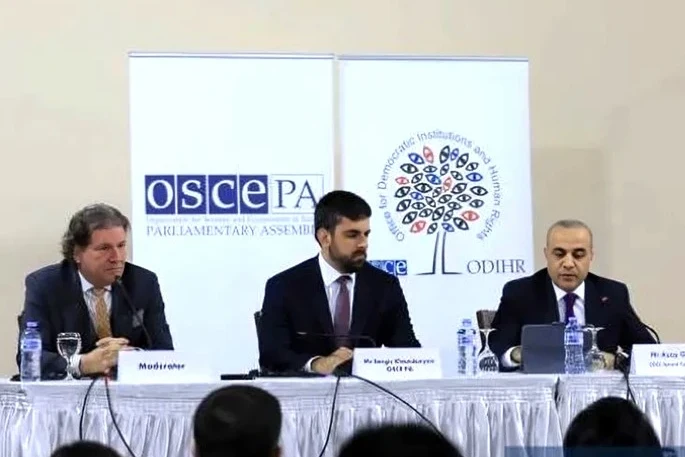 Tashkent hosted a press conference of international observer missions representing the Organization for Security and Cooperation in Europe (OSCE) structures at the October 27 elections.