Europe embraces Nord Stream expansion
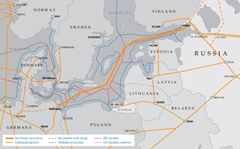 By Igor Alexeev By Igor Alexeev
Russian journalist and blogger for Strategic Culture Foundation and Route Magazine. He writes on the oil and gas sector, Eurasian energy security and shipping industries in the Arctic.
European countries, including the Netherlands, Finland and the United Kingdom expressed their interest in the expansion of Nord Stream. The third and fourth strings of the pipeline enjoy the highest level of political support in Europe. As a result Nord Stream will be the cornerstone of European energy security in the decades to come.
Nord Stream Fact Sheet
- Nord Stream is a twin pipeline system through the Baltic Sea transporting natural gas from Russia to Europe;
- It runs across the Baltic Sea waters from the Portovaya Bay (near Vyborg) to the German coast (near Greifswald) stretching over 1224 kilometers;
- The third and fourth lines are planned for annual capacities of 27.5 billion cubic meters each;
- The stakes in Nord Stream AG are distributed as follows: Gazprom holds 51%, Wintershall Holding and E.ON Ruhrgas – 15.5% each, Gasunie and GDF Suez – 9% each;
- Nord Stream will export gas from the Yuzhno-Russkoye oil and gas field, the Yamal Peninsula, Ob and Taz Bays and in perspective Shtokman field;
- The cost of construction of the first two sections was $7.4 billion.
READ MORE
- Tuesday, 7 May 2013, 07:58
South Stream Shapes European Energy Security, Nabucco Falls Behind 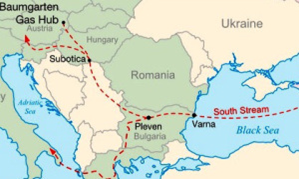 By Igor Alexeev By Igor Alexeev
Russian journalist and blogger for Strategic Culture Foundation and Route Magazine. He writes on the oil and gas sector, Eurasian energy security and shipping industries in the Arctic.
South Stream is an ambitious endeavor of Russia’s energy giant Gazprom to get direct access to the EU energy market. It is portrayed and criticized by some politicians in Europe as a “dangerous” gateway to a broader economic relationship with Moscow. Remarkably enough, Bulgaria, Serbia, Croatia, Slovenia and Hungary have one-by-one opted for the project.
The South Stream Fact Sheet
- Gas pipeline will be 1455 km long in Southern and Central Europe;
- 8500 people will be employed in its construction, with 770 at the operational level;
- Eight compression stations are to be set up in the main transit countries;
- The South Stream planned transport capacity may reach 63 billion cubic meters;
- The overall cost of the project is approximately $39 billion.
READ MORE
- Tuesday, 7 May 2013, 07:57
Political Advisory Briefing: Egypt 
By Claudia Nocente,
Research Associate Global Security
February 2013
Key points:
- Egypt’s new administration between international praise and domestic unrest
- Morsi assumes pharaonic powers in an attempt to rid Egypt of Mubarak judges
- The felool take another shot in Egyptian politics
- The generals remain silent
- The Egyptian economy sinks. READ MORE
- Tuesday, 12 February 2013, 14:21
The evolution of European and Euro-Atlantic policy making in the wider Black sea: EU and NATO attempts at strenghening regionalism in an area of strategic interest 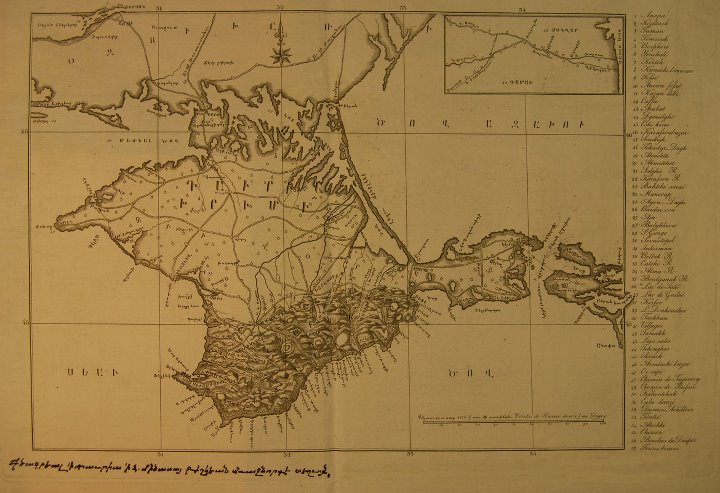
Debates about the geopolitical, geo-economic and strategic significance of the wider-Black Sea (WBS) region have become fashionable amongst Western policy makers and the international scholarly community since the end of the Cold War. While the Black Sea represented a “front line” in the stand-off between rival superpower blocks during an age which now seems to have slipped into the bygone days of our youth, the major geopolitical realignments which have taken place in Eurasia during the last two decades have evidently led to our “re-discovery” of one of the world’s most historically significant geostrategic playing fields. To read more click here.
- Wednesday, 1 August 2012, 20:27
What are the main obstacles for realisation of Southern Energy Corridor projects?  Martin Vladimirov, Martin Vladimirov,
Expert on Balkan-Black Sea External Relations and Energy Security
It has been two decades now since the southern energy corridor, linking the energy producing Caspian and Middle East regions with European consumers, was incepted. The 1990s proved to be very successful after the U.S. was able to fill in the geopolitical vacuum in the Wider Black Sea region and divert significant amounts of Caspian oil and gas away from Russia and in direction Europe. Yet the strong push for diversification of the European energy supply came to a sudden halt after 9/11. The U.S. changed its geopolitical priorities focusing on the destabilized Middle East and South Asia. Since then the EU has been painfully searching for alternatives in accessing the vast Caspian reserves. The Nabucco gas pipeline, which has been seen as the strategic continuation of the Baku-Tbilisi-Ceyhan (BTC) corridor, has remained only a distant dream as gas quantities available are simply not enough to fill the 31 billion cubic meters (bcm) pipeline capacity. READ MORE
- Tuesday, 12 June 2012, 09:29
North Africa after the Arab Spring Political Outlook for Morocco, Algeria, Tunisia, Libya and Egypt
Key points:
- Morocco’s monarchy seems to have survived the wind of change blowing on Arab countries last year and is
currently trying to hold on to its power by allowing reforms that partly reduce its absolute authority.
- The adoption of a new constitution and the victory of moderate and nationalist Islamic parties are signs that
mark Morocco’s gradual progress towards the demands of protesters who have taken the streets last year.
- However, civil society is not yet a primary actor in Moroccan politics and a widespread sense of communalism
is still missing.
- Tensions are still present in Morocco, due to the unresponsiveness of the central government regarding the
high levels of unemployment, structural corruption and deficiencies in welfare and health systems.
- Morocco has been praised by the international community for its counter-terrorism efforts, although major
security risks stem from the unresolved situation of West Sahara. High unemployment and persisting poverty,
however, continue to ensure fertile grounds for terrorist recruiters.
- New economic deals with the EU are expected to have a positive impact on the Moroccan economy, which is
of great interest for foreign direct investors.
READ MORE
- Tuesday, 8 May 2012, 06:09
Kofi Annan’s Syrian mission  Mikhail Roshchin Mikhail Roshchin
Former United Nations Secretary General Kofi Annan appears to have made some diplomatic strides in efforts to mediate the violent uprising in Syria. And Annan’s mission also has gained Russian support, which is a crucial key to an international consensus on how best to resolve the Syrian conflict. We are joined on the line with Mikhail Roshchin, a Senior Research Fellow at the Institute of Oriental Studies at the Russian Academy of Sciences. READ MORE
- Saturday, 31 March 2012, 05:58
Letter from Istanbul, by EGF International Expert on Energy Security, Mehmet Oguctu  by Mehmet Öğütçü by Mehmet Öğütçü
In his “Letter from Istanbul”, EGF International Expert on Energy Security, Mehmet Oguctu, argues that for the first time in several generations, there is a credible belief within Turkey that with the right policies, institutions and leadership, the country could well sit on the management board of the new world order by 2023, the centenary year of the founding of the modern Turkish state. Click here to read Mehmet Ogutcu’s letter
- Thursday, 8 March 2012, 08:14
|
|


 In Progress
