Authorization

Registration

Forgot password?


Forgot password

  • English version
  • Русская версия
EGF
The European Geopolitical Forum

Monday 19 January 2026

  • Registration
  • Login
  • About
    • Who we are
    • What we do
    • Issues we work on
    • EGF in Press
    • What makes us different?
    • Staff
    • Affiliated Experts
    • Why is geopolitics important?
    • Expert Presentations
    • EGF Partners
    • Contact Us
  • Forum
    • In progress
    • Archive
    • Terms & Rules
    • Registration
    • Help
  • Experts
  • Context
    • News
    • Publications
    • Events
    • Documents
    • Maps
    • Members Area
    • Book reviews
  • EGF Shop

Advanced Search

Discussion on Markets
  • In Progress
  • Archive
Economic Implications of the Washington Declaration for Azerbaijan and Armenia[Over]

Aytaс Mahammadova By Aytaс Mahammadova, Energy Security Expert affiliated with the Caspian-Alpine Society

The Washington Declaration of August 2025 marks a turning point for the South Caucasus, unlocking unprecedented economic opportunities through peace, open borders, and the TRIPP corridor. Enhanced trade, investment, and energy cooperation promise regional integration, job creation, and sustainable growth, positioning Azerbaijan, and Armenia as key hubs in global value chains.
The historic Washington Declaration of August 8, 2025, represents a transformative moment not only for regional stability but for the economic prosperity of the entire South Caucasus region. The establishment of sustainable peace between these two nations unlocks unprecedented economic opportunities that extend far beyond the immediate benefits of ending hostilities, creating a foundation for long-term economic integration, infrastructure development, and regional cooperation that could serve as a model for conflict resolution worldwide. The economic dividends of peace are multifaceted, encompassing direct benefits from increased foreign investment, enhanced trade relationships, and the opening of previously closed borders, as well as indirect benefits from improved regional stability, and the ability to redirect resources from defence to productive economic activities. READ MORE

  • October 31, 2025 04:52AM
Stories of Resilience and Innovation: Women in Afghanistan Under the Taliban[Over]

Shanthie Mariet D’SOUZA By Shanthie Mariet D’SOUZA, PhD, founder & president, Mantraya Institute for Strategic Studies (MISS)

The dominant narrative on women in Afghanistan, one that appears fairly regularly in international media, is a story of restrictions, denial, and loss of rights. Under the Taliban’s Islamic Emirate, the rights of women are under siege. It is arguably one of the key reasons why the regime’s yearning for broad international recognition is yet to actualize. However, what is often missed are the stories of courage, adaptation, and resilience by Afghan women who, while living within those structural constraints, are trying to make a difference. And to an extent, even the de facto Taliban authorities acknowledge this reality. Any hope that things would change for the better in the future must take note of these windows of opportunities and build on the agency exhibited by women inside Afghanistan who are navigating a complex terrain. READ MORE

  • October 7, 2025 19:31PM
The Port of Baku Facilitates Trans-Eurasian Commerce[Over]

Vusal GULIYEV By Vusal GULIYEV, Policy Advisor at the Center of Analysis of International Relations and Head of Shanghai Office at AZEGLOB Consulting Group

In December 2024, Azerbaijani President Ilham Aliyev authorized a $12 million investment into the Port of Baku to initiate the second phase of its expansion. This phase aims to increase the port’s annual cargo capacity from 15 million to 25 million tons. The region’s ongoing geopolitical instability, largely due to Russia’s full-scale invasion of Ukraine and the ensuing Western sanctions, has disrupted its established trade routes. These geopolitical upheavals underline the importance of Azerbaijan’s position between Europe and Asia as a transit state via the Port of Baku. Azerbaijan’s flagship port is capitalizing on its strategic location along the Silk Road to become a key hub for east–west connectivity. READ MORE

  • May 19, 2025 06:09AM
Uzbekistan’s bold steps towards WTO membership[Over]

Uzbekistan Qodir Djuraev,
Vice Chairman, Committee for International Affairs and Inter-parliamentary Relations, Legislative Chamber of Oliy Majlis of the Republic of Uzbekistan


The World Trade Organization (WTO) is the world’s largest and most influential trade and economic organization, renowned for its capacity to provide a comprehensive legal system for international trade. Critical documents enacted by the organization place responsibility on member states to conduct trade policy according to commonly agreed criteria. The aim is to help producers, exporters, and importers of goods and services operate successfully in the global market. READ MORE

  • August 9, 2024 08:34AM
The Emerging Azerbaijan-Gulf Partnership in Energy[Over]

Fuad Shahbazov By Fuad Shahbazov, Baku-based independent regional security and defence analyst

On January 8, Mohammad bin Zayed Al-Nahyan (MBZ), the leader of the United Arab Emirates (UAE), paid an official visit to Azerbaijan upon the invitation of his counterpart, President Ilham Aliyev. While MBZ’s visit to Baku signaled an era of deepening economic and energy ties between Azerbaijan and the UAE, it also reflected significant progress made in recent years. Indeed, the bilateral relationship has seen a raft of new projects and investments, particularly in the renewable energy sector. Notably, according to 2022 data, the Gulf countries are now among Azerbaijan’s top investment partners, though reciprocal investment remains low, compared to Azerbaijan’s other partners. READ MORE

  • March 20, 2024 07:40AM
MIIT: In Uzbekistan, the implementation of 7,656 projects with a total value of $11.6 billion is planned in 2024[Over]
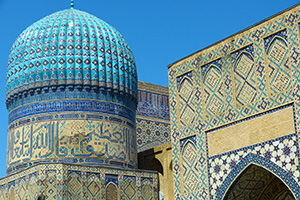
Uzbekistan One of the key principles of Uzbekistan's economic growth is the widespread and parallel regional development, based on a deep analysis of the socio-economic situation of the country’s regions, including the study of resource base, production, transport-logistics potential, and demand for various high-value-added products.

According to the Ministry of Investment, Industry and Trade, based on the analysis results, regional investment programs (RIP) are formed annually and approved by the Government Commission, implemented with the coordination and support of the Ministry of Investment, Industry, and Trade of the Republic of Uzbekistan. Considering the identification of new opportunities, the list of projects expands throughout the year. READ MORE

  • February 27, 2024 13:00PM
Geopolitical Change and the Re-Emergence of the Middle Corridor[Over]

Fuad Shahbazov By Fuad SHAHBAZOV, Baku-based independent regional security and defence analyst

As the war in Ukraine escalates and becomes more violent, global food and energy recession risks continue to increase, in turn further heightening the likelihood of a global economic recession. The new full-scale war revealed particular vulnerabilities of the Western block of countries, particularly on energy and supply chain management, due to their imposition of sanctions and export restrictions on Russia. Hence, new security challenges in Europe have forced the Western block of countries to explore new and safer trade routes while avoiding Russian territory. With the West’s search for new and safer trade routes, the Middle Corridor—a joint venture composed of Azerbaijan, Georgia, Kazakhstan, and Türkiye—has regained strategic prominence. READ MORE

  • November 19, 2022 06:23AM
Oil Market Collapse Damages the Iraqi Economy[Over]

Ahmed Mousa Jiyad By Ahmed Mousa Jiyad, Development Consultancy & Research, Norway

The collapse of the global oil market is undoubtedly unprecedented in its timing, magnitude, spread and devastating impacts across the globe. A strange and unpredicted association of a few, but major, factors had contributed to the current threat, causing much uncertainty and vulnerability on national and global levels. The revised "OPEC+" production cut agreed on 12 April prompted initial minor improvement in oil price, but there remains very many serious concerns that such reduction is much below what is needed to bring stability to and balances a saturated global oil market. READ MORE

  • September 30, 2020 11:10AM
New Russian Embargo - Collapse for Georgian Economy or Historic Chance?[Over]

By Nika Chitadze, PhD, Director, Center for International Studies, International Black Sea University, Tbilisi    By Nika Chitadze, PhD, Director, Center for International Studies, International Black Sea University, Tbilisi

By Putin's order, flights to Georgia from Russia will be prohibited from July 8. Based on past experience, it can be mentioned, that this step from the official Kremlin may not be a catastrophe for Georgia and on the contrary, to be a chance for the better future. The opening of the Russian market during the last several years and the partial settlement of relations with Russia was considered as a means of growth of Georgia's economy, but the developments since 2013 have proved contradictory. READ MORE

  • October 7, 2019 21:18PM
Armenia caught in a peculiar transit trap[Over]

Benyamin Poghosyan By Benyamin Poghosyan, PhD, Executive Director, Political Science Association of Armenia

The South Caucasus is facing an infrastructure development boom. However, Armenia is in stark isolation, with no major project passing through the country.
The launch of new transit routes and transport infrastructure are key topics widely discussed within the context of the geopolitics of the South Caucasus. Since the late 1990s several new pipelines, highways and railroads have been constructed traversing the region. Given the re-emergence of Russia as a key player in the post-Soviet space, since President Putin's ascendance to power in 2000, new transport corridors and large infrastructure projects have become factors in the wider competition between Russia and western countries. READ MORE

  • February 27, 2018 15:18PM
Russian Defence Industry in the Era of Putin[Over]
turkey Nato By Eugene Kogan, Tbilisi-based defence and security expert

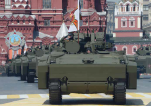
There is a preconceived and very inaccurate perception in the West at large that the Russian Military-Industrial Complex (MIC) has and will continue to have difficulties in the coming years because Russia faces domestic economic challenges caused by the low price of oil, continuing economic sanctions imposed by the EU and the US and the breakdown of defence industrial relations with Ukraine.
There is very little understanding in the West that for President Vladimir Putin the issue of rearmament and well-functioning of the MIC are of crucial importance, and that the Russian president is not ready to give up an inch in tenaciously pursuing this ambitious items on his domestic agenda. READ MORE

  • December 18, 2017 22:09PM
Any Optimism in the Chinese ‘Rooster Year'?[Over]

MEHMET ÖĞÜTÇÜ Mehmet Ogutcu
EGF Affiliated Expert


LONDON - As the world is preparing to leave 2016 behind as a year fraught with political surprises, financial crises and market volatility, governments and businesses including those in Turkey have started to set their eyes on what the next 12 months have in store for them politically and economically. 

Clearly, global risks are more elevated and more interconnected than we have ever seen before and demand a proactive and integrated response to address potential impacts. To refresh your memory, since the end of the Bretton Woods order in the 1970s, there have been serious financial crises every seven years over the past 40 years: 1987, 1997, 2007.  If you ask me whether the global crisis which has been brewing in the last few years could erupt in 2017, my answer would be yes. READ MORE

  • March 7, 2017 10:09AM
Stakeholder Consultation Round Two - Exploring the Role of Economic Initiatives as Peace Building Tools in the Nagorno-Karabakh Context [UPDATED][Over]

The second stakeholder consultation round in EGF's ongoing Nagorno-Karabakh research took place on 06-08 July 2014 in Berlin (Germany), including introduction of a post-conflict scenario building workshop. More than 30 experts from Armenia, Azerbaijan, and international partner NGOs and institutions attended this highly successful event, held in a constructive atmosphere of exchange. It has been the first step towards exploring the idea of a roadmap leading towards an economically integrated South Caucasus, and created a platform for exchange of information between Armenian and Azerbaijani experts. During the post-conflict scenario building workshop, regional participants simulated the negotiation of a roadmap for the implementation of economic components of a peace agreement built upon the Madrid principles, encompassing joint economic measures in areas such as energy, transport, trade, rehabilitation of the territories affected by the conflict, and the return of IDPs to their homeland.

Please click here for the summary of conclusions.
Please click here to see the agenda of the seminar, and participants’ biographies.
Please click here to see the EGF presentation on this research.

  • November 25, 2014 20:56PM
  • 2 comments
The EU-Russia Energy Partnership: Overcoming the Challenges[Over]

The energy trade between Russia and the countries of the European Union (EU) is of fundamental significance for the energy security of each party. Despite the close proximity of the EU-Russia energy relationship, however, the legal and political basis underpinning this relationship, particularly with regards to the gas trade, has proven itself inadequate in guaranteeing the energy security of both parties. Russia's recent announcement of its intention "of not becoming a member" of the Energy Charter Treaty, and new proposal for global energy security has created further uncertainty. While it is hoped that a new government in Kiev will lead to an improvement of Russian relations with Ukraine, Ukraine's national gas transportation operator remains in a difficult financial position and another gas crisis embroiling Ukraine, Russia and the EU, whilst hardly imminent, cannot be entirely ruled out.

Leading Russian and international energy professionals have shared their views on these energy policy challenges in an online session. Click here to go into the discussions or here to view forum summary

  • August 11, 2010 09:22AM
  • 39 comments

Documents

  • Joint Declaration on the Southern Gas Corridor
Choose region

Context

  • News How European leaders are reacting to EU-US trade deal
  • Publications Economic Implications of the Washington Declaration for Azerbaijan and Armenia
More

© 2006—2026 European Geopolitical Forum

  • Terms and Conditions
  • Privacy Policy
  • Contact us
