Big Armenian Decisions on Future Relations with Azerbaijan  By Benyamin Poghosyan, PhD, Chairman, Center for Political and Economic Strategic Studies By Benyamin Poghosyan, PhD, Chairman, Center for Political and Economic Strategic Studies
Relations with Azerbaijan will be the key foreign policy issue faced by the new government, regardless of the outcome of the forthcoming parliamentary elections. Big decisions on future relations with Azerbaijan will have to be taken soon after the new Armenian government is formed after the 20 June elections.
On 10 May 2021, the Armenian Parliament did not elect a prime minister for the second time in a row. According to the Armenian constitution, Parliament was dissolved, and the President signed a decree to hold snap parliamentary elections on 20 June 2021. It is not easy to predict the precise results of the elections. However, we may assume that Armenia will not have a single-party government after the elections. READ MORE
Armenia’s Reformers Struggle On  By Armen Grigoryan, Vice-president, Yerevan-based Centre for Policy Studies By Armen Grigoryan, Vice-president, Yerevan-based Centre for Policy Studies
After last year’s war, hopes that the 2018 revolution will fulfil its promise are fading – but it’s not too late for change.
“A stellar performance in one year is no guarantee of future success,” declared The Economist after Armenia held free and fair elections three years ago. The qualified praise was not without cause. It was always likely that Armenia’s attempts at democratic consolidation would be difficult, particularly because of the need for some unpopular reforms. Prior to the December 2018 parliamentary elections, observers noted that civic demobilisation – the influx of non-profit sector professionals to the government and their ensuing unwillingness to criticise it – could potentially undermine political pluralism, enable re-emergent authoritarianism, or foster the rise of right-wing populism. READ MORE
How Baku Undermines the Credibility of Russia's Mediation Mission 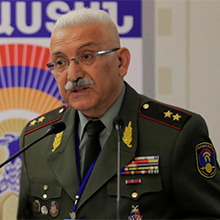 By Lieutenant General (R) Hayk Kotanjian, D.Sc, Full Professor (Strategic Security Studies) By Lieutenant General (R) Hayk Kotanjian, D.Sc, Full Professor (Strategic Security Studies)
Dear Colleagues, I have the honour to draw your attention to the deliberate steps taken by the Baku authorities to undermine the international community's confidence in Russia's mediation mission in the peaceful settlement of the Armenian-Azerbaijani relations and in the South Caucasus region. Another irrefutable evidence of this, among many facts, is the provocation of the Azerbaijani authorities with the violation of the Republic of Armenia’s state border regime, which defiantly followed right after the visit of Russian Foreign Minister Sergey Lavrov to Azerbaijan on May 10-11, 2021 and his departure from Baku. READ MORE
Russian-Turkish Relations: Moscow Calls the Tune 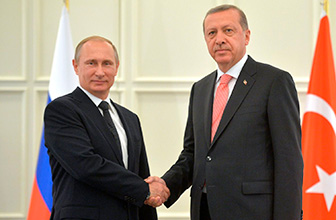 By Eugene Kogan, Tbilisi-based defence and security expert By Eugene Kogan, Tbilisi-based defence and security expert
The relationship between Russia and Turkey is an unequal one. Turkish President Recep Tayyip Erdoğan does not like playing second fiddle in the Russian-Turkish orchestra, conducted by Russian President Vladimir Putin. However, at every twist and turn, Putin holds more leverage over Erdogan than the other way around.
Putin will cooperate with Turkey as long as it suits Russian interests. He would quickly end the relationship if Turkey were to turn against him and tried to return to the Western fold from which it has drifted away ever since the failed coup on 15 July 2016. Erdoğan is aware of this and, as a result, is leading Turkey ever deeper into the Russian fold since the European Union, the United States and NATO all remain suspicious of him and his administration’s goals and are simply unwilling to assist him in his various military activities in Libya, Syria and, most recently, in the South Caucasus. READ MORE.
The EU Will Not Act as a Counterweight to Russia in Either Armenia or NKR By Benyamin Poghosyan, PhD, Chairman, Center for Political and Economic Strategic Studies
The EU is neither willing nor capable of countering Russia or Turkey in Armenia and Azerbaijan and will not make efforts to decrease Russian influence in Armenia and the unrecognised Nagorno Karabakh Republic.
EU-Armenia relations entered a new phase in 2009 when the EU launched its Eastern Partnership Initiative. Armenia successfully negotiated an Association Agreement with the EU and was going to sign it in autumn 2013. The growing tensions between Russia and the West forced Armenia to cancel the signature, not to ruin relations with its strategic ally. Armenia and the EU started a new round of negotiations in late 2014, culminating with the signature of the Comprehensive and Enhanced Partnership Agreement (CEPA) in November 2017. READ MORE
Beijing’s Long Road to the Gulf Region  By Fuad Shahbazov, Baku-based independent regional security and defence analyst By Fuad Shahbazov, Baku-based independent regional security and defence analyst
Energy cooperation has been a key aspect of growing bilateral cooperation between China and the Arab states of the Gulf region for the past several years. Since 1996, China has become a net importer of crude oil and, as the second‑largest energy consumer in the world after the United States, is now the third‑largest importer of oil after the United States and Japan. Therefore, it should not come as a surprise that China is eying a deep and strategic partnership with the states of a region that sits on top of the world’s largest proven crude oil and natural gas reserves. READ MORE
A Vote Largely Motivated by Hate in Armenia’s June ‘21 Elections By Benyamin Poghosyan, PhD, Chairman, Center for Political and Economic Strategic Studies
Former president Robert Kocharyan has emerged as the strongest challenger to prime minister Nikol Pashinyan in Armenian’s forthcoming parliamentary elections. However, most voters are simply motivated by their hate of one or the other.
Armenia is looking forward to the snap parliamentary elections scheduled for June 20, 2021. According to the preliminary agreement between the ruling "My step" faction and the two parliamentary opposition parties, prime minister Nikol Pashinyan will resign at the end of April, beginning of May; Parliament will not elect a new prime minister twice; and will thereafter be automatically dissolved as provided for by the Armenian constitution. READ MORE
US-Turkey Relations Are Difficult but Enduring By Benyamin Poghosyan, PhD, Chairman, Center for Political and Economic Strategic Studies
US-Turkey relations have passed through significant transformations in the last decade. President Obama started by seeking to build a "model partnership" with Turkey during his first term in office, but later he confronted Turkey over the growing authoritarianism of President Recep Tayyip Erdogan. The US decision to choose the Syrian Kurds as the main ally in their fight against ISIS in Syria triggered significant resentment from Turkey. Ankara perceives the Kurdish YPG fighters as a Syrian branch of Kurdistan Workers Party (PKK), which was identified as a terrorist organisation by both the US and Turkey. Ankara repeatedly warned the US "not to use terrorists to fight other terrorists". READ MORE
United States-Georgia Charter on Strategic Partnership: Defence and Security 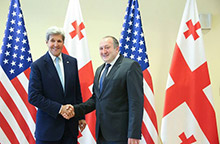 By Eugene Kogan, Tbilisi-based defence and security expert By Eugene Kogan, Tbilisi-based defence and security expert
Established in 2009, the United States-Georgia Charter on Strategic Partnership is based on four core pillars: Defense and Security Cooperation; Economic, Trade and Energy Cooperation; Strengthening Democracy; and Increasing People-to-People and Cultural Exchanges. As part of these two countries’ defence and security cooperation, the US provides financial support to the Georgian military, support for Georgia’s territorial defence and sovereignty, and, ultimately, for Georgia’s procurement of US defensive weapons. READ MORE
Key Challenges for the Armenian Foreign Policy in 2021 By Benyamin Poghosyan, PhD, Chairman, Center for Political and Economic Strategic Studies
2020 was disastrous for Armenian foreign policy. The defeat in the 2020 Karabakh war which resulted in the November 10 capitulation has sent shock waves across Armenia and Diaspora. Within only 44 days Armenia lost what it gained during the 1992 – 1994 first Karabakh war. Significantly reduced Nagorno Karabakh was effectively turned into a Russian protectorate and its current status can be compared with Karabakh status in 1989 when the Soviet Union put Karabakh under the direct Kremlin control through the establishment of the Special Committee led by Mr. Arkadi Volski. Now approximately 3000 square kilometres of territory with some 100,000 Armenians there is again de facto governed by the Kremlin, while the head of the Russian peacekeeping mission LtG Muradov had assumed the role of Volski. READ MORE
Perspectives of the US-China relations: Implications for Armenia By Benyamin Poghosyan, PhD, Chairman, Center for Political and Economic Strategic Studies
The four years of President Trump’s rule will most probably remain in the history of the United States as years of unprecedented turmoil. It started from Presidential executive orders to ban visas for several countries, continued with the tumultuous Russian investigation and impeachment process, almost permanent skirmishes with the key US allies, and ended up with an attack on the Capitol, suspension of the incumbent US President’s Twitter, Facebook and Instagram accounts, and the prospects of the second impeachment in the last days of the current administration. These extraordinary developments may force many to conclude that President Biden will make significant policy shifts in all major domestic and external issues. READ MORE
Why Armenians are Disappointed with NATO and the EU By Benyamin Poghosyan, PhD, Chairman, Center for Political and Economic Strategic Studies
Despite being firmly anchored in the Russian sphere of influence, Armenia has been quite successful in developing partner relations with the EU and NATO. In the early 1990s, Armenia joined the NATO Partnership for Peace program, and since 2005 bilateral relations have been developing within Individual Partnership Actions Plans. NATO played a key role in developing Armenia's peacekeeping potential and supported defence reforms, including defence education. Armenian peacekeepers participated in NATO-led operations in Iraq, Kosovo, and Afghanistan; Armenian troops took part in several NATO-led drills; and each year a "NATO Week" was held in Yerevan. READ MORE
- December 16, 2020 06:00AM
The True Nature of Sino-Russian Relations 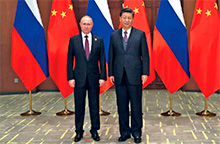 By Eugene Kogan, Tbilisi-based defence and security expert By Eugene Kogan, Tbilisi-based defence and security expert
While Russia is certainly viewed by Beijing as a reliable economic and trade partner with its oil, gas and arms exports to China, the Chinese do certainly not overemphasise this relationship. Instead, China sees Russia as a waning power with its vast territories, supported by armed forces and nuclear weapons, while at the same time prone to endemic corruption and unable to pursue meaningful economic, political and social reforms. READ MORE
- November 26, 2020 08:51AM
After the Elections, Georgia Needs to Walk Carefully on a Regional Tight Rope By Benyamin Poghosyan, PhD, Chairman, Center for Political and Economic Strategic Studies
On October 31, 2020, Parliamentary elections took place in Georgia. Since 2012 Georgian politics is often perceived as a two-men show - billionaire Bidzina Ivanishvili and former President Mikhail Saakashvili. In 2012, Mr. Ivanishvili made a surprisingly successful bid to win Parliamentary elections and ousted President Saakashvili's United National Movement (UNM) party from power. Saakashvili left Georgia in 2013 after the end of his second Presidential term and entered Ukrainian politics becoming the governor of the Odesa region. […] Meanwhile, several criminal investigations were opened against him in Georgia, and a court sentenced him in absentia to several years of imprisonment. Mr. Ivanishvili left the Prime Minister's position in late 2013, but continued to de facto govern Georgia through the ruling Georgian Dream (GD) party. READ MORE
- November 26, 2020 08:43AM
China, Russia and the EU: Forging a Cooperative Relationship  By Elkhan Nuriyev, PhD, Eastern Europe-Global Area (EEGA) fellow at Leipzig University By Elkhan Nuriyev, PhD, Eastern Europe-Global Area (EEGA) fellow at Leipzig University
For Russia, China’s Belt and Road Initiative is less of a threat than an opportunity. Moscow is receptive to the BRI’s ability to help create a multipolar world as it bolsters China’s global stance to counterbalance American hegemony. The Kremlin also views the BRI as a means to attract Chinese investment and foster renewed Russian influence over the European Union’s eastern zone. One of the important buckles of the Silk Road Economic Belt – the overland component of China’s ambitious Belt and Road Initiative (BRI) – is the Eastern Partnership (EaP) region, which represents an essential link between Asia and Europe. Developing this stage means enhancing commercial relations with six partner countries and an infusion of investment funds in several emerging-market economies. READ MORE
Iran–Turkey Rivalry in the Middle East: The Case of Lebanon By Benyamin Poghosyan, PhD, Chairman, Center for Political and Economic Strategic Studies
Iran and Turkey have a long history of rivalry in the Middle East. As two key regional powers, they were vying for influence and seeking to expand their spheres of influence. After WWII both Iran and Turkey had an anti-Soviet attitude and participated in the Central Treaty Organization with the key goal to contain the Soviet Union. The Cold War has halted bilateral competition, while the 1979 Islamic Revolution in Iran has significantly changed the regional balance of power. READ MORE
- September 23, 2020 08:48AM
Covid-19 Is an Important Test for Azerbaijani Unity 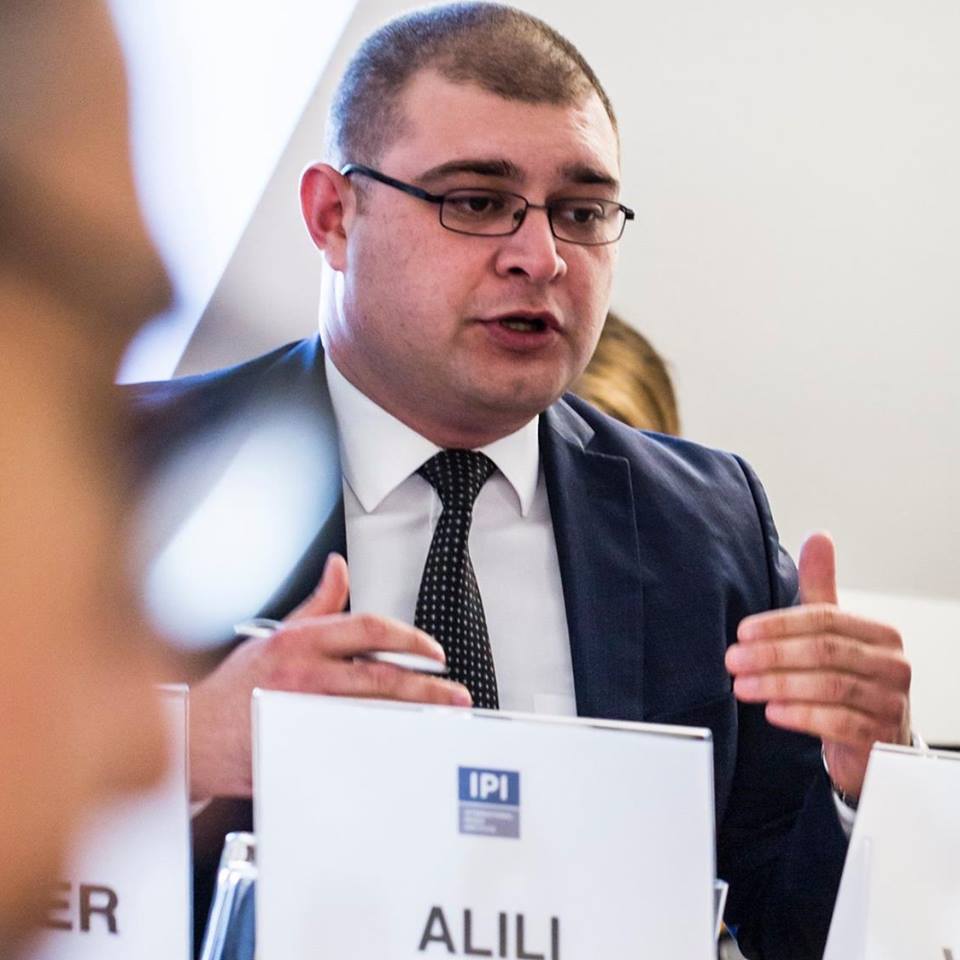 By Ahmad Alili, Head of Research, Caucasus Policy Analysis Center, Baku By Ahmad Alili, Head of Research, Caucasus Policy Analysis Center, Baku
The COVID-19 pandemic has created interesting qualitative and quantitative changes at the top of Azerbaijan's public agenda. Following the snap parliamentary elections in February, the newly elected Parliament, which includes a number of new faces, is tasked to address the challenges the country is facing. In a speech at the opening of the Parliament, President Aliyev sent clear messages to the public servants, political parties and youth. READ MORE
- September 12, 2020 10:32AM
Covid19 Outbreak - A Test to Global Governance 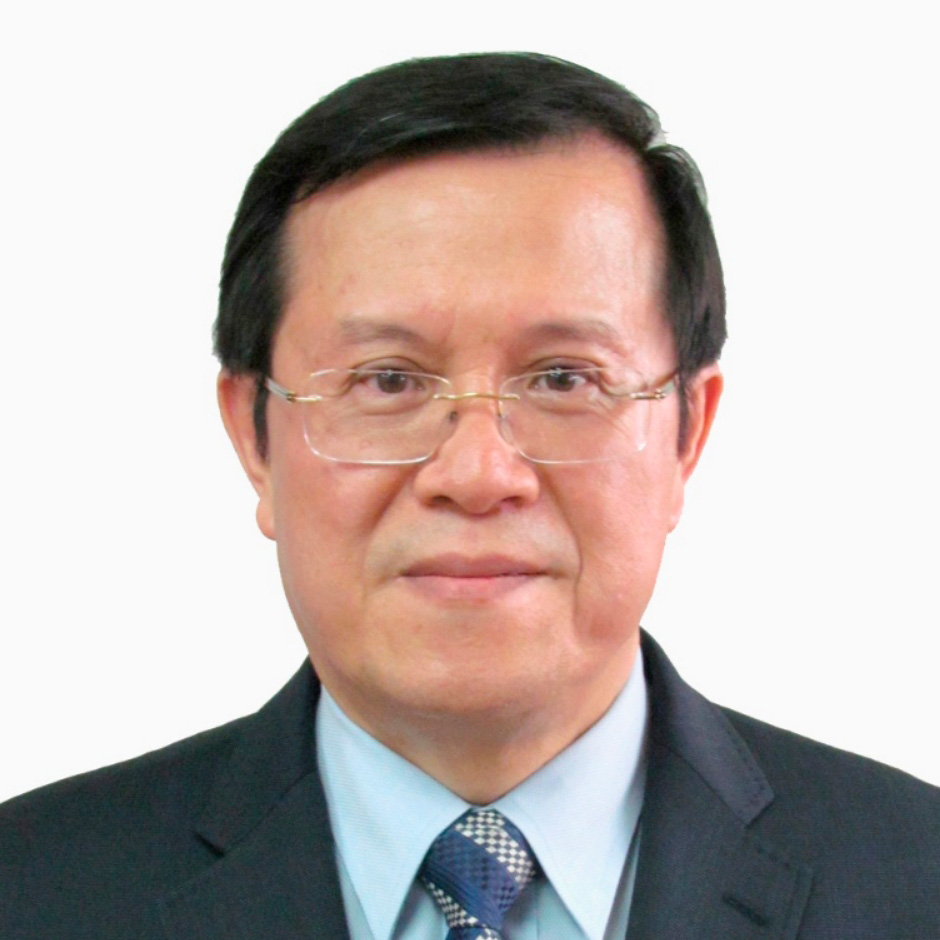 By Ong Tee Keat, Chairman, Center for New Inclusive Asia, Kuala Lumpur By Ong Tee Keat, Chairman, Center for New Inclusive Asia, Kuala Lumpur
On March 11th , 2020, Robert Redfield, the director of US Center for Disease Control & Prevention (CDC), dropped a proverbial bombshell when he testified to the US Congress admitting that numerous Corona virus deaths might have been miscategorized as flu. This belated admission of misdiagnosis has further lent credence to the earlier speculation that many pulmonary fibrosis cases which resulted in deaths due to patients' inability to breathe might in fact have been caused by the Corona virus. These cases, where symptoms might have been masked by attributions to e-cigarette or vaping, happened well before the virus outbreak in Wuhan, China. READ MORE.
US and Russian Involvement in Recent Domestic Upheavals in Georgia and Armenia By Benyamin Poghosyan, PhD, Chairman, Center for Political and Economic Strategic Studies
After the collapse of the Soviet Union the newly independent successor states faced numerous challenges: economic collapse, ethnic conflicts, and a rapid introduction of market reforms which ushered in large scale poverty as well as a quick enrichment of very small portion of the population. At the same time, there was a constant flow of Western experts and consultants who were embedded in almost all state institutions. In the first decade of independence there was a vague but widespread perception that the ultimate destination of former Soviet republics would be membership of the Euro-Atlantic institutions - EU and NATO. READ MORE
Russia and Eurasian Dilemmas  By Sergey Markedonov, Leading Researcher, MGIMO Institute
Future historians will definitely christen the year 2020 as the worldwide onset of coronavirus. It seems like tons of research articles and expert reports on the impact of the pandemic on the global economy and international political processes have been published. However, it is quite obvious that with the focus having been shifted towards the global perspective, the processes taking place in individual countries and regions appear to be falling out of sight. In the meantime, all of the conclusions drawn about the comprehensive implications of COVID-19 will remain somewhat schematic and generic without due consideration of their nuances and peculiarities. READ MORE
What’s Next in Karabakh… By Benyamin Poghosyan, PhD, Chairman, Center for Political and Economic Strategic Studies
The April 21, 2020 statements of Russian foreign Minister Lavrov brought back Nagorno Karabakh issue to the forefront of expert discussions. However, Russian foreign minister did not reveal something special or unexpected. He just reiterated what pundits following the conflict settlement process had already known. Since May 2018 negotiations have been based on a phased approach. It envisaged the return of some territories to Azerbaijan and indefinite postponement of the determination of the Nagorno Karabakh final status. READ MORE
Coronavirus Presents Armenia with Difficult Challenges By Benyamin Poghosyan, PhD, Chairman, Center for Political and Economic Strategic Studies
The COVID-19 pandemic has confronted governments with two massive simultaneous challenges. They have to contain the virus through large scale social distancing to prevent the uncontrolled growth of infected people and collapse of the health system. Meanwhile, each day that passes with economic activity virtually suspended puts an enormous pressure on businesses, and contributes to a possible social and financial collapse. Armenia faces the same dilemma. READ MORE
Coronavirus Presents Armenia with Difficult Challenges By Benyamin Poghosyan, PhD, Chairman, Center for Political and Economic Strategic Studies
The COVID-19 pandemic has confronted governments with two massive simultaneous challenges. They have to contain the virus through large scale social distancing to prevent the uncontrolled growth of infected people and collapse of the health system. Meanwhile, each day that passes with economic activity virtually suspended puts an enormous pressure on businesses, and contributes to a possible social and financial collapse. Armenia faces the same dilemma. READ MORE
The Karabakh Elections Go to Second Round By Benyamin Poghosyan, PhD, Chairman, Center for Political and Economic Strategic Studies
Elections were held in Nagorno-Karabakh on 31 March but since no candidate secured the necessary amount of votes a run-off is now expected between the two leading candidates in two weeks-time.
On March 31, 2020 Presidential and Parliamentary elections were held in Artsakh (Nagorno-Karabakh). Elections are not something new for Karabakh. Since the mid-1990s regular general as well as local elections have been held there. However, this time almost everything was different, such as the record number of candidates (14 running for the office of President and 10 parties and 2 blocks for Parliament) and the fully proportional electoral system. However, the key difference was the ambiguity of the position of Republic of Armenia's leadership. READ MORE
Rivals in the Midst of Domestic Transformations By Benyamin Poghosyan, PhD, Chairman, Center for Political and Economic Strategic Studies
On February 9, 2020 early parliamentary elections were held in Azerbaijan. According to preliminary results the ruling "New Azerbaijan" party has won a clear majority, while, some representatives of opposition, such as Erkin Gadirli from REAL, have entered the Parliament. However, the main speculation around the elections was not the name of the winner; few if any had expectations that ruling party may lose the elections, or that the process will be in full compliance with liberal democracy requirements. The key question is on the implications of these elections for the domestic balance of power in Azerbaijan, and the future development of the country. READ MORE
- February 25, 2020 21:11PM
|
|




 In Progress
