Exporting Power: Türkiye’s Defence Industry and the Politics of Strategic Autonomy[Over]
 By Fuad SHAHBAZOV, Baku-based independent regional security and defence analyst By Fuad SHAHBAZOV, Baku-based independent regional security and defence analyst
Over the last decade, the development of Turkey’s defence industry has become a crucial aspect of its soft power diplomacy in both regional and global politics. The country has made significant efforts to invest heavily in the development of its indigenous defence industry, reducing its dependence on imports and becoming a leading defence exporter in global markets. The rapidly changing regional and global geopolitical landscape, particularly after the Arab uprisings, has prompted Ankara to expand the country’s defence industry and reduce its reliance on overseas arms procurement and international supply chains. Since the ruling AKP government came to power, the country’s indigenous defence industry has undergone a significant transformation, steadily becoming the twelfth-largest arms exporter, according to the Stockholm International Peace Research Institute (SIPRI). Given the regional instability marked by violent uprisings and sectarian conflicts, Türkiye’s pursuit of defence industry development can be understood as a primarily threat-driven strategy. This approach reflects an effort to enhance national defence capabilities and ensure strategic autonomy in response to both external security challenges and internal vulnerabilities. READ MORE
- February 25, 2026 04:07AM
TRIPP/Zangezur Corridor Must Serve both Peace and Connectivity[Over]
 By Vasif HUSEYNOV, PhD, Head of Department, AIR Center, Adjunct Lecturer, ADA and Khazar Universities, Baku By Vasif HUSEYNOV, PhD, Head of Department, AIR Center, Adjunct Lecturer, ADA and Khazar Universities, Baku
The Zangezur Corridor – recently rebranded as the Trump Route for International Peace and Prosperity (TRIPP) — has become one of the most discussed and debated infrastructure projects in Eurasia. Stretching 43 kilometres through Armenia’s Syunik Province, it promises to reconnect mainland Azerbaijan with its Nakhichevan exclave and, through Türkiye, to Europe. It is a project of logistics and trade — a corridor capable of shortening cargo transit from Asia to Europe from 18 days to 12 along the Middle Corridor, reducing dependency on maritime choke points, and creating new opportunities for growth across the South Caucasus. In practice, however, the TRIPP risks becoming a stage for geopolitical contestation unless regional actors ensure that its purpose remains economic, inclusive, and depoliticized. READ MORE
Taking up Maritime Security Challenges and Stakes : A European Governance Mechanism?[Over]
 By Jean-Marie L’HUISSIERE, independent consultant and expert on European maritime policies
While the European Union (EU) benefits today from a large regulatory acquis and from a vast experience in maritime operations and programmes, efforts must go on with regard to coordination and consistency to overcome sectoral divisions and increase efficiency. Taking up challenges and stakes in the maritime domain requires to implement concretely the integration principles and the comprehensive approach, by coordinating the use of both civilian and military resources and capabilities available to the EU. […] An initiative aiming at establishing an inter-institutional mechanism for maritime governance at strategic level opens prospects in this direction. READ MORE
Russia’s Exclusion from Joint Caspian Drills Shows Regional Shift[Over]
By Fuad SHAHBAZOV, Baku-based independent regional security and defence analyst
On October 25, Azerbaijan participated in the Nusret-2025 Invitation Exercise, a joint military drill held in the Gulf of Soros in Türkiye. The exercise aimed to strengthen cooperation between the Turkish Naval Forces and the naval forces of friendly and allied countries, such as Azerbaijan. This is the latest example of Azerbaijan’s partnership with Türkiye in strengthening its naval forces. The Caucasus region, particularly the Caspian littoral, is emerging as a focal point of geopolitical competition amid rising tensions between Russia and the West. The Caspian, often referred to as a “Russian lake” during the Soviet era, has presented new challenges to Russia’s regional dominance since 2022. Until the 2020s, Russia remained the most powerful naval power in the Caspian Sea, despite Kazakhstan, Azerbaijan, and Iran systematically enhancing their naval capabilities over the past three decades. Russia’s full-scale invasion of Ukraine in 2022, as well as regional conflicts and reordering, have exacerbated Moscow’s declining leverage and hegemony in the South Caucasus and Central Asia. READ MORE
Russia Tests NATO’s Eastern Defences[Over]
 By Yunis GURBANOV, PhD, Senior Advisor at the AIR Center, Baku By Yunis GURBANOV, PhD, Senior Advisor at the AIR Center, Baku
In September, countries in the North Atlantic Treaty Organization (NATO) reported several incidents involving airspace violations. On September 10, 19 drones crossed into Polish territory, prompting Warsaw to call for Article 4 consultations. In a separate episode on September 19, three Russian MiG-31 jets briefly entered Estonian airspace before being intercepted by NATO air policing units. NATO Secretary-General Mark Rutte described these developments as concerning and emphasized that the Alliance remains attentive to safeguarding its members’ security. These incidents reflect an increasingly complex security environment along NATO’s eastern flank. The combination of drone activity and jet overflights highlights the challenges of managing airspace security in an era of hybrid threats. At the same time, the use of unmarked drones, short-duration incursions, and deactivated transponders complicates attribution and leaves room for differing interpretations of intent. READ MORE
- November 13, 2025 19:41PM
The Acceleration of Putin’s Shadow War[Over]
By Fuad SHAHBAZOV, Baku-based independent regional security and defence analyst
Air incursions, military drills, and escalating hybrid warfare hint at a new and alarming level of Russian aggression. Is it just for show?
Russia and Belarus held joint military drills in September. But the biennial exercises were overshadowed by something that may be more ominous — an outbreak of drone and aerial incursions across Poland and the Nordic-Baltic states that illustrate NATO members’ vulnerability to disabling attacks on fragile systems like civil airports. Zapad-2025 is an established Kremlin method of baring its military teeth to its near-neighbours. The official reason for September’s large-scale exercises is to test the ability of the two countries to repel an enemy attack, retake lost territory and secure the borders of what they refer to as their “Union State”. They have often triggered alarm across the NATO alliance, particularly in the Baltic states and Poland, which have a deep historical and recent sensitivity to Kremlin aggression. READ MORE
West Can’t Help Ukraine Win the War — but it Could Help End it[Over]  By Elkhan NURIYEV, PhD, Senior Fellow at the Alexander von Humboldt Foundation in Berlin By Elkhan NURIYEV, PhD, Senior Fellow at the Alexander von Humboldt Foundation in Berlin
As the war in Ukraine drags on for yet another year, a hard truth is becoming even harder to ignore: Military victory may no longer be a realistic objective for Kyiv — no matter how many billions the West sends, or how many Russian soldiers die. This isn’t a popular outlook in Washington or Brussels, where the assumption persists that enough aid and resolve will eventually break Moscow. But despite Ukraine’s extraordinary resilience and the West’s deep pockets, that outcome is looking increasingly unlikely. Rather, the war is hardening into a grinding stalemate — one that threatens to exhaust Ukraine, fracture Western unity and empower the very regime it was meant to weaken. The question Western policymakers must now confront is not whether Ukraine deserves support, but whether the current strategy is helping it win, or simply helping it survive long enough to lose more slowly. READ MORE
Kazakhstan Aims to Modernize Military Through Multi-Vector Diplomacy[Over]
By Fuad Shahbazov, Baku-based independent regional security and defence analyst
Kazakhstan has recently been making steps to improve its defence capabilities. In April 2025, the Kazakh Ministry of Defence confirmed that a legislative framework was established to regulate the Defence Industry Development Fund, which was created in December 2023. The new defence fund aims to acquire and manufacture domestically crucial military hardware, such as artillery ammunition, weapons systems, and combat modules. For this purpose, the Kazakh government plans to allocate approximately $265 million from the state budget. Earlier, on March 3, Kazakh Defence Minister Ruslan Zhaksylykov announced the establishment of a new defence industry centre at the only tank repair plant in Central Asia in the Eastern city of Semey. Zhaksylykov proclaimed that the new hub aims to strengthen “Kazakhstan’s self-sufficiency in defence production” through “expanding the ability to both maintain and manufacture crucial military technologies locally”. As the regional order in Eurasia shifts amid Russia’s war against Ukraine, Kazakhstan is opting to rely on its armed forces, domestic military resources, and international security partnership formats to counter any potential threat. READ MORE
Strategic pathways toward a credible endgame for Ukraine [Over] By Elkhan NURIYEV, PhD, Senior Fellow at the Mathias Corvinus Collegium Foundation in Budapest and Senior Fellow at the Alexander von Humboldt Foundation in Berlin
Just over two months into U.S. President Donald Trump’s second term, new uncertainties have begun to reshape the West’s approach toward the war in Ukraine. As the conflict grinds through its third year, signs of strategic drift have emerged across Western capitals. With battlefield momentum stalled, political divisions deepening, and public fatigue rising, the West now faces a narrowing window to reassess its goals—or risk drifting toward a scenario of prolonged stalemate and fractured unity. While former president Joe Biden framed the war as a broader fight for democracy and pledged open–ended support to Kyiv, Trump’s foreign policy instincts emphasize burden sharing, cost efficiency, and transactional diplomacy. These principles are already shaping Washington’s posture. Military aid packages have slowed, public rhetoric has shifted toward ending the war “quickly,” and U.S. diplomatic overtures increasingly hint at conditional support rather than blank checks. READ MORE
Strengthening the rights of citizens in the area of freedom of receiving and disseminating information in the New Uzbekistan[Over]  Karine Javakova,
Head of the Department of State and Legal Disciplines and Ensuring Human Rights of the Academy of the Ministry of Internal Affairs of the Republic of Uzbekistan, Doctor of Philosophy, Professor
Uzbekistan has created a solid legal framework to ensure freedom of speech and information, as well as the development of the media, improvement of the legal basis for the activities and protection of the professional rights of journalists. Considering that the liberalization of the information sphere and its development are priority tasks in the construction of the New Uzbekistan, after the constitutional reform, the articles devoted to these rights were significantly expanded. Thus, Article 33 of the Constitution of the Republic of Uzbekistan notes that everyone has the right to freedom of thought, speech and belief. Everyone has the right to seek, receive and disseminate any information. The state creates conditions for ensuring access to the global information network Internet. Restrictions on the right to search for, receive and disseminate information are allowed only in accordance with the law and only to the extent necessary to protect the constitutional order, public health, public morality, the rights and freedoms of others, ensure public safety and public order, and prevent the disclosure of state secrets or other secrets protected by law. READ MORE
Military Supplies to Armenia Escalate Tensions in South Caucasus[Over]  By Vasif HUSEYNOV, PhD, Head of Department, AIR Center, Adjunct Lecturer, ADA and Khazar Universities, Baku By Vasif HUSEYNOV, PhD, Head of Department, AIR Center, Adjunct Lecturer, ADA and Khazar Universities, Baku
On July 31, US Assistant Secretary of State for European and Eurasian Affairs James O’Brien reaffirmed Washington’s plans to establish a land trade route through Azerbaijan and Armenia. He stated that this route aims to offer Central Asian countries an alternative and reduce their reliance on Russia and China for access to global markets. In addition to his earlier remarks, O’Brien pointed out that part of this strategy is aimed to “create conditions” for Armenia to “distance itself from Russia”. According to him, Armenia is “almost completely dependent” on Russia for its economy and energy. Therefore, the United States supports Prime Minister Nikol Pashinyan’s bold steps in his diversification efforts. Armenia’s re-posturing is representative of a geopolitical shift occurring throughout the wider region as the three states of the South Caucasus move further away from Russian influence.
READ MORE
- September 13, 2024 14:14PM
A New and Technological Approach to Elections Begins[Over] The Central Election Commission held a meeting and a series of events today, July 26th. The primary agenda item was the preparation and high-level accomplishment of the upcoming elections for the Legislative Chamber of the Oliy Majlis and the Councils of People's Deputies in full compliance with the Constitution and laws.
According to Article 128 of the Constitution of the Republic of Uzbekistan, elections for the Legislative Chamber of the Oliy Majlis and the Councils of People's Deputies are scheduled to take place on the first Sunday of the third ten-day period of October in the year their term expires. Considering that the term of the deputies of the Legislative Chamber of the Oliy Majlis and the Councils of People's Deputies ends in 2024, the elections will be held on October 27th of this year, and the election campaign will begin on July 26th, as decided by the Central Election Commission. READ MORE
President Aliyev does not intend to sign a peace agreement with Armenia[Over]  By Benyamin POGHOSYAN, PhD, Chairman, Center for Political and Economic Strategic Studies By Benyamin POGHOSYAN, PhD, Chairman, Center for Political and Economic Strategic Studies
As war in Ukraine rages and the confrontation between Russia and the West continues unabated, a growing number of experts are speaking of the beginning of Cold War 2.0, pitting the West against Russia, China, Iran, and North Korea, the so-called “Axis of upheaval.” As with the original Cold War, the new one covers many areas of the globe, including Asia-Pacific, Africa, and the Middle East. The former Soviet Union remains the heart of this confrontation, and the South Caucasus is no exception. Strategically located between Russia, Turkey, and Iran, for the 25 years after the collapse of the Soviet Union the region was mainly the scene of competition between Russia and Turkey, with the first in the leading role. The last four years have brought significant changes in equilibrium. Azerbaijan transformed the status quo in the Nagorno-Karabakh conflict by defeating Armenia in the 2020 Nagorno-Karabakh War with the direct military involvement of Turkey.
READ MORE
Russian withdrawal from Karabakh allows Azerbaijan to strengthen its ties with its Turkic "family"[Over] By Vasif HUSEYNOV, PhD, Head of Department, AIR Center, Adjunct Lecturer, ADA and Khazar Universities, Baku
The geopolitics of the South Caucasus is as unpredictable as ever. Even as recently as the beginning of April, few, if any, would have imagined that Russia may withdraw its peacekeeping contingent from the Karabakh region of Azerbaijan anytime soon. Many observers were even sceptical about the possibility of their withdrawal in November 2025 – the date which was stipulated in the November 2020 trilateral statement as the potential but not fixed date for the ending of the peacekeeping mission of Russia. This skepticism was grounded in the understanding that for Russia, Karabakh holds paramount importance in the broader context of the South Caucasus.
READ MORE
What Is at Stake in the Tavush Region?[Over]  By Benyamin POGHOSYAN, PhD, Chairman, Center for Political and Economic Strategic Studies By Benyamin POGHOSYAN, PhD, Chairman, Center for Political and Economic Strategic Studies
Since Prime Minister Nikol Pashinyan’s March 18 visit to Voskepar and Kiranc villages in the Tavush region, discussions and debates have been underway in Armenia on the situation along the Armenia – Azerbaijan border in that region. The visit took place after the statement of the office of Azerbaijan’s Deputy Prime Minister Shahin Mustafayev, demanding the immediate return of “four non-enclave Azerbaijani villages’” located in Tavush along the Armenia – Azerbaijan border to Azerbaijan which were in principle covered in the demarcation and delimitation negotiations. During his meetings with villagers, the Armenian prime minister stated that “the process of delimitation and demarcation between Armenia and Azerbaijan was entering the practical stage.” Despite acknowledging that there were no agreements on maps and principles of the process and that Azerbaijan would not leave the Armenian territories currently under its control, the prime minister argued for withdrawing from those villages to avoid a new war. After these meetings, some representatives of the Armenian leadership, including the speaker of the National Assembly, started to state that those territories were not part of Armenia and should be returned to Azerbaijan.
READ MORE
Reflections on the Karabakh and Ukraine Wars[Over]  By Alan WHITEHORN, Professor Emeritus in Political Science, The Royal Military College of Canada By Alan WHITEHORN, Professor Emeritus in Political Science, The Royal Military College of Canada
As we contemplate our current era of ongoing pandemics and wars, it is useful to utilize a comparative framework. In a geopolitical strategic analysis of the 2020 Karabakh war and that of the ongoing 2022-2023 war in Ukraine, we have witnessed the continuing importance of the technological revolution in warfare. Newspaper headlines around the world have proclaimed the pivotal use of drones and satellite-based intelligence for targeting in both cases. In the 2020 war between Azerbaijan and Armenia over Nagorno-Karabakh and its surrounding territories, the extensive and critical use of Turkish and Israeli-made drones by Azerbaijan led to a swift and dramatic change in the military and geopolitical landscape in the South Caucasus. The widespread impact of drones was somewhat of a surprise to the Armenian armed forces. READ MORE
Ensuring women's rights is an integral part of the State gender policy in Uzbekistan[Over] Mahinora Mirkhamidova, associate professor of the department International law and Public law disciplines of the University of World Economy and Diplomacy
Today over two-thirds of the world's countries are participants in the UN Convention on the Elimination of All Forms of Discrimination Against Women (CEDAW) adopted in 1979. Ensuring women's rights is one of the 17 Sustainable Development Goals, goal 5 specifically aims at “Achieving gender equality and empowering all women and girls.” The issues of ensuring women's rights are reflected in the constitutions of almost all countries, entrenched in their legislation, and hold a significant place in national development plans and strategies.
READ MORE
Proprietary rights will be guaranteed in Uzbekistan[Over]  Avazbek Kholbekov, expert of the Development Strategy Center Avazbek Kholbekov, expert of the Development Strategy Center
Over the past five years in Uzbekistan, a number of laws have been adopted in our country to ensure the priority of private property and strengthen its legal protection.
Most importantly, based on the principle of "From Action Strategy to Development Strategy" there was adopted the "Development Strategy of New Uzbekistan for 2022-2026", as a logical continuation of Action Strategy. In the document, turning the principles of justice and the rule of law into the most basic and necessary condition for development in the country was defined as one of the most important directions. Several necessary objectives were envisaged for this.
READ MORE
The UN General Assembly unanimously adopted a resolution initiated by Uzbekistan on environmental challenges in Central Asia[Over] 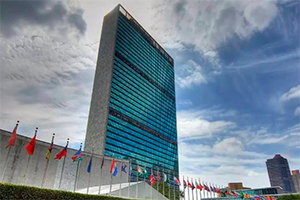 Qodir Djuraev, MP, Legislative Chamber of the Oliy Majlis of the Republic of Uzbekistan Qodir Djuraev, MP, Legislative Chamber of the Oliy Majlis of the Republic of Uzbekistan
The UN General Assembly unanimously adopted the resolution on "Central Asia in the face of environmental challenges: strengthening regional solidarity for the sake of sustainable development and prosperity".
The resolution initiated and proposed by Uzbekistan and unanimously adopted by the UN General Assembly highlights the pressing environmental challenges faced in Central Asia. This region, known for its diverse ecosystems and natural resources, has been grappling with various environmental issues that require immediate attention and joint collaborative efforts. The resolution serves as a significant step towards addressing these challenges and fostering sustainable development in the region.
READ MORE
Armenia and Azerbaijan Address Concerns Over Territorial Integrity[Over] By Vasif HUSEYNOV, PhD, Head of Department, AIR Center, Adjunct Lecturer, ADA and Khazar Universities, Baku
On January 19, Armenian Prime Minister Nikol Pashinyan called for a new constitution in a meeting with senior officials from the Armenian Ministry of Justice. Pashinyan asserted that Armenia needs “a new constitution, not constitutional changes,” adding that the new foundational document would make the country “more competitive and viable in the new geopolitical and regional environment” (Azatutyun.am, January 19). He highlighted that the new constitution would maintain the present parliamentary system and underscored “external security” and “internationally recognized sovereign territory” as the main issues to be addressed. Mutual respect for one another’s territorial integrity remains a sticking point in peace negotiations between Armenia and Azerbaijan. If Yerevan proceeds with Pashinyan’s proposal, the new constitution will eliminate certain hurdles to signing a peace treaty with Baku.
READ MORE
Gender equality in the civil service of Uzbekistan[Over] 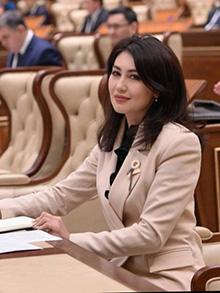 Farangiz Avazbekova, Chief inspector of the Agency for the Development of Public Service under the President of the Republic of Uzbekistan; Doctor of Philosophy (PhD) in Law Farangiz Avazbekova, Chief inspector of the Agency for the Development of Public Service under the President of the Republic of Uzbekistan; Doctor of Philosophy (PhD) in Law
The social and political activity of women and their participation in public administration bodies in the process of making important decisions are crucial for the development of the country. Sociological research has shown that women’s high efficiency, rapid and persistent decision-making, responsiveness to job completion, and prompt provision of executive discipline allow them to perform their duties effectively in the civil service.
READ MORE
What Next in Armenia – Azerbaijan Negotiations[Over] By Benyamin POGHOSYAN, PhD, Chairman, Center for Political and Economic Strategic Studies
In the late months of 2022 and 2023 there were intensive discussions about the possible signature of the Armenia – Azerbaijan peace agreement. Both international mediators and facilitators, as well as representatives of Armenia and Azerbaijan were making statements that a peace agreement signature is within reach. As we enter 2024, discussions are underway about the potential signature of the Armenia – Azerbaijan agreement in 2024. The December 7, 2023, bilateral statement on the release of Prisoners of War and Armenia’s support of the Azerbaijani bid to host the COP29 in Baku gave more impetus to these hopes. Some believe that the military takeover of Nagorno Karabakh by Azerbaijan in September 2023 made this perspective more realistic, especially as the Armenian government agreed not to include anything on Nagorno Karabakh in the peace agreement.
READ MORE
Armenia and Azerbaijan Conclude the Year With Hopeful Prospects for Peace[Over] By Vasif HUSEYNOV, PhD, Head of Department, AIR Center, Adjunct Lecturer, ADA and Khazar Universities, Baku
On December 13, Armenia and Azerbaijan exchanged prisoners that each side had detained at different times since the end of the Second Karabakh War in November 2020. This historic exchange was made possible thanks to a significant breakthrough between the two countries on December 7. Baku and Yerevan issued a joint statement announcing a list of confidence-building measures to normalize relations and reach a peace agreement. Azerbaijan agreed to release 32 Armenian servicemen as part of the agreement, and Armenia reciprocated by releasing two Azerbaijani soldiers. While a number of unresolved issues remain, the recent success in bilateral consultations has given new hope for a comprehensive peace agreement between the two sides.
READ MORE
How the Hamas-Israel War Impacts the South Caucasus[Over]
By Fuad SHAHBAZOV, Baku-based independent regional security and defence analyst
The war between Hamas and Israel war has triggered strong anti-Israel sentiments in the region and heightened fears of a broader conflict engulfing actors such as Egypt, Iran, Jordan, Lebanon, and Turkey. Worried that the conflict in Gaza could escalate into a regional confrontation, the US has dispatched two aircraft carrier strike groups within range, including additional troops and military advisors.
But alongside tough rhetoric, the violence in Gaza has renewed apparent pragmatism by important regional states such as Iran and Turkey. Turkish President Recep Tayyip Erdogan has openly slammed Israel's bombings of the Palestinian coastal enclave. On the other hand, Ankara has avoided issuing direct threats against Tel Aviv and, in an apparent unusual move, allegedly distanced itself from Hamas in the aftermath of the Palestinian movement’s surprise attack on Israel last month.
READ MORE
Azerbaijan’s New “Shopping List”[Over] By Benyamin POGHOSYAN, PhD, Chairman, Center for Political and Economic Strategic Studies
Since the launch of the first Artsakh (Nagorno-Karabakh) war in the 1990s, the region’s status has been at the core of the conflict. This issue was the primary focus of negotiations and different settlement options put forward by the OSCE Minsk Group—package solution, phased approach, Common State, Key West, Kazan document, Lavrov plan—which all tried to find a mutually acceptable solution for the status of Artsakh. At the end of the day, Azerbaijan decided to solve this issue by military force. Azerbaijan probably came to this decision in the early 2000s, hoping it could get more by deploying military force than by any negotiated solutions. Azerbaijan was cautiously waiting for the geopolitical window of opportunity, which appeared in 2020 as a combination of the COVID-19 pandemic, elections in the U.S. and growing misperceptions of Armenia-Russia relations after the 2018 Velvet Revolution.
READ MORE
- November 13, 2023 07:07AM
How the Military Escalation in Gaza Could Impact the South Caucasus[Over] 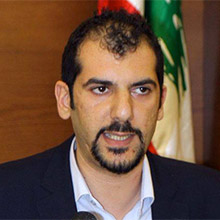 By Yeghia TASHJIAN, Beirut-based regional analyst and researcher, columnist, "The Armenian Weekly” By Yeghia TASHJIAN, Beirut-based regional analyst and researcher, columnist, "The Armenian Weekly”
On October 7, 2023, Palestinian Islamist militant group Hamas launched operation “Al-Aqsa Flood,” aiming to destroy the Israeli army positions near Gaza and capture as many soldiers as possible, in order to exchange them with the almost 7,000 Palestinians detained in Israeli prisons. The operation created a shockwave in Israeli society, killing more than 1,000 soldiers and civilians. As a result, Israelis started indiscriminately bombing Gaza, killing civilians and threatening ethnic cleansing through a land invasion. The danger that the escalation will turn into a regional conflict involving Iran and Hezbollah is high. Such a step would surely have devastating consequences for the region and a domino effect beyond the Middle East. If Israel, which is Azerbaijan’s military partner and Iran’s regional enemy, was involved in a war of attrition in Gaza or a regional escalation, it would become isolated from the events in the South Caucasus.
READ MORE
All-Encompassing Solutions are Necessary for Sustainable Peace between Armenia and Azerbaijan[Over] By Vasif HUSEYNOV, PhD, Head of Department, AIR Center, Adjunct Lecturer, ADA and Khazar Universities, Baku
On 28 September, the separatist regime illegally created by Armenia in the territories of Azerbaijan in early 1990s, and which presented itself as the “Nagorno-Karabakh Republic”, declared its dissolution by the end of 2023. Azerbaijan has quickly restored its sovereignty over the area that remained under the joint control of the separatists and Russia’s peacekeeping contingent following the 44-day war in 2020. This has been undoubtedly a major development not only for Azerbaijan but also for the entire South Caucasus. Many people both in the region and beyond agree that Baku and Yerevan are now much closer to a peace treaty as the crux of their decades-long conflict no longer exists.
It is important that the Armenian government shares this view and realizes the present opportunities for a real breakthrough. For instance, the speaker of the Armenian parliament Alen Simonian told Armenian public television on September 25 that “We are very close and have a historic opportunity to sign a peace agreement”. “Endless war is not beneficial for anyone”, he asserted.
READ MORE
|
|




 Archive