CERR: IMF Estimates Uzbekistan's GDP at $101.6 Billion 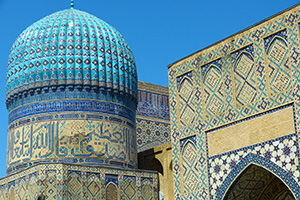 According to the IMF's assessment, the nominal GDP of the Republic of Uzbekistan in 2023 increased by 125.6 trillion sums ($10.7 billion) and amounted to 1,192.2 trillion sums ($101.6 billion). According to the IMF's assessment, the nominal GDP of the Republic of Uzbekistan in 2023 increased by 125.6 trillion sums ($10.7 billion) and amounted to 1,192.2 trillion sums ($101.6 billion).
CERR hosted a discussion among experts and academics regarding a study conducted by the Statistics Agency in collaboration with the IMF. The primary goal of this study was to assess the size of the unobserved economy in Uzbekistan and examine its impact on other macroeconomic indicators. READ MORE
What is behind the Azerbaijan–Pakistan love affair?  By Benyamin POGHOSYAN, PhD, Chairman, Center for Political and Economic Strategic Studies By Benyamin POGHOSYAN, PhD, Chairman, Center for Political and Economic Strategic Studies
Recently, Azerbaijan–Pakistan ties have grown significantly through economic and military-technical cooperation. Pakistan threw its full support behind Azerbaijan during the 2020 Nagorno-Karabakh war, supplying weapons and providing training for Azerbaijani special forces. When Azerbaijan claimed victory in November 2020, the streets of Baku were full of Pakistani flags. Relations grew closer still after 2020, with intensive negotiations to buy Pakistani-made military jets and supply Azerbaijani gas to Pakistan. They discussed a series of joint projects worth $2 billion, setting up a bilateral committee to develop the projects. Most importantly, President Aliyev expressed his full support for Pakistan on the issue of Kashmir, claiming that international law and justice are on the side of Pakistan.
READ MORE
Uzbekistan plans to increase exports of electrical products to Europe, countries of South Asia and the Middle East  Yuri Kutbitdinov, Yuri Kutbitdinov,
chief Research Officer of the Center for Economic Research and Reforms under the Administration of the President of the
Republic of Uzbekistan
There are about a thousand manufacturing enterprises operating in the electrical engineering sector of Uzbekistan, most of them small, producing over two thousand types of products. Almost all enterprises in the industry are privately owned. The total number of people employed in the industry exceeds 35,000.
The 76 largest enterprises in the industry, which produce over 90% of all electrical engineering products, are members of the Association of Electrical Engineering Manufacturers (UzEltechSanoat). Of these, 18 enterprises manufacture electrical wires and cables, 27 enterprises manufacture household appliances, and 32 enterprises manufacture power transformers and other electrical products.
READ MORE
Human dignity and the benefits of the people in New Uzbekistan – high values Khudoyberdi Khaknazarov
Doctor of History
It is not an exaggeration to say that in the historical conditions where humanity is going through a difficult period, where contradictions and conflicts are intensifying and seriously undermining stability, in the multi-ethnic New Uzbekistan, human dignity and the interests of the people are recognized as the highest values, and in this regard, it is becoming an example and model for many countries of the world.
Because sustainable development can be achieved first of all by valuing and honoring people, creating conditions for the population to live well today, and realizing the high trust and responsibility of the population for the future.
READ MORE
What does the India-Iran Chabahar port deal mean for Armenia?  By Yeghia TASHJIAN, Beirut-based regional analyst and researcher, columnist, "The Armenian Weekly” By Yeghia TASHJIAN, Beirut-based regional analyst and researcher, columnist, "The Armenian Weekly”
On May 13, 2024, Iran and India signed a historic deal under which New Delhi was granted the right to develop and operate the Iranian port of Chabahar on the Gulf of Oman. India has been eying this port for the past two decades to export goods to Iran, Afghanistan and Central Asian countries and bypass the Chinese-developed ports of Gwadar and Karachi in Pakistan. Commenting on the deal after the signing ceremony in Tehran, India’s Shipping Minister Sarbananda Sonowal said, “Chabahar Port’s significance transcends its role as a mere conduit between India and Iran; it serves as a vital trade artery connecting India with Afghanistan and Central Asian Countries.” Under this agreement, the Indian Ports Global Limited (IPGL) company will invest $120 million in the port with an additional $250 million in financing. Within this context, Indian Foreign Minister Subrahmanyam Jaishankar told reporters in Mumbai that this deal will open the path for new, larger investments to be made in the port.
READ MORE
Uzbekistan: the fight against corruption is a continuous process Nilufar Doniyorkhodjaeva,
Head of Department Development Strategy Center,
Tashkent, Uzbekistan
Uzbekistan has been undergoing a transformational journey since it changed political leadership in 2016. The nation is implementing extensive reforms aimed at spanning anti-corruption measures, business climate enhancements, judicial reforms, improving labour conditions, administrative efficiency, protection of human rights, and good governance.
READ MORE
The alternative scenarios facing the South Caucasus  By Benyamin POGHOSYAN, PhD, Chairman, Center for Political and Economic Strategic Studies By Benyamin POGHOSYAN, PhD, Chairman, Center for Political and Economic Strategic Studies
As the global order continues to morph into a more complex architecture with an array of global and regional powers, the geopolitical future of the South Caucasus hangs in the balance. The tectonic changes in the region of the last four years – the 2020 Nagorno-Karabakh war, the regional implications of the Russian invasion of Ukraine, the military takeover of Nagorno-Karabakh by Azerbaijan, and forced displacement of Armenians, the EU candidate status for Georgia and Georgia’s quest for multi-vector foreign policy including the establishment of strategic partnership with China, the limbo in Armenia–Azerbaijan negotiations, growing assertiveness of Azerbaijan and eventual move of Armenia towards closer cooperation with the EU and the US – all make the situation quite complex.
READ MORE
Gender Issues in Contemporary Uzbekistan Roxila Mardonkulovna Usmanova, Doctoral Student, Institute of Family and Gender Research, Republic of Uzbekistan
Special attention is being paid to further enhancing the status of women in the new Uzbek society and ensuring their rights as a priority value. Gender equality is recognized as a social phenomenon that permeates all aspects of the life and activities of society, encompassing politics, economics, law, ideology, culture, education, and science, shaping the dynamics between women and men. In the words of the President of the Republic of Uzbekistan, Shavkat Mirziyoev, "The stereotype formed in the minds of our people makes me think about many things. Traditionally, we perceive a woman first and foremost as a mother, a keeper of the family hearth. This is undoubtedly true. However, today not every woman should not be just an observer, she should be an active and proactive participant in the democratic changes taking place in the country." Therefore, it can be asserted without exaggeration that in recent years, increasing the political, social, and economic engagement of women in Uzbek society has emerged as a top priority of state policy, driven by the political will of the Uzbekistani leadership.
READ MORE
Trans-Afghan corridor: Uzbekistan's initiative serves the development of a larger region Yu. Imomova
Research fellow
Institute for Prospective International Studies
Under UWED
In recent years, the main principle of the foreign policy of the Republic of Uzbekistan has been the establishment of good neighborly relations, in particular, strengthening economic ties with Afghanistan, providing comprehensive assistance in preventing a humanitarian crisis in this country, implementing the Trans-Afghan railway project, cooperating on the Kosh-Tepa canal project, and other issues. Evidence supporting this perspective is the strategic focus of the Republic of Uzbekistan's development plan for 2022-2026, which emphasizes fostering comprehensive relations with Afghanistan and aiding its socio-economic revitalization.
READ MORE
Representative of Uzbekistan elected to UN Human Rights Committee for the first time in history On May 29, at the UN headquarters in New York, during the 40th session of the states parties to the International Covenant on Civil and Political Rights (ICCPR), elections were held for nine members of the Human Rights Committee (HRC) for the 2025-2028 term.
Representatives from 16 states, including Burundi, Georgia, Egypt, India, Spain, Cameroon, Côte d'Ivoire, Lithuania, Morocco, Paraguay, the Republic of Korea, North Macedonia, Togo, Uzbekistan, Croatia, Ethiopia, and South Africa, competed for the nine seats in the HRC.
READ MORE
Armenia and Azerbaijan Step Up Work on Peace Deal  By Vasif HUSEYNOV, PhD, Head of Department, AIR Center, Adjunct Lecturer, ADA and Khazar Universities, Baku By Vasif HUSEYNOV, PhD, Head of Department, AIR Center, Adjunct Lecturer, ADA and Khazar Universities, Baku
On May 10 and 11, the foreign ministers of Armenia and Azerbaijan, Ararat Mirzoyan and Jeyhun Bayramov, respectively, met for another round of bilateral peace negotiations in Almaty, Kazakhstan. It was the second meeting this year between the two sides after meeting in Berlin on February 28 and 29. The Almaty talks came after the initiation of the delimitation process on the Armenian-Azerbaijani interstate border, with the return of four non-enclave villages to Azerbaijan in April (see EDM, April 17, 23, May 14). The act was celebrated by some as the first instance in the post-Soviet era of a peaceful resolution in the long-standing territorial disputes between the two countries (Azertag.az, April 19; State.gov, April 28). The two parties hope to build on this progress and foster a constructive atmosphere during the talks in Almaty. These developments point to progress in the peace process between Armenia and Azerbaijan, demonstrating both sides’ willingness to pursue improved relations.
READ MORE
Border readjustment in Tavush, what’s next? By Yeghia TASHJIAN, Beirut-based regional analyst and researcher, columnist, "The Armenian Weekly”
On April 17, 2024, Armenia’s Prime Minister Nikol Pashinyan, at a meeting with the residents of Kirants village in the Tavush region, said that for the past 30 years, the residents have lived “in the conditions of lawlessness, and the time has come to put an end to this, to establish a rule of law” in the region. The PM added: “Our idea is for you not to say Azerbaijan is 50 meters away, but to say, wow, it is good that Azerbaijan is 50 meters away. We will trade there. We will build the economy there. Maybe we will build another checkpoint. Cars will come and go and pay the Republic of Armenia.” He later continued: “Now you can say to me: Do you 100-percent guarantee that you will do this? I will answer, I don’t guarantee 100-percent, but I know that by taking step by step, we will reach 90-percent or even more.” Azerbaijan insists that there are four bordering villages near Armenia’s Tavush and Azerbaijan’s Qazax region that must be ceded to Azerbaijan. Baku argues that these villages were taken by Armenian forces in the early 1990s.”
READ MORE
The Role of Foreign Actors in the Armenia-Azerbaijan Conflict  By Eugene KOGAN, Tbilisi-based defence and security expert By Eugene KOGAN, Tbilisi-based defence and security expert
This AIES Focus discusses the four major foreign actors in the conflict between Armenia and Azerbaijan within the time frame of the last 12 to 18 months. While Russia and Turkey are active and directly involved, China and India are implicitly but not explicitly involved in the conflict. As a result, the author tries to present and highlight the divergent and convergent perspectives of the foreign actors in the conflict. One of the major focal points of the conflict relates to what the Azerbaijani call the Zangezur corridor, and the Armenians perceive as a bone of contention. What is perhaps not least important to emphasise is that for Ilham Aliyev, the President of Azerbaijan, the corridor has a crucial role in the transportation link between Turkey, Azerbaijan and the Turkic States. As for Armenia and Iran, its neighbouring country, the establishment of such a corridor is perceived as an existential threat. READ MORE
Yerevan’s ‘Crossroads for Peace’ Remains Elusive By Vasif HUSEYNOV, PhD, Head of Department, AIR Center, Adjunct Lecturer, ADA and Khazar Universities, Baku
On April 5, European Commission President Ursula von der Leyen and US Secretary of State Antony Blinken expressed support for the “Crossroads for Peace” project of Armenian Prime Minister Nikol Pashinyan during a press conference before their meeting in Brussels. The project, which was presented to the public during the Armenian premier’s address at the Fourth Silk Road Forum in Tbilisi on October 26, 2023, envisions opening new transportation routes across Armenia with the hopes of transforming the country into a regional transit hub. The project calls for the opening of connections between Azerbaijan and Türkiye via Armenian territory and aims to incorporate these links into east-west trade along the Middle Corridor. Neither Baku nor Ankara, however, has been consulted or declared any support for the initiative. Thus, Pashinyan’s project remains “on paper,” and failure to work directly with the Azerbaijan and Turkish governments may mean the idea never comes to fruition.
READ MORE
Tashkent will host the first meeting of Central Asia Regional Expert Council in Rehabilitation and Reintegration of Returnees 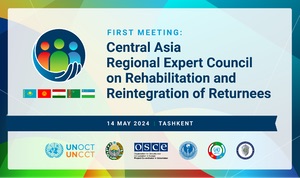 Tashkent/New York/Vienna, May 10, 2024. Tashkent/New York/Vienna, May 10, 2024.
On May 14 this year, the first meeting of Central Asia Regional Expert Council in Rehabilitation and Reintegration of Returnees from armed conflict zones will be held in Tashkent.
The Regional Expert Council is being established on the initiative of the President of Uzbekistan, Mr. Shavkat Mirziyoyev, put forward in March 2022 in Tashkent at the high-level conference “Regional cooperation of the countries of Central Asia under the Joint Action Plan for the implementation UN Global Counter-Terrorism Strategy” and supported by international partners.
READ MORE
Address by President of the Republic of Uzbekistan Shavkat Mirziyoyev at the Third Tashkent International Investment Forum 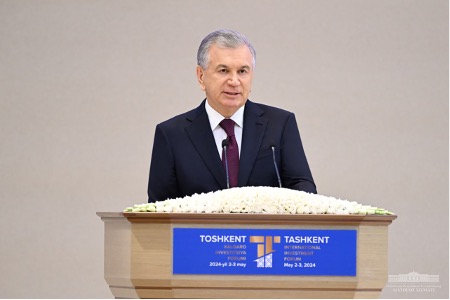 Dear participants of the forum! Dear participants of the forum!
Ladies and gentlemen!
At the outset, let me sincerely welcome you at the third Tashkent International Investment Forum.
I would like to note with pleasure that within the framework of this format, which is becoming a great annual tradition, new and reliable partners from all continents of the world are gathering in our country. Over the past three years, this Forum has provided a broad platform for enhancing collaboration, discussing pressing issues, and generating fruitful ideas and solutions to tackle the most urgent challenges.
READ MORE
Uzbekistan-Tajikistan: commitment to deepening cooperation based on principles of good-neighborliness and mutual trust 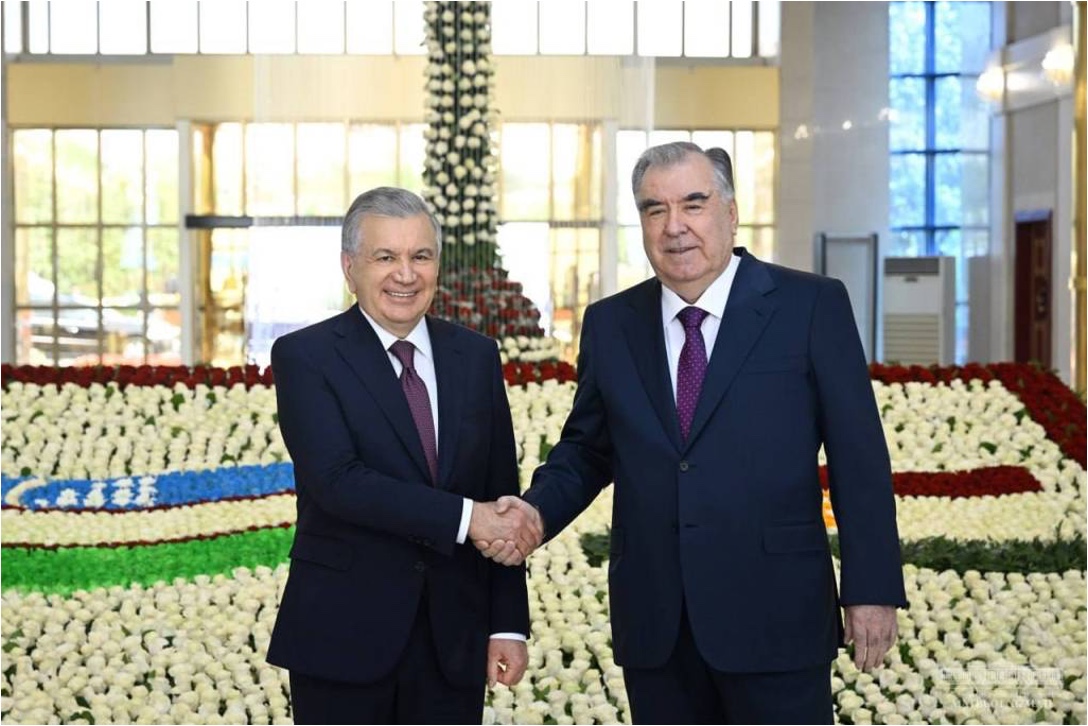 President Shavkat Mirziyoyev will pay a state visit to Tajikistan on April 18-19 at the invitation of President Emomali Rahmon. President Shavkat Mirziyoyev will pay a state visit to Tajikistan on April 18-19 at the invitation of President Emomali Rahmon.
As close neighbors whose peoples are historically and culturally inseparable from each other, Uzbekistan and Tajikistan have brought their relations to the level of strategic partnership and alliance.
The close and constructive political dialog established between the leaders of the two countries, supported by regular bilateral and multilateral meetings, plays a huge role in the development of mutually beneficial and fruitful cooperation.
READ MORE
Geopolitics of the South Caucasus Intensifies By Vasif HUSEYNOV, PhD, Head of Department, AIR Center, Adjunct Lecturer, ADA and Khazar Universities, Baku
From March 17 to 19, Jens Stoltenberg, secretary-general of the North Atlantic Treaty Organization (NATO), embarked on his first tour of the South Caucasus, visiting Georgia, Armenia, and Azerbaijan (NATO, March 19). During this tour, he engaged with each country’s political leadership. In Azerbaijan, he also met with the defence and foreign ministers. Stoltenberg’s visit occurred amid deteriorating relations between Russia and Armenia, an ongoing stalemate in the Armenian-Azerbaijani peace process, and political uncertainty in Georgia before parliamentary elections in October 2024. Each one of these situations points toward the possibility of renewed confrontation and prolonged instability in the South Caucasus.
READ MORE
Uzbekistan will gather folklorists and expect tourists from all over the world in May On 1-7 May, the ancient and unique land of Surkhandarya will host the traditional international “Boysun Bakhori” (Baysun Spring) folklore festival
Preparations for the festival, which will unite bearers, performers and masters of folklore and ethnographic art from all over the world, are being carried out in a completely new spirit. In the modern tourist complex in Bibishirin mahalla, where its main events will take place, all conditions are being created for performances of folklore and ethnographic groups, national sports games and other various performances.
READ MORE
Remember Kazan, for history can repeat itself By Benyamin POGHOSYAN, PhD, Chairman, Center for Political and Economic Strategic Studies
The September 2023 military takeover of Nagorno-Karabakh by Azerbaijan was a watershed moment in the conflict. Azerbaijan achieved a decisive victory by force, defying decades-long widespread perception among OSCE Co-chair countries and other actors that the conflict had no military solution. Many expected that the demise of the self-proclaimed Nagorno-Karabakh Republic would pave the way for the Armenia – Azerbaijan peace agreement, thus bringing long-awaited stability to the region. However, it appeared that the issue of Nagorno-Karabakh was only one part of the bigger puzzle of Armenia–Azerbaijan relations. After September 2023, Azerbaijan brought back the narrative of a corridor via Armenia to connect Azerbaijan with Nakhichevan, despite the fact that there was no Lachin corridor anymore connecting Armenia with Nagorno-Karabakh and started to highlight the necessity to change the Armenian constitution and other laws
READ MORE
Armenia–Turkey Normalization Process: A Road to Nowhere? By Benyamin POGHOSYAN, PhD, Chairman, Center for Political and Economic Strategic Studies
Armenia and Turkey started a new phase of normalization at the end of 2021, appointing special representatives to draw up recommendations. From the beginning, Turkey stated that the process should be carried out without any preconditions. However, in the last two years Ankara has put forward various preconditions and failed to take steps agreed upon during negotiations.
Armenia–Turkey relations have always been a significant factor impacting regional geopolitics in the South Caucasus. In the period between the first and the second Nagorno-Karabakh wars, many viewed the normalization of Armenia–Turkey relations as having the power to help settle the conflict. Another significant factor influencing the process was the West’s perception that Armenia–Turkey normalization might enable Armenia to reduce its dependence on Russia, as “without fear of Turkey, Armenia will need Russia less.
READ MORE
Cultural Heritage of Karakalpakstan Karakalpakstan has a unique and rich cultural heritage. It includes ancient architectural and archaeological monuments, unique folklore, performing arts, ceremonies and customs, as well as traditional handicrafts.
The territory of Karakalpakstan is rich with architectural and archaeological monuments, most of which are defensive constructions, including a number of impressive fortresses along the borders of settlements. The majority of the earliest constructions date back to the IV century B.C., when Ancient Khorezm freed itself from the Achaemenid Empire.
READ MORE
Armenia must not ignore developments in the Middle East By Yeghia TASHJIAN, Beirut-based regional analyst and researcher, columnist, "The Armenian Weekly”
The South Caucasus will be the epicentre of any political or economic friction between Russia and the Middle East. The region, located along the International North-South Transport Corridor, is the most feasible gateway to connect Russia to the Middle East. Russia’s increasing economic and political interaction and involvement in the Middle East will further enhance its dependency on Azerbaijan, due to its bridging location, and Turkey, its partner in addressing upheavals in the Arab region. These two factors may push Russia to pressure Armenia to agree on the implementation of article nine of the November 10, 2020, trilateral statement on unblocking economic and transport communications in the region and deploying Russian border guards to control the transit road connecting Azerbaijan to its Nakhichevan exclave. By doing so, Russia assumes it would increase its leverage on the main actors in the region that will use the transit route connecting Europe to China. The main actor within this context is Turkey, which aims to use the shortest route (compared to the Azerbaijan-Georgia-Turkey route) to trade with the Central Asian republics and beyond.
READ MORE
Azerbaijan is not de-coupling from the West By Vasif HUSEYNOV, PhD, Head of Department, AIR Center, Adjunct Lecturer, ADA and Khazar Universities, Baku
Over the past two years, since the beginning of the Russia-Ukraine conflict, Azerbaijan’s foreign and security policies have drawn varying interpretations from experts and political observers. The delicate balancing act pursued by Baku between competing global powers while safeguarding the country’s national interests and restoring its territorial integrity has appeared as an intriguing case for the studies of international relations. Amidst the evolving dynamics of regional geopolitics, Azerbaijan’s recent engagements with Western counterparts underscore its unwavering commitment to maintaining robust relations with the West. Despite the complexities of navigating relations with neighbouring powers, Azerbaijan remains steadfast in its pursuit of multilateral or, as better known in the Azerbaijani discourse, balanced approach in foreign policy.
Many experts are still debating how the Azerbaijani government succeeded to dismantle the separatist regime in Karabakh without provoking a clash with Russia, widely known to be the major protector of this regime. In November 2023, during an international conference in a European city attended by the author of this article, Armenian experts critiqued the collaboration between Azerbaijan and the Western powers (i.e., the EU and United States) in September 2023 to dismantle to the separatist regime, aiming to diminish Russia's influence in the South Caucasus. Interestingly, some of these experts now suggest that Baku has aligned with Moscow to penalize Armenia’s pro-Western government. This situation underscores the complexity of Azerbaijan's foreign policy, often susceptible to misinterpretation.
READ MORE
Is Azerbaijan Interested in Peace? By Benyamin POGHOSYAN, PhD, Chairman, Center for Political and Economic Strategic Studies
After the military takeover of Nagorno-Karabakh by Azerbaijan in September 2023 and the forced displacement of the Armenians who lived there, there were hopes in Armenia and abroad that an Armenia-Azerbaijan peace agreement was within reach. These hopes were based on the assumption that Azerbaijan had achieved its primary objective for the past 30 years: the full absorption of Nagorno-Karabakh into Azerbaijan without any Armenian claims over the region.
Since September 2023, Azerbaijan has controlled all of Nagorno-Karabakh, with only a handful of Armenians remaining there. The Armenian government has accepted this reality and has no intention of challenging it. Meanwhile, Azerbaijan has faced no repercussions from the US, the EU, or Russia for imposing a blockade on Nagorno-Karabakh in December 2022, ignoring the orders of the International Court of Justice, launching a military attack in September 2023, or forcing all Armenians to leave the region. It seemed that the time for peace had thus arrived – a peace that would formalize Azerbaijani control over Nagorno-Karabakh, settle relations with Armenia, and open the way for the normalization of relations between Armenia and Turkey.
READ MORE
|
|




 In Progress
