Is the Balkan Region Israel’s Newfound Interest?
 By Fuad Shahbazov, Baku-based independent regional security and defence analyst By Fuad Shahbazov, Baku-based independent regional security and defence analyst
Israeli President Isaac Herzog concluded his historic first visit to Albania in September, shortly after his first-ever trip to Serbia, where both sides agreed to deepen bilateral cooperation amid Israel's extending military campaign against Hamas and Hezbollah in Southern Lebanon. Although the recent intensive diplomatic dialogue between Israel and Balkan states is gaining more impetus, it is not a new phenomenon. In the last five years, much has been done to ensure Israel’s expanding diplomatic, security, and economic ties with the Balkans, particularly with Albania and Serbia. In light of the worsening geopolitical tensions in the Middle East after the Hamas attack on Israel in October 2023 and Israel’s large-scale military campaign in Gaza and Southern Lebanon, Tel Aviv sought to build new alliances and partnerships at a critical time. READ MORE
Türkiye Demonstrates Increased Interest in BRICS Membership
By Fuad Shahbazov, Baku-based independent regional security and defence analyst
On June 11, Turkish Foreign Minister Hakan Fidan attended a session of the BRICS group (a loose political-economic grouping originally consisting of Brazil, Russia, India, China, and South Africa) in Moscow. While there, he met with Russian President Vladimir Putin, Foreign Minister Sergei Lavrov, and Russian Security Council Secretary Sergei Shoigu. During the face-to-face meeting with Putin, Fidan discussed bilateral economic and political relations, focusing on the geopolitical turmoil in the Middle East caused by the war in Gaza. Putin vowed to “fully support” Turkish membership in BRICS and build stronger ties to facilitate further economic cooperation. Fidan’s visit to Russia came shortly after he visited China, where he reiterated Ankara’s willingness to join BRICS and the Shanghai Cooperation Organization (SCO). These pronouncements have raised eyebrows in the West. US Ambassador to Türkiye Jeff Flake declared that Türkiye’s place is “in the West” and voiced his hope that Ankara would decide against joining the bloc. READ MORE
The issue of the “Zangezur Corridor” is back — can Iran provide an alternative?  By Yeghia TASHJIAN, Beirut-based regional analyst and researcher, columnist, "The Armenian Weekly” By Yeghia TASHJIAN, Beirut-based regional analyst and researcher, columnist, "The Armenian Weekly”
On August 7, 2024, Elchin Amirbayov, President Ilham Aliyev’s senior envoy for special assignments, told Radio Free Europe/Radio Liberty that Baku had agreed to withdraw the issue of the “Zangezur Corridor” from Armenia-Azerbaijan negotiations and “refer it to a later stage.” This statement put Russia in a difficult position, as it had aimed to control the transit routes between Armenia and Azerbaijan, according to the November 10, 2020 trilateral statement signed by the heads of state of Armenia, Azerbaijan and Russia. As such, Russia attempted to revive the issue but met Iranian opposition. This article will highlight U.S. involvement in containing Russia’s influence in the South Caucasus, Russia’s objective behind bringing back the corridor issue and Tehran’s harsh stance against Moscow.
READ MORE
Strengthening the rights of citizens in the area of freedom of receiving and disseminating information in the new Uzbekistan  Karine Javakova,
Head of the Department of State and Legal Disciplines and Ensuring Human Rights of the Academy of the Ministry of Internal Affairs of the Republic of Uzbekistan, Doctor of Philosophy, Professor
Uzbekistan has created a solid legal framework to ensure freedom of speech and information, as well as the development of the media, improvement of the legal basis for the activities and protection of the professional rights of journalists. Considering that the liberalization of the information sphere and its development are priority tasks in the construction of the New Uzbekistan, after the constitutional reform, the articles devoted to these rights were significantly expanded. READ MORE
Important Migration Agreement Signed Between Uzbekistan and Germany 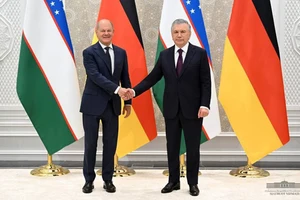 On the invitation of President of the Republic of Uzbekistan, Shavkat Mirziyoyev, Federal Chancellor of the Federal Republic of Germany Olaf Scholz arrived in Uzbekistan for an official visit on September 15. On the invitation of President of the Republic of Uzbekistan, Shavkat Mirziyoyev, Federal Chancellor of the Federal Republic of Germany Olaf Scholz arrived in Uzbekistan for an official visit on September 15.
In recent years, labor migration has emerged as a promising area of cooperation with Germany. At the same time, multifaceted and mutually beneficial relations in the field of healthcare are also developing consistently. READ MORE
US and EU in the South Caucasus: Active Engagement, Uncertain Future  By Benyamin POGHOSYAN, PhD, Chairman, Center for Political and Economic Strategic Studies By Benyamin POGHOSYAN, PhD, Chairman, Center for Political and Economic Strategic Studies
The 2020 Nagorno-Karabakh war and the onset of the Russia-Ukraine conflict in February 2022 have dramatically disrupted the status quo in the South Caucasus, thrusting the region into the center of regional and global power rivalries. To varying degrees, Russia, the United States, the European Union, Turkey, Iran, Israel, France, India, China, and Pakistan are involved in the South Caucasus, creating a complex nexus of overlapping and diverging interests shaping the region’s geopolitical present and future. In recent years, the United States and the European Union have increased their presence in the South Caucasus. However, potential change in leadership in Washington and the shifting priorities in the forthcoming EU legislative cycle could significantly alter their engagement in the region. The Biden Administration has pursued active engagement in the South Caucasus. The United States has been one of the main mediators in Armenia-Azerbaijan negotiations, organizing several meetings between Armenian and Azerbaijani foreign ministers in Washington from 2022-2024 and the meeting between Prime Minister Nikol Pashinyan and President Ilham Aliyev in February 2023 in Munich.
READ MORE
What does Azerbaijan’s “shift to the East” mean for the South Caucasus? By Yeghia TASHJIAN, Beirut-based regional analyst and researcher, columnist, "The Armenian Weekly”
On August 29, 2023, in my article “What does the expansion of BRICS mean for the South Caucasus?” I argued that Iran’s accession to BRICS and the integration of the region’s infrastructure into the International North-South Transport Corridor (INSTC) would similarly increase pressure on Armenia and Azerbaijan to join the bloc. The post-2020 regional status quo and the war in Ukraine have opened the path for new Eurasian actors such as India and China to exert their influence on the South Caucasus. Azerbaijan is the main beneficiary of this development. Positioned strategically along the North-South and East-West transport corridors, Baku has capitalized on its position to become a pivotal transportation and logistics hub in Eurasia. This has caught the attention of China amid the geopolitical shifts that took place in the South Caucasus in light of the second Artsakh (Nagorno-Karabakh) and Ukraine wars.
READ MORE
- September 13, 2024 08:15AM
Uzbekistan’s renewed electoral system a key factor in the advancement of representative democracy Shuhrat Bafayev,
Chairman of the Committee for Democratic Institutions, Nongovernmental Organizations and Citizens’ Self-Government Bodies, Legislative Chamber of the Oliy Majlis of the Republic of Uzbekistan
Over the years of independent development Uzbekistan firmly guided by the principles of universal, equal and direct suffrage in secret voting, has progressively implemented international electoral standards into its electoral legislation. In 2017, in his first Address to the Parliament, the President of Uzbekistan Shavkat Mirziyoyev suggested that the current national electoral legislation does not ensure its harmonization and proposed to develop an Electoral Code that meets international norms and standards. Thus, the Electoral Code was adopted in 2019, incorporating more than 30 new democratic norms for organizing and conducting election processes. The approval of the Code marked the dawn of a new stage in the development of representative democracy in the country. READ MORE
The awakening lion: the era of renewal  Hey, great Turan, land of lions! Hey, great Turan, land of lions!
What has become of you? What are these days you endure now?
Oh, glorious cradle of Genghis, Timur, Oghuz, and Attila!
Where have the esteemed seats you once held gone?..
Abdurauf Fitrat
An American politician once said of the current life and fate of the Central Asian region: ‘They are neither post-Soviet nor post-communist countries now’.
Today no specialist knowledge is needed to understand this idea, which suggests that such labels are outdated in the research community. For example, ten to fifteen years ago the political behaviour of Central Asian societies – neighbours for thousands of years – was prone to national separatism, mutual dislike and latent hostility, but today they have undergone a remarkable transformation. Ideologues and ordinary Central Asians only a couple years ago endeavoured to prove their superiority, their antiquity and, for these very reasons, their greater belonging to the historical and cultural heritage of the region. Though they still might hurl some sharp insults at each other, now they have become united neighbours.
READ MORE
CERR: IMF Estimates Uzbekistan's GDP at $101.6 Billion According to the IMF's assessment, the nominal GDP of the Republic of Uzbekistan in 2023 increased by 125.6 trillion sums ($10.7 billion) and amounted to 1,192.2 trillion sums ($101.6 billion).
CERR hosted a discussion among experts and academics regarding a study conducted by the Statistics Agency in collaboration with the IMF. The primary goal of this study was to assess the size of the unobserved economy in Uzbekistan and examine its impact on other macroeconomic indicators. READ MORE
Uzbekistan plans to increase exports of electrical products to Europe, countries of South Asia and the Middle East  Yuri Kutbitdinov, Yuri Kutbitdinov,
chief Research Officer of the Center for Economic Research and Reforms under the Administration of the President of the
Republic of Uzbekistan
There are about a thousand manufacturing enterprises operating in the electrical engineering sector of Uzbekistan, most of them small, producing over two thousand types of products. Almost all enterprises in the industry are privately owned. The total number of people employed in the industry exceeds 35,000.
The 76 largest enterprises in the industry, which produce over 90% of all electrical engineering products, are members of the Association of Electrical Engineering Manufacturers (UzEltechSanoat). Of these, 18 enterprises manufacture electrical wires and cables, 27 enterprises manufacture household appliances, and 32 enterprises manufacture power transformers and other electrical products.
READ MORE
The Last Hurdle to the Armenia-Azerbaijan Peace Treaty Should be Overcome  By Vasif HUSEYNOV, PhD, Head of Department, AIR Center, Adjunct Lecturer, ADA and Khazar Universities, Baku By Vasif HUSEYNOV, PhD, Head of Department, AIR Center, Adjunct Lecturer, ADA and Khazar Universities, Baku
A long road has been passed since Armenia and Azerbaijan were fighting a violent war that erupted in the wake of the deadlock in the peace negotiations for around three decades. As President Ilham Aliyev of Azerbaijan rightfully said, the chance for peace was eventually brought about by the war in 2020 that put an end to the occupation of the Azerbaijani territories. Having liberated its occupied territories, Azerbaijan immediately initiated a peace treaty with Armenia based on the fundamental principles of international relations, including mutual recognition of each other’s territorial integrity and non-use of force. It is a telling fact that Azerbaijan put forward this initiative in March 2022, when the Armenian separatist regime still had some control over the parts of the Karabakh region where Russia’s peacekeeping mission was temporarily deployed. This clearly manifested Baku’s intention to peacefully reintegrate the Armenian population in the Karabakh region and diplomatically resolve the remaining disputes with Armenia.
READ MORE
Uzbekistan: A Course for Continuing Intensive Reforms in Youth Policy Bekzod Jurabayev
Chief scientific researcher of the Institute of Legislation and Legal Policy under the President of the Republic of Uzbekistan, Chairman of the Council of Young Scientists of the Institute
Uzbekistan is a country of youth. According to statistical data, about 60% of Uzbekistan's population is under the age of 30. Thus, over 18 million residents of Uzbekistan are young people, and by 2040 this number could reach 25 million. This creates unique opportunities and specific challenges for the state in terms of providing education, employment, and social integration for the youth. On February 21 of this year, a Presidential Decree approved the State Program for the implementation of the "Uzbekistan - 2030" Strategy in the Year of Support for Youth and Business. It outlines a number of tasks aimed at addressing the problems faced by young people and realizing their potential.
READ MORE
Armenia’s European aspirations  By Anahide PILIBOSSIAN, Vice President of Strategy and Development, APRI Armenia By Anahide PILIBOSSIAN, Vice President of Strategy and Development, APRI Armenia
Benyamin POGHOSYAN, PhD, Chairman, Center for Political and Economic Strategic Studies
Despite economic challenges and existing agreements with the Eurasian Economic Union, Armenia seeks closer alignment with the EU.
The recent statement of the Armenian Foreign Minister in the margins of the Antalya Diplomatic Forum denotes Armenia’s desire to join the European Union. This aspiration raises important questions on Armenia’s current position and options, which this article seeks to shed light on. At the same time, today’s complicated geopolitical environment highlights the need for the EU to formulate a strategic vision for the region. Between Pax Europa and Pax Russica, Armenia first went with the latter. However, following Yerevan’s defeat in the second Nagorno-Karabakh War and the military takeover of the region by Azerbaijan, despite the presence of the Russian peacekeepers, Armenia has now opted for the former. It stated its desire, backed by the EU, to join the Black Sea energy cable project (from which it has been excluded, reportedly as a result of pressures from Azerbaijan) and promote a regional infrastructure and connectivity project called the Crossroad of Peace, embracing, as European leaders did after World War II, the peace-building effects of economic regional integration projects.
READ MORE
What does the India-Iran Chabahar port deal mean for Armenia? By Yeghia TASHJIAN, Beirut-based regional analyst and researcher, columnist, "The Armenian Weekly”
On May 13, 2024, Iran and India signed a historic deal under which New Delhi was granted the right to develop and operate the Iranian port of Chabahar on the Gulf of Oman. India has been eying this port for the past two decades to export goods to Iran, Afghanistan and Central Asian countries and bypass the Chinese-developed ports of Gwadar and Karachi in Pakistan. Commenting on the deal after the signing ceremony in Tehran, India’s Shipping Minister Sarbananda Sonowal said, “Chabahar Port’s significance transcends its role as a mere conduit between India and Iran; it serves as a vital trade artery connecting India with Afghanistan and Central Asian Countries.” Under this agreement, the Indian Ports Global Limited (IPGL) company will invest $120 million in the port with an additional $250 million in financing. Within this context, Indian Foreign Minister Subrahmanyam Jaishankar told reporters in Mumbai that this deal will open the path for new, larger investments to be made in the port.
READ MORE
Uzbekistan: the fight against corruption is a continuous process Nilufar Doniyorkhodjaeva,
Head of Department Development Strategy Center,
Tashkent, Uzbekistan
Uzbekistan has been undergoing a transformational journey since it changed political leadership in 2016. The nation is implementing extensive reforms aimed at spanning anti-corruption measures, business climate enhancements, judicial reforms, improving labour conditions, administrative efficiency, protection of human rights, and good governance.
READ MORE
Shavkat Mirziyoyev: “I devote my life to the Uzbek Nation”  Qudratilla Rafikov,
Political scientist Qudratilla Rafikov,
Political scientist
In the speech of our President at a recent meeting with activists of Jizzakh region, one point caught the attention of most of the people. In it, the head of state said the following:
"If God gives me health and life, the days will come when we will not have poverty and unemployment. I have devoted seven years of my life to this, created a system for this, created laws, opened the world. I came to this position, so that my people would live well, so that their dreams would come true, so that their children would live in prosperity and be happy, so that their grandchildren would be born healthy, so that medicine would work, schools would work, roads would be smooth...".
READ MORE
The alternative scenarios facing the South Caucasus  By Benyamin POGHOSYAN, PhD, Chairman, Center for Political and Economic Strategic Studies By Benyamin POGHOSYAN, PhD, Chairman, Center for Political and Economic Strategic Studies
As the global order continues to morph into a more complex architecture with an array of global and regional powers, the geopolitical future of the South Caucasus hangs in the balance. The tectonic changes in the region of the last four years – the 2020 Nagorno-Karabakh war, the regional implications of the Russian invasion of Ukraine, the military takeover of Nagorno-Karabakh by Azerbaijan, and forced displacement of Armenians, the EU candidate status for Georgia and Georgia’s quest for multi-vector foreign policy including the establishment of strategic partnership with China, the limbo in Armenia–Azerbaijan negotiations, growing assertiveness of Azerbaijan and eventual move of Armenia towards closer cooperation with the EU and the US – all make the situation quite complex.
READ MORE
Trans-Afghan corridor: Uzbekistan's initiative serves the development of a larger region Yu. Imomova
Research fellow
Institute for Prospective International Studies
Under UWED
In recent years, the main principle of the foreign policy of the Republic of Uzbekistan has been the establishment of good neighborly relations, in particular, strengthening economic ties with Afghanistan, providing comprehensive assistance in preventing a humanitarian crisis in this country, implementing the Trans-Afghan railway project, cooperating on the Kosh-Tepa canal project, and other issues. Evidence supporting this perspective is the strategic focus of the Republic of Uzbekistan's development plan for 2022-2026, which emphasizes fostering comprehensive relations with Afghanistan and aiding its socio-economic revitalization.
READ MORE
Representative of Uzbekistan elected to UN Human Rights Committee for the first time in history On May 29, at the UN headquarters in New York, during the 40th session of the states parties to the International Covenant on Civil and Political Rights (ICCPR), elections were held for nine members of the Human Rights Committee (HRC) for the 2025-2028 term.
Representatives from 16 states, including Burundi, Georgia, Egypt, India, Spain, Cameroon, Côte d'Ivoire, Lithuania, Morocco, Paraguay, the Republic of Korea, North Macedonia, Togo, Uzbekistan, Croatia, Ethiopia, and South Africa, competed for the nine seats in the HRC.
READ MORE
Armenia and Azerbaijan Step Up Work on Peace Deal By Vasif HUSEYNOV, PhD, Head of Department, AIR Center, Adjunct Lecturer, ADA and Khazar Universities, Baku
On May 10 and 11, the foreign ministers of Armenia and Azerbaijan, Ararat Mirzoyan and Jeyhun Bayramov, respectively, met for another round of bilateral peace negotiations in Almaty, Kazakhstan. It was the second meeting this year between the two sides after meeting in Berlin on February 28 and 29. The Almaty talks came after the initiation of the delimitation process on the Armenian-Azerbaijani interstate border, with the return of four non-enclave villages to Azerbaijan in April (see EDM, April 17, 23, May 14). The act was celebrated by some as the first instance in the post-Soviet era of a peaceful resolution in the long-standing territorial disputes between the two countries (Azertag.az, April 19; State.gov, April 28). The two parties hope to build on this progress and foster a constructive atmosphere during the talks in Almaty. These developments point to progress in the peace process between Armenia and Azerbaijan, demonstrating both sides’ willingness to pursue improved relations.
READ MORE
The Role of Foreign Actors in the Armenia-Azerbaijan Conflict  By Eugene KOGAN, Tbilisi-based defence and security expert By Eugene KOGAN, Tbilisi-based defence and security expert
This AIES Focus discusses the four major foreign actors in the conflict between Armenia and Azerbaijan within the time frame of the last 12 to 18 months. While Russia and Turkey are active and directly involved, China and India are implicitly but not explicitly involved in the conflict. As a result, the author tries to present and highlight the divergent and convergent perspectives of the foreign actors in the conflict. One of the major focal points of the conflict relates to what the Azerbaijani call the Zangezur corridor, and the Armenians perceive as a bone of contention. What is perhaps not least important to emphasise is that for Ilham Aliyev, the President of Azerbaijan, the corridor has a crucial role in the transportation link between Turkey, Azerbaijan and the Turkic States. As for Armenia and Iran, its neighbouring country, the establishment of such a corridor is perceived as an existential threat. READ MORE
Reflection on the “Friends of Armenia Network” white paper By Yeghia TASHJIAN, Beirut-based regional analyst and researcher, columnist, "The Armenian Weekly”
On March 27, 2024, a high-level group named “Friends of Armenia Network” headed by the former Danish Prime Minister and NATO Secretary General Anders Fogh Rasmussen published a white paper aiming to “galvanize support for democratic Armenia and promote peace in South Caucasus.” The title of the paper is “Deepening EU-Armenia Relations: More Europe in Armenia; More Armenia in Europe,” and the authors include former prime ministers, European parliamentarians and diplomats.
“Armenia is pivoting to the West,” the paper argues, and the EU has a strategic and value-based interest in supporting this pivot. To succeed, both Yerevan and Brussels need to make a “substantial, long-term strategic commitment in terms of resources, security cooperation, trade relations, and political engagement.” To make this pivot “irreversible,” the EU must grant Armenia “EU candidate status,” which would match Yerevan’s strategic orientation, back up its geopolitical commitments and minimize the impact of Moscow’s reaction to Yerevan by increasing the latter’s resilience.
READ MORE
Uzbekistan-Tajikistan: commitment to deepening cooperation based on principles of good-neighborliness and mutual trust 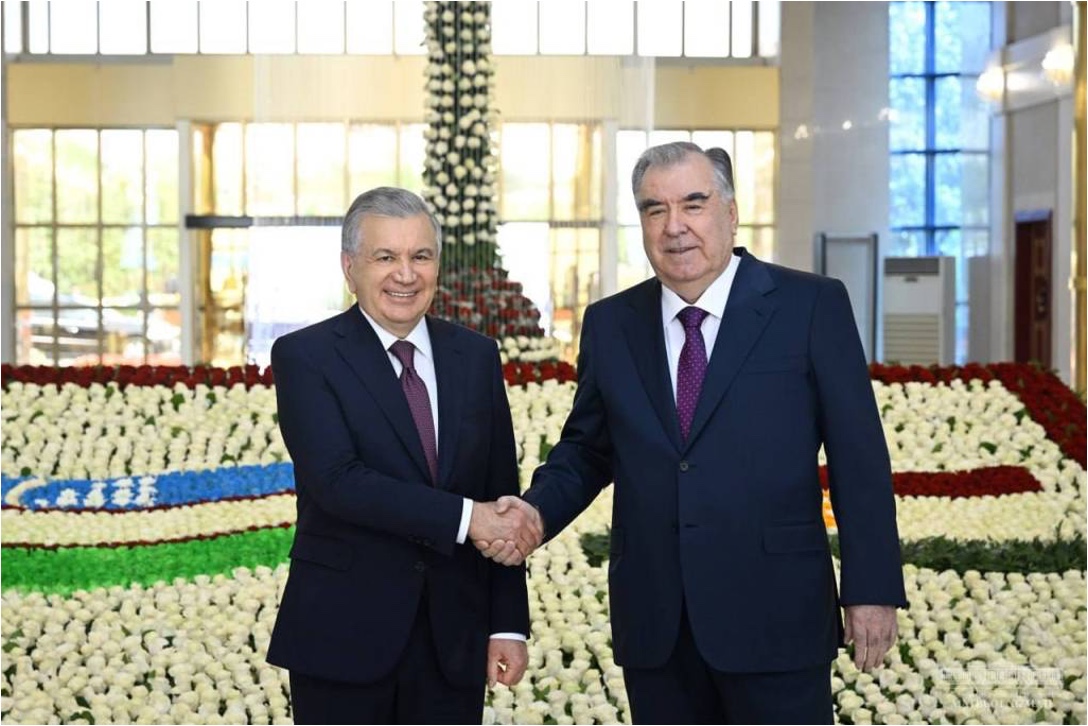 President Shavkat Mirziyoyev will pay a state visit to Tajikistan on April 18-19 at the invitation of President Emomali Rahmon. President Shavkat Mirziyoyev will pay a state visit to Tajikistan on April 18-19 at the invitation of President Emomali Rahmon.
As close neighbors whose peoples are historically and culturally inseparable from each other, Uzbekistan and Tajikistan have brought their relations to the level of strategic partnership and alliance.
The close and constructive political dialog established between the leaders of the two countries, supported by regular bilateral and multilateral meetings, plays a huge role in the development of mutually beneficial and fruitful cooperation.
READ MORE
Central Asian countries and the Gulf Cooperation Council: synergy of potentials Uzbekistan, and Tashkent in particular, is becoming the venue for an important international forum that should give a practical vector to a new format of interregional cooperation based on the traditions of centuries-old exchanges between the peoples of Central Asia and the Arab States of the Gulf and today's huge potential for mutually beneficial co-operation.
The first ministerial meeting of the Gulf Cooperation Council-Central Asia Strategic Dialogue was held on 7 September 2022 in Riyadh, the capital of Saudi Arabia.
READ MORE
|
|




 In Progress
