Publications
Armenia–China: Strategic Partnership for Mutual Benefits  By Benyamin Poghosyan, PhD, Executive Director, Political Science Association of Armenia
Armenia and China are both among the ancient civilizations of human history. They share millennia of mutual contacts via the ancient Silk Road. However, history is not the only thing which unites the two nations. Both Armenians and Chinese put enormous emphasis on protecting their national identities and traditions. Of course, this does not mean that Armenia and China are not interested or involved in the current wave of globalization. READ MORE
Publications
Pashinyan's New Tactic: 'Tougher in Public, Softer at the Negotiation Table' 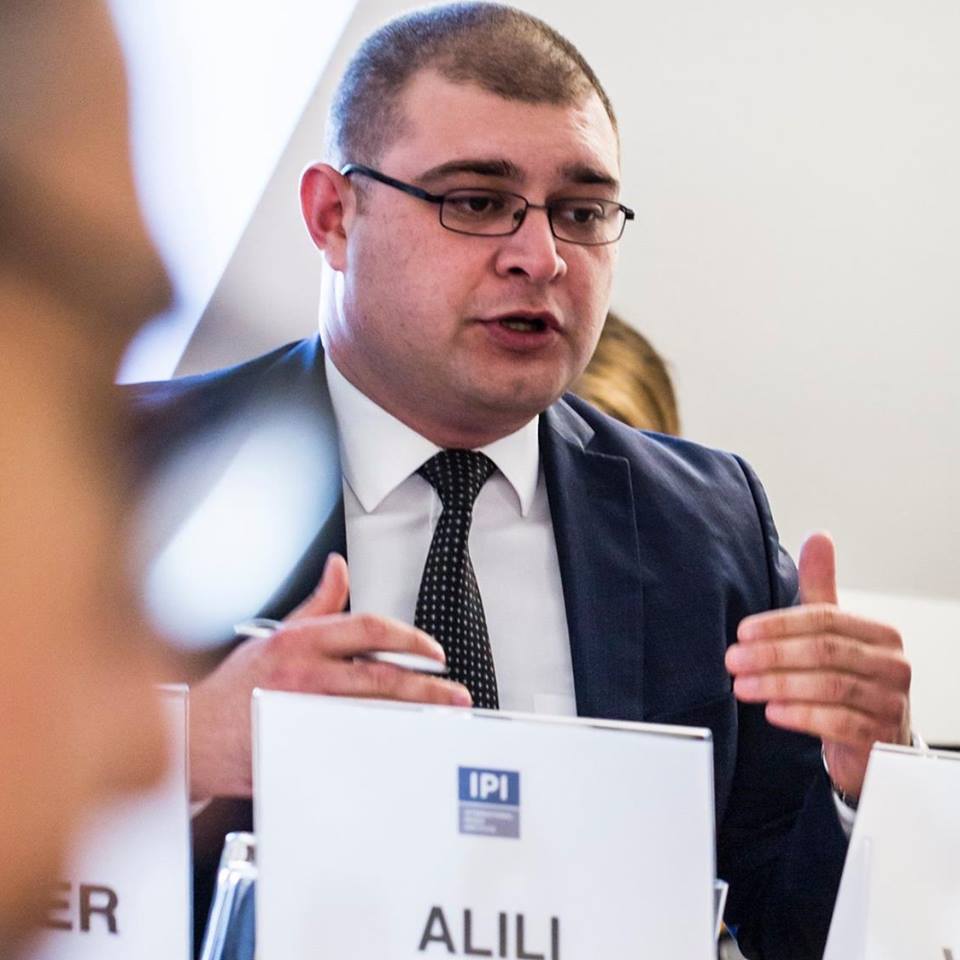 By Ahmad Alili, Head of Research, Caucasus Policy Analysis Center, Baku
The next meeting between the Ministers of Foreign Affairs of Armenia and Azerbaijan will be held in the upcoming days, most likely during the UN General Assembly in New York. This is the first meeting following Armenian Prime Minister Nikol Pashinyan's "Unification" speech on 5 August in Nagorno-Karabakh, which contained an unprecedented hardline rhetoric, hurting both 'Track1' and 'Track2' processes, which shocked Baku. Following the speech, Azerbaijani officials called for a reaction from the OSCE Minsk Group co-chairs. READ MORE
Publications
Armenia-Azerbaijan: Searching for New Models of Dialogue  Joint Study with “Yeni nesil”, coordinated by Boris Navasardian, President, Yerevan Press Club
The main purpose of this study was to consider the feasibility and prospects of revival of the Track-2 diplomacy and the development of appropriate recommendations. Although it was conceived and supported by the US government even before the political changes in Armenia, its relevance was confirmed by the intensification of the dialogue at the official level between Yerevan and Baku in the summer of 2018. Certain characteristics of the renewed interest in the informal communication were revealed during the visit to Yerevan of the Azerbaijani journalist Shahin Hajiyev, in February 2019, and by the interest of Armenian journalists to visit the neighboring country. READ MORE
Publications
‘Game of Thrones Moment' for Azerbaijan in Nagorno-Karabakh
By Ahmad Alili, Head of Research, Caucasus Policy Analysis Center, Baku
In the real world, we do not have dragons, faceless men, red woman, white walkers or resurrection from the dead. Yet, the public policy challenges facing advisers in the famous Game of Thrones (GoT) TV show mirror those that political advisors to real governments face. We draw parallels to the real world in the way the show's decision-makers and advisers face the same limitations of time, resources and information bias. READ MORE
Publications
NATO and Georgian–American Military Relations  By Eugene Kogan, Tbilisi-based defence and security expert
Since the 2003 Rose Revolution, Georgia has become a staunch and dependable non-NATO ally of the United States in the South Caucasus. Georgian-American bilateral military relations have become stronger and have climaxed in November 2017. With 870 soldiers per capita, Georgia is the leading donor of troops in Afghanistan. This is highly appreciated by the United States. READ MORE
Publications
How Will Uzbekistan Become A Regional Transit Hub?  By Fuad Shahbazov, Baku-based independent regional security and defence analyst
On 5th April of 2019, a meeting of the railway authorities of Kazakhstan, China, Iran, Turkmenistan, and Uzbekistan took place in Almaty dedicated to advancing cargo traffic along the North-South Transit Corridor. In fact, the participation of Uzbekistan in the project will shorten the route of goods from China to Iran and forward. Being a part of the ambitious North-South Transit Corridor, the China-Kazakhstan-Turkmenistan-Uzbekistan-Iran railway can shape the geopolitics of Central Asia. READ MORE
Publications
New Caspian–Black Sea Transit Corridor Boosts Geostrategic Importance of South Caucasus By Fuad Shahbazov, Baku-based independent regional security and defence analyst
On March 4, Romania, Azerbaijan, Georgia and Turkmenistan held a ministerial meeting in Bucharest—the first such quadripartite gathering for these governments. During this meeting of their foreign ministers, the parties issued a joint statement reaffirming mutual respect for each other’s sovereignty, territorial integrity and inviolability of their internationally recognized borders. Additionally, a number of other important issues were raised in Bucharest, including a discussion on establishing a multimodal corridor for the transport of goods between the Black Sea and Caspian Sea basins, a project officially named the Caspian Sea–Black Sea International Transport Corridor (ITC-CSBS). READ MORE
Publications
Armenia's "Other Choices"? By Benyamin Poghosyan, PhD, Executive Director, Political Science Association of Armenia
It is time for Armenia to deepen its relations with Iran and China, out of necessity rather than choice.
Armenia continues to face a hard geopolitical reality. The 2018 Velvet revolution has brought hope of the possibility of significant and systemic changes in domestic policy - including in the fight against corruption, furthering the rule of law, and reducing monopolies over key imports and exports from and to Armenia. However, the revolution did not change the geopolitical juncture around Armenia. Yerevan continues to face joint Azerbaijani-Turkish pressure to make concessions in the Karabakh conflict settlement process. READ MORE