How China Shapes the Drone Divide in the Russia-Ukraine War
 By Fuad SHAHBAZOV, Baku-based independent regional security and defence analyst By Fuad SHAHBAZOV, Baku-based independent regional security and defence analyst
The war in Ukraine has evolved into a complex geopolitical conflict while demonstrating the transformative role that drone technology has played in shaping the course of the war. Following the Russian invasion of Ukraine in 2022, the Ukrainian Armed Forces began to actively embrace modern warfare technology, especially the use of First-Person Drones (FPVs) which were critical in inflicting grave damage on Russian forces using ‘meat grinder’ tactics to storm Ukrainian front-line positions. In the past two years, Ukrainian forces have used FPV drones for real-time intelligence and reconnaissance of Russian positions and troop movements while also deploying cost-effective “kamikaze” drones to target Russian recruits, tanks, howitzers, and other armoured vehicles. Although drone technology is now a core part of Ukraine’s struggle against Russian intervention, Kyiv initially faced an acute shortage of unmanned aerial vehicles (UAVs) in the early stages of the war, while the requirements of its frontline forces were partially met by civilian drones, mostly produced by the Chinese company DJI. READ MORE
- December 22, 2025 07:00AM
Iran–Israel War’s Implications for Armenia
 By Benyamin POGHOSYAN, PhD, Senior Research Fellow at the APRI Armenia
The June 2025 12-day Iran–Israel War and US military strikes targeting Iranian nuclear sites created shock waves in the Middle East and beyond. Iran and Israel exchanged strikes twice in 2024, but these were limited and mostly symbolic operations. While the war did not solve critical issues between Iran and Israel, and there is a possibility of another escalation, it demonstrated the volatile nature of Middle Eastern geopolitics, shaped by evolving balance of power. Armenia is a neighbour of Iran, and this fact alone is enough to mean that Armenia will be affected by any Iran–Israel confrontation. However, there are other factors that can amplify the implications for Armenia of a potential long-term war against Iran.
READ MORE
A Long War of Attrition May Await Lebanon  By Yeghia TASHJIAN, Beirut-based regional analyst and researcher, columnist, "The Armenian Weekly” By Yeghia TASHJIAN, Beirut-based regional analyst and researcher, columnist, "The Armenian Weekly”
Over the past few weeks, security events have dramatically accelerated Israel’s aggression on Lebanon. On October 8, 2023, Hezbollah, a paramilitary political party in Lebanon (also known as the Islamic Resistance) backed by Iran, opened a front against Israel to assist Hamas in its conflict with Israel following its “al-Aqsa Storm” operation. The Lebanese front remained “managed” as Israel and Hezbollah engaged in limited clashes. This equation changed starting on September 17, 2024. Along with its fight against Hamas and the destruction of Gaza, Israel shifted its focus to Hezbollah and started bombing Lebanon, destroying the party’s infrastructure in southern Beirut, South Lebanon and Beqaa near the border with Syria.
READ MORE
- November 13, 2024 23:18PM
Conflict in the South Caucasus and the Middle East  By Alan WHITEHORN, Professor Emeritus in Political Science, The Royal Military College of Canada By Alan WHITEHORN, Professor Emeritus in Political Science, The Royal Military College of Canada
Armenia and the South Caucasus were historically parts of the former Soviet Union, and are often considered, in geopolitical terms, to be in the so-called Moscow-influenced “Russia’s near abroad”. It might be useful, however, to recognize the significant connections of the South Caucasus to the Middle East. In fact, Armenia is relatively close geographically (under 1,000 km) to each of the capital cities of Teheran (Iran), Baghdad (Iraq), and Ankara (Turkiye) and not much farther from Israel and Lebanon (under 1,300 km). In terms of international affairs and recent conflict Turkey has been a crucial military ally of Azerbaijan during the latter’s wars with Armenia and Nagorno-Karabakh (Artsakh) in 2020 and 2023. A lesser-known fact is that, over the previous decade, Israel has been a major weapons’ supplier of Azerbaijan, particularly advanced drones that proved critical for Baku’s swift and decisive victory in the 2020 Armenia-Azerbaijan war, and its 2023 recapture of Nagorno-Karabakh, which displaced over 100,000 civilians, virtually all of the local Armenian population. READ MORE
The intersection between Turkey’s defence industry and its foreign policy By Yeghia TASHJIAN, Beirut-based regional analyst and researcher, columnist, "The Armenian Weekly”
After the end of the Cold War, Turkish decision-makers adopted a “top-down” strategy that capitalized on the dramatic shift in international arms production. Turkey aimed to look eastward to cooperate with China and Russia as its threat perception changed. In the second half of the 1990s, Turkey became a prominent Israeli arms purchaser. There were numerous factors behind this. First, Israeli weapons were a high-tech and credible alternative to NATO weapons. Second, unlike Europe and the U.S., Israeli arms purchases were not conditioned to Turkey’s domestic developments (democratization, human rights, minority rights…). Third, Israel and Turkey’s foreign policies overlapped in critical areas in the Middle East, aiming to contain Syrian and Iranian interests. Finally, deep relations with Israel were expected to be rewarded by pro-Israeli lobbying groups in the U.S. to counter the Armenian and Greek lobbies.
READ MORE
United States Encourages Armenia and Azerbaijan to Sign Peace Treaty ‘Without Delay’  By Vasif HUSEYNOV, PhD, Head of Department, AIR Center, Adjunct Lecturer, ADA and Khazar Universities, Baku By Vasif HUSEYNOV, PhD, Head of Department, AIR Center, Adjunct Lecturer, ADA and Khazar Universities, Baku
On June 20, during a phone call with Azerbaijani President Ilham Aliyev, US Secretary of State Antony Blinken called upon the Armenian and Azerbaijani governments to conclude a peace agreement “without delay” (US State Department, June 20). He stressed Washington’s willingness to support the peace process “in any way useful to the parties.” During his recent trip to the South Caucasus in late June, US Deputy Secretary of State James O’Brien reiterated these messages to the respective governments of Azerbaijan and Armenia. The United States views peace between the two countries in a larger geopolitical perspective, characterizing it as vital to reducing wider regional dependency on Washington’s foes.
READ MORE
The likeliest scenarios for tomorrow’s Russia  By Marat Terterov, PhD, Founder, and former Executive Director of the EGF By Marat Terterov, PhD, Founder, and former Executive Director of the EGF
The folly of predicting Russia’s future
When undertaking the task of seeking to forecast a ‘likely scenario’ for tomorrow’s Russia, one has to start with a caveat – predicting Russia’s future and what fate awaits the country in light of its continued military excursion in Ukraine is like trying to find a needle in a haystack. In other words, it is almost impossible to predict future political developments in Russia with any real certainty. This includes any efforts to predict whether Russia will continue to remain the arch belligerent in Ukraine, or whether it will be prepared to make concessions, or to forecast what impact either (or other) of these developments in the current conflict in Ukraine will have on the Russian regime of Vladimir Putin.
READ MORE
What Does a Recent ISIS-K Terror Attack Mean for Turkey?
By Fuad Shahbazov, Baku-based independent regional security and defence analyst
On January 28, 2024, masked assailants attacked a Roman Catholic church in Istanbul, killing one person. Shortly afterward, the Islamic State, through its official Amaq News Agency, claimed responsibility. Turkish police detained 47 people, most Central Asian nationals. The incident shed light on the growing presence in Turkey of a Central Asian offshoot of the Islamic State group known as ISIS-K for Khorasan, once a large portion of the Persian Empire now divided among Iran, Afghanistan, and Central Asian states. The January 28 assault was the group’s first successful attack in Turkey since January 1, 2017, when jihadists invaded an Istanbul nightclub, killing 39 people and wounding nearly 80.
Since then, Turkish security forces have launched mass counter-operations against ISIS suspects in Turkey, Syria, and Iraq. The operations appear to have deterred deadly terrorist attacks in large urban and border areas and to have depleted the militants’ financial resources. With the U.S. withdrawal from Afghanistan in 2021, ISIS-K suspended overseas activities to focus more on Afghanistan and try to undermine the Taliban, which resumed control over the country after the Americans left. READ MORE
Is Azerbaijan Interested in Peace?  By Benyamin POGHOSYAN, PhD, Chairman, Center for Political and Economic Strategic Studies By Benyamin POGHOSYAN, PhD, Chairman, Center for Political and Economic Strategic Studies
After the military takeover of Nagorno-Karabakh by Azerbaijan in September 2023 and the forced displacement of the Armenians who lived there, there were hopes in Armenia and abroad that an Armenia-Azerbaijan peace agreement was within reach. These hopes were based on the assumption that Azerbaijan had achieved its primary objective for the past 30 years: the full absorption of Nagorno-Karabakh into Azerbaijan without any Armenian claims over the region.
Since September 2023, Azerbaijan has controlled all of Nagorno-Karabakh, with only a handful of Armenians remaining there. The Armenian government has accepted this reality and has no intention of challenging it. Meanwhile, Azerbaijan has faced no repercussions from the US, the EU, or Russia for imposing a blockade on Nagorno-Karabakh in December 2022, ignoring the orders of the International Court of Justice, launching a military attack in September 2023, or forcing all Armenians to leave the region. It seemed that the time for peace had thus arrived – a peace that would formalize Azerbaijani control over Nagorno-Karabakh, settle relations with Armenia, and open the way for the normalization of relations between Armenia and Turkey.
READ MORE
Will an Armenia-Azerbaijan peace agreement be indefinitely delayed? By Vasif HUSEYNOV, PhD, Head of Department, AIR Center, Adjunct Lecturer, ADA and Khazar Universities, Baku
2023 ended with positive notes for the Armenia-Azerbaijan peace process, but the new year has so far failed to maintain the momentum. Despite a successful prisoner exchange, and Armenia’s endorsement of Azerbaijan’s COP29 candidacy, recent statements from the respective governments have presented a mixed picture. While the Azerbaijani side has not indicated any setbacks in the ongoing talks yet, the Armenian government has criticized the recent statements by the Azerbaijani leader as unconstructive for the peace process.
Complicating matters further, disagreements have intensified regarding the possible regulations along the Zangezur corridor. The latest developments highlight a disparity in the visions of Russia, Armenia, and Azerbaijan for this corridor. Unfortunately, these developments suggest that the obstacles in the Armenia-Azerbaijan peace treaty talks may be more fundamental, potentially leading to indefinite delays in the process.
READ MORE
- February 24, 2024 10:13AM
Baku wants an agreement with Armenia without mediators By Vasif HUSEYNOV, PhD, Head of Department, AIR Center, Adjunct Lecturer, ADA and Khazar Universities, Baku
On January 8, US Senior Adviser on Caucasus Negotiations Louis Bono visited Yerevan, engaging in discussions with local officials regarding the Armenia-Azerbaijan peace process. The Armenian side reported that one of the issues discussed during this visit was the organization of a meeting of the Armenian and Azerbaijani foreign ministers in Washington. Unlike his previous visits to the region, this trip omitted a visit to Baku, suggesting that it either wasn’t planned, which is unlikely, or that the Azerbaijani side was not open to receiving him. Recent developments between Baku and Yerevan, along with the evolving dynamics of mediator involvement, indicate that Azerbaijan has grown more cautious and sceptical about the role of third parties in the Armenia-Azerbaijan process. As a result, Azerbaijan has advocated for bilateral meetings between the two countries. Baku’s position is primarily related with the potential geopolitical fallout of the upcoming peace deal with Yerevan.
READ MORE
Statement on the Fresh Violence in Nagorno-Karabakh
Taking into account the latest media reports on the new outbreak of hostilities on the Line of Contact in Karabakh (called Artsakh in Armenian) between local Armenian forces and the Azerbaijani military, I am gravely concerned about the loss of life and the indiscriminate destruction of civilian assets. As the Founder of the European Geopolitical Forum, an organisation which embraces peaceful means of conflict resolution, and which has been actively involved in finding a reasonable, sound and long-term solution to the conflict in Nagorno-Karabakh for some ten years, I call for an immediate end to all hostilities and a swift return of the parties to the negotiation table. I am encouraged by the breaking news of a Russian-mediated ceasefire. I call for the immediate, non-conditional resumption of the internationally mediated dialogue between Baku and representatives of the population of Nagorno-Karabakh. I also call on the Russian Federation, the United States and the European Union to actively demand peaceful settlement of the Karabakh conflict and to ensure that the ceasefire is respected without any form of deviation.
Dr Marat Terterov,
Founder, European Geopolitical Forum
- November 28, 2023 07:42AM
Georgia is Losing, and Losing Badly  Interview by “Georgia Today” with Eugene KOGAN, Tbilisi-based defence and security expert Interview by “Georgia Today” with Eugene KOGAN, Tbilisi-based defence and security expert
Georgia is not ready to defend itself if Moscow decides to invade again. And this is a very big weakness, one which should have been solved years ago and remains unresolved to this day…In Georgia, they don’t bother to ask themselves difficult questions…it’s something Georgian politicians seem to be averse to – Eugene Kogan, a researcher at the Vienna Institute of International Politics, an expert on defence and security issues in Eastern Europe and the Middle East, who has been living in Georgia for the past 10 years, told RFE/RL’s Georgian Service. We spoke to him about the role of Georgia in the region, territorial integrity, Karabakh, and the new war in the Middle East. We started with the Israel-Hamas conflict. READ MORE
The Geopolitical Background of the Moscow-Yerevan Rift and Russia’s Future in the Region  By Yeghia TASHJIAN, Beirut-based regional analyst and researcher, columnist, "The Armenian Weekly” By Yeghia TASHJIAN, Beirut-based regional analyst and researcher, columnist, "The Armenian Weekly”
Recent geopolitical developments in the South Caucasus have once again appeared in the headlines of media and analytical centers. Experts have been questioning whether Russia is distancing itself from the region. Armenian regional experts and officials have been questioning Russia’s motives in the region, considering developments in Artsakh and the latest Azerbaijani escalation. Russia is navigating the narrow complexities of the post-2020 Artsakh War regional architecture, asserting itself as the main power broker in the region (i.e. brokering the 2020 trilateral ceasefire agreement, arranging humanitarian aid to Artsakh via the Berdzor Corridor and Aghdam, and possibly a new deal in the coming days) through compromise or political flexibility. This flexibility has caused friction in Moscow-Yerevan relations.
Many in Russia, including high officials, are suspicious of Armenian Prime Minister Nikol Pashinyan’s motives towards their country. The Armenian leader has speculated that Russia seems to be leaving the region. However, Russia still views the region as “blizhnee zarubezhe” (its “near abroad”) or its “lebensraum” (its “vital space”). From Russia’s perspective, if it leaves the South Caucasus, its only route to the Middle East would be cut off, Iran and Turkey would clash for power, and the North Caucasus would become vulnerable to instability.
READ MORE
Azerbaijan Moves to Disarm Karabakh Separatists (Part One) By Vasif HUSEYNOV, PhD, Head of Department, AIR Center, Adjunct Lecturer, ADA and Khazar Universities, Baku
On September 19, the Azerbaijani Defence Ministry announced it had launched an “anti-terrorist” operation against “illegal formations” in Karabakh. This move came after four Azerbaijani soldiers and two civilians were killed by land mines in the region. Armenian Prime Minister Nikol Pashinyan condemned the “full-scale aggression” and denounced Russian peacekeepers for “failing to do their jobs’.
The recent fighting comes as tensions had been mounting over Baku’s efforts to fully integrate Karabakh back into Azerbaijan. This measure had been stipulated in the tripartite agreement signed by Azerbaijan, Armenia and Russia following the end of the Second Karabakh War in November 2020. Russian peacekeepers were stationed in the region to facilitate implementation of the measure; yet, they have done little since to constructively manage the process.
READ MORE
Avoiding another War in Karabakh By Benyamin POGHOSYAN, PhD, Chairman, Center for Political and Economic Strategic Studies
It seems that talks over the future of Nagorno Karabakh have reached an impasse. Azerbaijan claims there will be no Nagorno Karabakh inside Azerbaijan, and Armenians should live as ordinary Azerbaijani citizens. At the same time, those who do not want to accept this option should leave. Armenians of Nagorno Karabakh categorically reject this option, meanwhile stating that they will not leave their homeland. […] Currently, it is challenging to offer an option that may more or less satisfy both Azerbaijan and NKR. However, one thing is clear: new large-scale war in Nagorno Karabakh will make long-term peace and stability in the South Caucasus a pipe dream. Thus, all actors interested in a stable region should message Azerbaijan that a new war against Nagorno Karabakh is not the best option to move forward. Otherwise, the region will plunge into another decade of instability, destruction, and human suffering.
READ MORE
- September 25, 2023 22:43PM
Azerbaijan needs to provide its vision on the future of Karabakh Armenians By Benyamin POGHOSYAN, PhD, Chairman, Center for Political and Economic Strategic Studies
As the humanitarian crisis deepens in the self-proclaimed Nagorno Karabakh Republic and tens of thousands of people have found themselves in a daily struggle to get basic food, hygiene products, and other goods, discussions are underway in Armenia, Azerbaijan, and within the international community about ways out. Azerbaijan has its vision of the situation. According to Baku, if the international community, including Armenia, recognizes Nagorno Karabakh as part of Azerbaijan, then no one should reject supplying goods to Nagorno Karabakh from Azerbaijan. Many in Baku view this option as the first step towards the gradual reintegration of Nagorno Karabakh into Azerbaijan's economic and later political sphere.
READ MORE
- September 13, 2023 07:08AM
A Long-Term International Presence in Nagorno-Karabakh Is Needed By Benyamin POGHOSYAN, PhD, Chairman, Center for Political and Economic Strategic Studies
Nagorno Karabakh's future is the most challenging question that Armenia and Azerbaijan face as they seek to move towards the normalisation of relations between them.
Since the 2020 Nagorno Karabakh war ended, Armenia and Azerbaijan have launched multi-track negotiations to sign a peace treaty. In 2021 the primary platform for negotiations was Russia, and in 2022 the EU and the US joined the club. Armenia and Azerbaijan discuss several separate but intertwined issues – the signature of the peace treaty, delimitation and demarcation of borders, restoration of communications, and the future of Nagorno Karabakh. All issues are pretty complicated, but Nagorno Karabakh's future is the most challenging question. There are different approaches how to deal with this issue. One approach argues for the inclusion of Nagorno Karabakh in the bilateral peace treaty, while according to another view, the Nagorno Karabakh issue should be separated from discussions on Armenia - Azerbaijan relations. READ MORE
No Peace Should not Mean War By Benyamin POGHOSYAN, PhD, Chairman, Center for Political and Economic Strategic Studies
The developments of the last three weeks have proved that Armenia and Azerbaijan are far from signing a peace agreement, at least by the end of 2022. There is a danger that Azerbaijan may interpret this as a failure of the peace process and use this as a "moral justification" to launch a new large-scale aggression. If this happens, it will push Armenia and Azerbaijan further back from any chance to reach an agreement and deepen the mutual mistrust.
In recent months Armenia – Azerbaijan negotiation process passed through several ups and downs. The September 13-14, 2022, Azerbaijani aggression seemed to jeopardize the fragile achievements reached during the three Brussel summits held in April, May, and August 2022. However, immediately after the ceasefire reached on September 14, there was a new push toward reaching a peace agreement. Armenian and Azerbaijani foreign ministers met in New York in late September and Geneva on October 2; Secretary of the Armenian Security Council Armen Grigoryan had a meeting with President Aliyev’s top foreign policy aide Hikmet Hajiyev in Washington on September 27, 2022. READ MORE
- December 13, 2022 05:37AM
New US National Security Strategy and Implications for Armenia By Benyamin POGHOSYAN, PhD, Chairman, Center for Political and Economic Strategic Studies
On October 12, 2022, the White House published President Biden’s first national security strategy. The document outlines the US’ primary goals for domestic and foreign policy and its future vision for the world. US national security strategies have been published every four years since the early 2000s, laying out the incumbent administration’s policy goals and strategic priorities. The 2002 and 2006 national security strategies were focused on the war on terror and democracy promotion. The Obama administration, while emphasizing democracy promotion, started to refocus the US’ attention on the Asia-Pacific region. Meanwhile, due to the 2014 Ukraine crisis, the February 2015 national security strategy included harsh rhetoric toward Russia. In December 2017, President Donald Trump focused his national security strategy on great power competition and US rivalry with China READ MORE
Restoration of Military Balance between Armenia and Azerbaijan By Benyamin POGHOSYAN, PhD, Chairman, Center for Political and Economic Strategic Studies
Almost every war, short or long, ends at the negotiation table. There are exceptions to this rule, like World War II, which ended with the capitulation of Nazi Germany and Japan. However, the capitulation of one side is an unlikely scenario for the Nagorno Karabakh conflict. Azerbaijan suffered significant defeat during the first Karabakh war in the early 1990s but did not sign the capitulation. Armenia faced almost the same fate in 2020, and while Azerbaijan and some experts in Armenia argue that the November 10, 2020, trilateral statement was a capitulation for Armenia, there was no formal capitulation. Since the end of the 2020 Karabakh war, Armenia and Azerbaijan have been negotiating to reach a long-lasting solution. Russia, and since mid-2021, the EU have acted as primary mediators, organizing several high-level summits and hectic behind-the-scenes actions to facilitate the process. READ MORE
- September 9, 2022 06:30AM
Scenarios for the Future of Nagorno Karabakh By Benyamin POGHOSYAN, PhD, Chairman, Center for Political and Economic Strategic Studies
In late May 2022, Armenia and Azerbaijan established national commissions for border delimitation and demarcation. The two countries are close to signing a deal on the restoration of communications and will soon launch negotiations on elaborating a bilateral agreement. Currently, experts and societies wonder what these developments mean for the future of the self-proclaimed Nagorno Karabakh Republic. Discussions are underway, and different ideas have been put forward. Some Azerbaijani experts started to circulate the possibility of autonomy for Nagorno Karabakh, hinting that Azerbaijan may change its post-2020 war rhetoric, denying the existence of Nagorno Karabakh and claiming that the issue of status was thrown into the dustbin of history. There is a lack of details on what this autonomy could be. READ MORE
The Perils of Black Sea Security 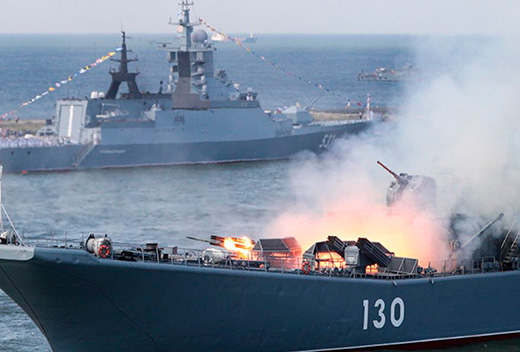 By Eugene KOGAN, Tbilisi-based defence and security expert By Eugene KOGAN, Tbilisi-based defence and security expert
The unprovoked Russian invasion of Ukraine on February 24th, 2022 has substantially changed the security situation around the Black Sea. The three NATO member states Bulgaria, Romania, and Turkey have pursued a very different and distinct policy with regard to Russia. Bulgaria, as will be further presented, remains dependent on Russian gas and oil. Despite the recent Russian decision to halt gas exports to Bulgaria over the country’s refusal to pay for supplies in roubles, Bulgaria did not buckle under pressure. Romania maintains a watchful eye after the Russian military operations along the Black Sea coast, in general, and the city of Odessa, in particular. Turkey maintains balanced relations with Russia and Ukraine. READ MORE.
Peacekeeping in Karabakh Can Learn from the UNOMIG Experience By Benyamin POGHOSYAN, PhD, Chairman, Center for Political and Economic Strategic Studies
As Armenia and Azerbaijan come closer to launching bilateral negotiations over the normalisation of relations, many issues wait for a solution. Currently, the hottest debates are underway regarding the future status of Nagorno Karabakh and the legal modalities of the transit for Armenian and Azerbaijani goods passing each other territories. The war in Ukraine and the complete collapse of Russia – West relations added geopolitical components to the equilibrium. Do we have EU – Russia competition over the mediation process? Are there any disagreements between Brussels and Moscow on promoting lasting peace and stability in the South Caucasus? All these issues are worthy of being discussed and debated. READ MORE
Black Sea Security in Times of War 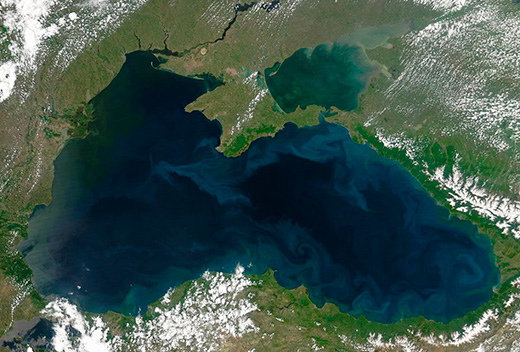 By Eugene KOGAN, Tbilisi-based defence and security expert By Eugene KOGAN, Tbilisi-based defence and security expert
There is no doubt that the ongoing Russian military action against Ukraine profoundly affects the rest of the Black Sea littoral states: Bulgaria, Georgia, Romania and Turkey. The tense standoff of recent weeks placed each of them in a difficult position between apprehension and, particularly with Turkey, a kind of peacemaker or rather mediator, which Russia now ignores completely.
Romanian Defence Minister, Vasile Dincu, said in January 2022 that “Russia, at the moment, is not a direct threat to Romania, but it is [rather] a threat to security in the [Black Sea] area”. The author disagrees with the minister’s statement since the Russian military, which is stationed on the occupied Crimean peninsula - not much more than 100 km from the Danube Delta – is a direct threat to Romania, even though Russian officials will blame the other side for posing a threat to Russia. Furthermore, the region’s three NATO member countries, namely Bulgaria, Romania and Turkey, have until today been unable to create and implement a comprehensive Black Sea security strategy together with NATO aspirants Georgia and Ukraine to counter the challenges posed by Russia. The latter, however, successfully implemented its divide and rule policy in the region. READ MORE.
Iran and the Second Karabakh War: Assessing the New Balance of Power in the South Caucasus
By Fuad SHAHBAZOV, Baku-based independent regional security and defence analyst
The second Karabakh war between Azerbaijan and Armenia in September of 2020 opened a new page in the modern history of the post-Soviet region and explicitly changed the geopolitical landscape in the South Caucasus. With Baku regaining control over large swathes of territories, Turkey has obtained a greater role in the region, acting as a guarantor of the ceasefire regime between Azerbaijan-Armenia alongside Russia, whereas Iran’s diminished position has gotten less attention. Indeed, in the post-war period, Tehran saw a steep decline in its regional influence in the Southern Caucasus, losing its direct land route to Armenia and facing the growing influence of Russia, Israel, and Turkey. Prior to the conflict, Iran had long pursued a balanced foreign policy in the region, developing a partnership with Armenia and Azerbaijan, respectively. However, Turkey’s close relations with Azerbaijan since the 1990s prevented Iran from establishing powerful leverage over this country, unlike landlocked Armenia, which has relied on Iran as one of the main economic partners. READ MORE
Russia-China-Afghanistan 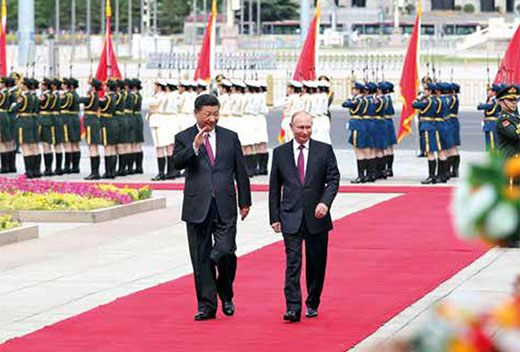 By Eugene KOGAN, Tbilisi-based defence and security expert By Eugene KOGAN, Tbilisi-based defence and security expert
Moscow and Beijing are likely to discover that their initial joy over the US withdrawal from Afghanistan may be premature. Afghanistan under the Taliban remains divided, insecure and uncertain about its current and future path. Without stability and security, neither Beijing nor Moscow will provide economic assistance while the international community will continue to shun Afghanistan.
Russia’s Presidential Envoy to Afghanistan, Zamir Kabulov, noted that “The Taliban were easier to negotiate with than the old “puppet government” of the exiled President Ashraf Ghani.” The latter was seen by, and from Moscow, as a puppet of the West and contacts that Russia maintained with Hamid Karzai’s successor were either downgraded or revised. At the same time, contacts between Russia and the Taliban only increased. With the West’s departure, Moscow is seizing up the opportunity indirectly to recognise the authority of the Taliban, which it officially designated as a terrorist organisation back in 2003 though without burning its bridges with the militant group. READ MORE.
Why non-aligned Azerbaijan signed an alliance declaration with Russia
By Fuad SHAHBAZOV, Baku-based independent regional security and defence analyst
On February 22, the President of Azerbaijan Ilham Aliyev made an paid official trip visit to Moscow to discuss and sign a new declaration on allied cooperation with Russia. The visit came just a day after President Putin's infamous decision to recognize the independence of the so-called Donetsk People's Republic and Luhansk Peoples' Republic in Eastern Ukraine. President Vladimir Putin’s “unexpected” decision deteriorated relations with Ukraine, even more and was followed by the new round of economic sanctions imposed by the U.S and the EU.
President Aliyev's visit to Moscow triggered debates in Azerbaijan and Russia, respectively, on whether the main text of the declaration was pre-negotiated between the two leaders, or prepared amid the escalation around Ukraine. READ MORE
Will Turkey Gamble with Ukraine against Russia? By Yeghia TASHJIAN, Beirut-based regional analyst and researcher, columnist, "The Armenian Weekly”
In the past few years, Turkey has been gradually increasing its influence in Ukraine through trade and military cooperation amid escalating tensions between Moscow and Kyiv, challenging Moscow’s standing in the Black Sea region. The strategic cooperation between Ankara and Kyiv is not limited to political statements, but rather encompasses other important fields, such as the economy, security and defence industries. Moreover, relations between the two countries gained further impetus with Russia’s unification of Crimea in 2014 and reached their peak during the administration of Ukrainian President Volodymyr Zelensky, who assumed office in 2019. READ MORE
Delimitation, Demarcation and Cartographic Manipulation in the Wake of the 44 Days War  By Hayk KOTANJIAN, Lieutenant General (Ret.), D.Sc., Professor of Political Science of the RA, RF, USA (state studies-strategic security studies), Full Member of the Academy of Military Sciences of the RF By Hayk KOTANJIAN, Lieutenant General (Ret.), D.Sc., Professor of Political Science of the RA, RF, USA (state studies-strategic security studies), Full Member of the Academy of Military Sciences of the RF
In the wake of the 44-day war in 2020, an unprecedented escalation of the process of delimitation and demarcation of the Armenian-Azerbaijani borders has been launched. This was done contrary to the principles and procedure for border delimitation and demarcation recommended by the OSCE Secretariat. The unparalleled pressure on the Armenian population from Karabakh was accompanied by subsequent attempts to undermine the settlement process under the auspices of the OSCE Minsk Group co-chairmanship. Among the arguments substantiating claims to include Nagorno-Karabakh in Azerbaijan, Baku authorities refer to the Azerbaijani-language toponymy, which allegedly has a long history. READ MORE
Armenia's Options in the Face of Coercive Azerbaijani Tactics Are Limited By Benyamin Poghosyan, PhD, Chairman, Center for Political and Economic Strategic Studies
The developments of the last year proved that assessments according to which by taking some 8500 square km of territories in the 2020 Karabakh war, Azerbaijan will be satisfied and an era of peaceful development will be launched for Armenians, were highly exaggerated, and had little semblance to reality.
Since the end of the 2020 Karabakh war, Armenia has faced a new, harsh reality along its borders with Azerbaijan. Some in Armenia hoped that after taking back most of the territories which Baku lost during the first Karabakh war of 1992-1994, an era of regional peace would start in the South Caucasus, while Azerbaijan would agree to continue negotiations to fix the status of Nagorno Karabakh within its 1988 borders. Baku was quite quick to dampen such perceptions. Azerbaijan established an economic region of Karabakh in July 2021 and started to aggressively push forward the narrative that war had ended not only the conflict, but Nagorno Karabakh itself, and thus it was senseless to negotiate over the status of a non-existing entity. READ MORE
Azerbaijan-Armenia Border Dispute – Could the Conflict Re-escalate?  By Fuad Shahbazov, Baku-based independent regional security and defence analyst By Fuad Shahbazov, Baku-based independent regional security and defence analyst
Half a year after the Russian-brokered ceasefire agreement was signed between Azerbaijan and Armenia ending the 44-day war in Karabakh, peace in the complex region is not on the horizon. A new stage of discontent and harsh statements came last week after Azerbaijani Armed Forces reportedly crossed the border with Armenia in the Syunik province and advanced around 3 kilometres by Sev Lake. Yerevan dubbed this action as an explicit provocation and an attempt to occupy Armenian territory, whereas Baku denied the accusations, stating that Azerbaijani border guards established a military control point at the heights around the lake without advancing into Armenian territories. READ MORE
- September 14, 2021 19:40PM
Revolutionizing the Turkish Army under Erdogan By Yeghia TASHJIAN, Beirut-based regional analyst and researcher, columnist, "The Armenian Weekly”
Back in July, Rich Outzen published a policy paper “Deals, Drones and National Will: The New Era in Turkish Power Projection” in the Washington Institute for Near East Policy highlighting the new strategy of the Turkish Armed Forces, the development of the arms industry and how Ankara is deploying hard power in the region. According to Outzen, the integration of drones, electronic warfare, manoeuvre and precision strike employed by Turkey across technologies and domains (manned/unmanned and ground/air/naval) have been characterized as a new phase of a revolution in military affairs (RMA). An RMA is a hypothesis in military theory about the future of warfare, often connected to technological and organizational recommendations for radical military reform. An RMA occurs when new tactics, technologies and operational concepts enable dramatic increases in ineffectiveness to provide early innovators a marked advantage and force others to adopt the same methods. READ MORE
- September 4, 2021 06:12AM
Polish-Romanian Defence and Security Policy  By Eugene Kogan, Tbilisi-based defence and security expert By Eugene Kogan, Tbilisi-based defence and security expert
A joint initiative of Romanian President Klaus Iohannis and Polish President Andrzej Duda, known as the ‘Bucharest Nine', was launched in November 2015 and laid a foundation for foreign and security policy meetings and discussions. As the next step, the Warsaw NATO Summit in July 2016 accelerated military-to-military cooperation. As a result, the initiative brought Romanian troops to Poland and Polish troops to Romania on a rotational basis in March 2017. In addition, their pivotal positions in the east and in the south of NATO’s reach have further increased their cooperation in a variety of defence and security programmes. READ MORE.
The Karabakh War: The Lessons of Defeat in the Cyberspace  By Lieutenant-General (Ret.) Hayk S. Kotanjian, PhD, Professor Strategic Security Studies By Lieutenant-General (Ret.) Hayk S. Kotanjian, PhD, Professor Strategic Security Studies
Reflecting on the lessons of the military aggression of Turkey and Azerbaijan against the Nagorno-Karabakh Republic and the Republic of Armenia, strategic analysts of the security institutions and processes continue to monitor the dynamics of the peace-war around Karabakh in the context of the world order transformation. Russian President Vladimir Putin at the session of the Russian Security Council of March 26, 2021, emphasizing the exceptional role of cybersecurity, pointed out the strategic priority of the development of the cyberspace resources management system. In general, this coincides with the assessments of the special significance of this security sector, voiced recently by the US President Joe Biden and Chinese President Xi Jinping. READ MORE
Peace and Reform: Europe’s Role in the Post-Karabakh War Caucasus  By Anna Ohanyan, PhD, non-resident senior scholar in the Russia and Eurasia Program of Carnegie By Anna Ohanyan, PhD, non-resident senior scholar in the Russia and Eurasia Program of Carnegie
Europe has a role to play in rebuilding the South Caucasus and promoting a sustainable future. One important dividend would be democracy promotion in the region. A Russian-enforced peace could be remarkably conducive to that end.
Since the Soviet collapse, Europe and Russia have remained unable to construct a common framework for security cooperation. The Kremlin has consistently pushed for grand security bargains to assert its privileged spheres of influence over swathes of the Eurasian landmass. In contrast, Europe’s normative preferences for a market economy and liberal democracy have favoured a very different approach, one based on rules and rights, in order to advance security and order in the emergent post-Soviet space. READ MORE
Armenia’s Endgame in the Aftermath of the 2020 Karabakh War Needs to be Clarified By Benyamin Poghosyan, PhD, Chairman, Center for Political and Economic Strategic Studies
Still recovering from the war, it is not yet clear what Armenia's strategy is for Nagorno Karabakh. Without a coherent and consistent policy from the Armenian government, Armenia may lose what it retains of the enclave.
Almost four and half months after the end of the 2020 Karabakh war, Armenia has not yet recovered. Society is grappling with lingering questions about the reasons for the staggering defeat. The fate of the remaining Armenian prisoners of war in Azerbaijan, whose POW status Azerbaijan refuses to accept, is a top priority. The ongoing de facto border demarcation process in the Syunik region, and looming demarcations in other regions, have put additional stress on society. The current political crisis and upcoming June 20, 2021, snap parliamentary elections do not help restore stability. Different political forces actively discuss possible changes in the electoral code, and even the possibility of making some amendments to the Constitution before the elections. However, apart from the daily ups and downs of politics, Armenia faces a bigger task: that of clarifying its stance on fundamental issues regarding the new status quo in Nagorno-Karabakh. READ MORE
Nagorno-Karabakh Crisis: Azerbaijan’s Fraying Temper  By Khayal Iskandarov Ibrahim, Rashad Tahirov Kamal, PhD in philology, associate professor Sadi Sadiyev Saleh By Khayal Iskandarov Ibrahim, Rashad Tahirov Kamal, PhD in philology, associate professor Sadi Sadiyev Saleh
Another escalation in Nagorno-Karabakh in early morning on September 27, 2020 brought Armenian-Azerbaijani conflict once again to the focus of world community. Approximately 30 years have elapsed since this conflict was initiated. However, there has not been any substantial progress in the efforts to solve the problem. The prominent political figures in Armenia, who more or less understood the consequences of their actions and endeavored to solve the problem, were either ousted or assassinated. READ MORE.
Russian Strategy Before and During the New Karabakh War By Benyamin Poghosyan, PhD, Chairman, Center for Political and Economic Strategic Studies
The new war against the unrecognized Nagorno Karabakh Republic launched by Azerbaijan on September 27, 2020, has intensified discussions among the experts on the role of the external actors in the region. Significant attention was focused on the newly gained influence of Turkey as a supporter of Azerbaijan. However, as for now, the key player in the Karabakh conflict remains Russia, and most probably, this balance will not be changed at least in the short term perspective. READ MORE
- November 10, 2020 05:19AM
A Tangled Tale By Benyamin Poghosyan, PhD, Chairman, Center for Political and Economic Strategic Studies
Tensions in the Aegean between Turkey and Greece have found an echo in the South Caucasus, with the risk of somewhat unpredictable consequences.
Tensions in the Eastern Mediterranean, between Turkey on the one hand, and Greece, Cyprus, Egypt, UAE and France, on the other, simmered over the summer period. There is a long history of Turkey - Greece disputes and conflicts, since the end of the WWII, such as events in 1974-1976, 1987, and 1995-1996; but the current situation can be described as unprecedented. The region now faces several intertwined conflicts: the proxy war in Libya; divergent views on the issues of demarcation in the eastern Mediterranean; and the fight for the control of large resources of natural gas and their transit routes. In the background is also the intra-Muslim struggle between the Muslim Brotherhood movement supported by Turkey and Qatar, but staunchly opposed by the Gulf monarchies and Egypt. READ MORE
- September 30, 2020 09:21AM
Military Cooperation between Israel, Greece and Cyprus 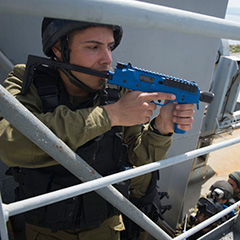 By Eugene Kogan, Tbilisi-based defence and security expert
The trilateral military cooperation, begun in November 2017, has all the necessary components to become decisive for the three countries in the eastern Mediterranean in the long-term. In addition, the US is fully behind the three countries, sending a clear signal to Ankara not to provoke conflict in the region.
Turkey, which is still a member of NATO, is not in a position to prevent Israel from cooperating with NATO, although such cooperation is a thorn in the side of Turkey. Although Cypriot military exercises with Israel upset Turkey, it cannot prevent the two countries from cooperating. That is why we see a new military architecture in the Eastern Mediterranean, which will shape the security relations of the three countries in the coming years. READ MORE
President Trump’s Middle East Peace Plan: Possible Implications for Armenia By Benyamin Poghosyan, PhD, Chairman, Center for Political and Economic Strategic Studies
On January 28, 2020 President Trump unveiled his much long waited peace plan for the Israeli – Palestinian conflict. The plan was warmly welcomed by the Israeli Prime Minister Benyamin Netanyahu and Israeli opposition leader General Gantz. Simultaneously, it was sharply criticized by the Palestinian leader Mahmoud Abbas, who told that it belonged to the dustbin of history, and by Hamas leaders who stated that Palestinians would confront that deal. Turkish President Erdogan called it a plan to ignore the rights of Palestinians and legitimize Israel’s occupation. READ MORE
- February 17, 2020 23:16PM
|
|




 In Progress
