President Trump’s Middle East Peace Plan: Possible Implications for Armenia  By Benyamin Poghosyan, PhD, Chairman, Center for Political and Economic Strategic Studies By Benyamin Poghosyan, PhD, Chairman, Center for Political and Economic Strategic Studies
On January 28, 2020 President Trump unveiled his much long waited peace plan for the Israeli – Palestinian conflict. The plan was warmly welcomed by the Israeli Prime Minister Benyamin Netanyahu and Israeli opposition leader General Gantz. Simultaneously, it was sharply criticized by the Palestinian leader Mahmoud Abbas, who told that it belonged to the dustbin of history, and by Hamas leaders who stated that Palestinians would confront that deal. Turkish President Erdogan called it a plan to ignore the rights of Palestinians and legitimize Israel’s occupation. READ MORE
- February 17, 2020 23:16PM
Gulf Tensions May Spill Over into the Caucasus By Benyamin Poghosyan, PhD, Executive Director, Political Science Association of Armenia
The September 14th attacks against Saudi Arabia's oil facilities have dangerously increased tensions in the Middle East. Regardless of the author of these actions - the Houthi rebels from Yemen or the Islamic Revolutionary Guard Corps using Iraqi or Iranian territories - a clear message was sent to the Gulf monarchies and the US: Iran on its own or through its proxy forces is capable of inflicting serious damage to the Gulf States’ vital interests, and the "maximum economic pressure" campaign led by the US since May 2018 has as yet failed to change Iranian regional policy. READ MORE
‘Game of Thrones Moment' for Azerbaijan in Nagorno-Karabakh 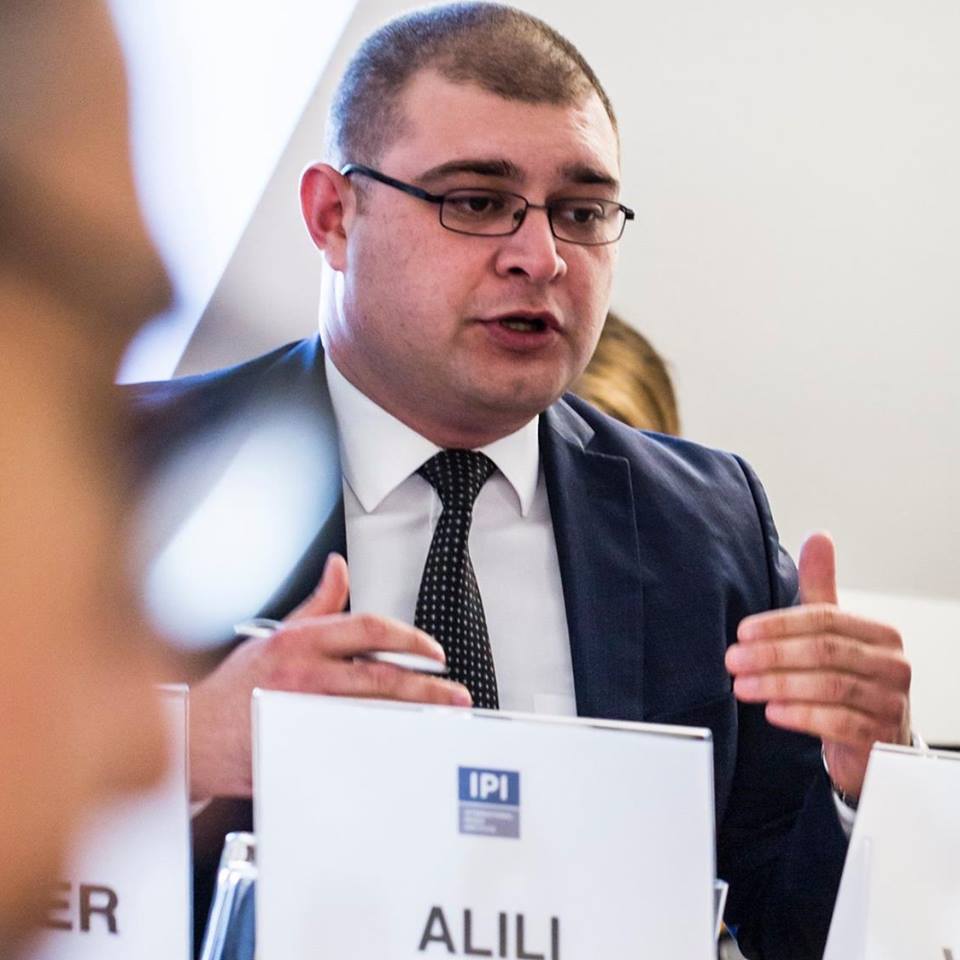 By Ahmad Alili, Head of Research, Caucasus Policy Analysis Center, Baku
In the real world, we do not have dragons, faceless men, red woman, white walkers or resurrection from the dead. Yet, the public policy challenges facing advisers in the famous Game of Thrones (GoT) TV show mirror those that political advisors to real governments face. We draw parallels to the real world in the way the show's decision-makers and advisers face the same limitations of time, resources and information bias. READ MORE
- September 24, 2019 21:39PM
Is Russia Cultivating ‘Symmetric Separatism’ in Karabakh?  By Eduard Abrahamyan, Wider Black Sea & Central Asia regional security analyst By Eduard Abrahamyan, Wider Black Sea & Central Asia regional security analyst
Moscow’s mistrust of the Armenian government headed by Prime Minister Nikol Pashinyan dates all the way back to his rise to power last year in the so-called “Velvet Revolution.” And that mistrust has persisted despite Pashinyan’s various foreign policy gambits designed to win Russia’s confidence (see EDM, March 21). At the same time, Pashinyan’s domestic agenda—specifically, his determination to dismantle the previous regime’s oligarchic/kleptocratic order, including by prosecuting former president Robert Kocharyan for abuses of power—seems to be increasingly irking Moscow as well. READ MORE
- September 16, 2019 21:43PM
NATO and Georgian–American Military Relations  By Eugene Kogan, Tbilisi-based defence and security expert By Eugene Kogan, Tbilisi-based defence and security expert
Since the 2003 Rose Revolution, Georgia has become a staunch and dependable non-NATO ally of the United States in the South Caucasus. Georgian-American bilateral military relations have become stronger and have climaxed in November 2017. With 870 soldiers per capita, Georgia is the leading donor of troops in Afghanistan. This is highly appreciated by the United States. READ MORE
- September 9, 2019 22:26PM
Can Azerbaijan Afford a Change of Format in the Peaceful Resolution of the Nagorno-Karabakh Conflict?
By Eduard Abrahamyan, Wider Black Sea & Central Asia regional security analyst
While the standoff between adversaries rages on, recent weeks saw an intensified communication between American and Russian high-level officials over the wide array of issues on which Moscow and Washington have contrasting views. On May 14, U.S. Secretary of State Mike Pompeo met with his Russian counterpart, Foreign Minister Sergey Lavrov, and later with President Vladimir Putin in the Russian Black Sea city of Sochi. READ MORE
Armenian-Azerbaijani Talks on Karabakh Appear Positive Even as Conflict Continues to Simmer Underneath By Eduard Abrahamyan, Wider Black Sea & Central Asia regional security analyst
The foreign ministers of Armenia and Azerbaijan held four-hour-long consultations in Paris, on January 16, under the auspices of the Organization for Security and Cooperation in Europe’s (OSCE) Minsk Group. The joint statement to come out of the meeting included telling language. In particular, the two sides acknowledged the need for “concrete measures to prepare the populations for peace”. READ MORE
Non-alignment Policy as a Principle of Shaping the National Security of Azerbaijan  By professor Sadi Sadiyev Saleh, War College of the Armed Forces, Republic of Azerbaijan By professor Sadi Sadiyev Saleh, War College of the Armed Forces, Republic of Azerbaijan
The emergence of a bipolar world and the formation of two military blocks (NATO and the Warsaw Pact) after the Second World War ushered in an intense rivalry between different countries. Finding an effective grand strategy to survive between two hostile powers inevitably requires a balanced policy. In this context, the underdeveloped countries felt the need to join efforts for the common defence of their interests, to strengthen their independence and sovereignty and to express a strong commitment for peace by declaring themselves as “non-aligned” from either of the two nascent military blocks. READ MORE
- February 14, 2019 20:25PM
Russia’s Policy of Deception and Denial  By Eugene Kogan, Tbilisi-based defence and security expert By Eugene Kogan, Tbilisi-based defence and security expert
A policy of deception and denial is the cornerstone of Russia‘s overarching strategy of confusion, paralysis and ultimately defeat of the opponent.
Consistency, conviction and perseverance are key words to describe the policy of deception and denial. The cases presented below shed light on the consistent pattern of President Vladimir Putin’s government to deceive others and depict Russia as the one that comes to the aid of the underdogs, whether in Georgia, Ukraine or elsewhere. Syria is a special case where Russia cannot abandon its military bases to aggressive Western powers. READ MORE
What Next in Iran? By Benyamin Poghosyan, PhD, Executive Director, Political Science Association of Armenia
On May 8, US President Donald Trump made the decision to pull the US out of the Iran nuclear deal (JCPOA). This was done despite all efforts of European leaders to convince Trump to stay in. The President of France and German Chancellor Merkel visited Washington late April and UK Foreign Secretary Johnson was in DC on May 6-7. However, all failed to reach an agreement with the US President. READ MORE
The Regional Security Situation Remains Challenging in the South Caucasus
By Benyamin Poghosyan, PhD, Executive Director, Political Science Association of Armenia
The South Caucasus is facing multiple security challenges with no clear path to overcome them in the foreseeable future. The conflicts in Nagorno-Karabakh, Abkhazia and South Ossetia are hampering any efforts to have an inclusive regional cooperation, and are the key reasons for the strained Russia - Georgia relations and absence of relations between Armenia, Turkey and Azerbaijan. Meanwhile, there are no immediately apparent ways to move towards the settlement of these conflicts. Russia deployed military bases in both Abkhazia and South Ossetia, and demanded from Georgia to accept the geopolitical facts on the ground. READ MORE
Expect No Changes on the Karabakh Issue in the Next Year or Two By Benyamin Poghosyan, PhD, Executive Director, Political Science Association of Armenia
On April 11, the incumbent President of Azerbaijan lham Aliyev was re-elected for his fourth term in office. Despite a boycott by the Azerbaijani opposition, as well as a tough assessment on elections from western observers, very few doubt that Aliyev will continue to rule in Azerbaijan. On April 9, Armenia finalized its transformation from semi-presidential system of government to a parliamentary one. The Parliament elected a new President - former Armenian ambassador in the UK Armen Sarkissian. His role defined by the new constitution is purely ceremonial. READ MORE
Russian-Turkish Relations and their Impact on NATO and the EU  By Eugene Kogan, Tbilisi-based defence and security expert By Eugene Kogan, Tbilisi-based defence and security expert
The Black Sea region is one of the regions in which Turkey has lost its influence to Russia. NATO and the EU have no influence on relations between Russia and Turkey, as NATO has no mechanism for excluding Turkey as a member state, while the EU, although it has implicitly suspended negotiations on Turkey's possible membership, it is not prepared to make a clear statement that Turkey will not join the Union in the foreseeable future. READ MORE
Armenia’s Karabakh Strategy, from Status Quo to Preemption By Benyamin Poghosyan, PhD, Executive Director, Political Science Association of Armenia
The settlement of Nagorno-Karabakh conflict is the number one national security priority for Armenia. Armenia guarantees the security of the people of the Nagorno Karabakh Republic, having supported Karabakh during the 1992–94 war with Azerbaijan and through the years of cease-fire. Since 1994, Armenia has been involved in negotiation process in order to resolve the conflict with Azerbaijan. In recent years talks focused on the so-called Madrid Principles prepared by international mediators. Armenia accepted these principles as a basis for settlement and expressed willingness to sign a framework agreement during the summit in Kazan, Russia in 2011. READ MORE
The New End Game (Part 2)  By Mehmood-Ul-Hassan Khan, EGF Affiliated Expert
President Donald Trump has announced his most controversial “Afghan Policy” by blaming Pakistan for the strategic failure of his country in Afghanistan. He called Pakistan the only “destabilizing factor” for its “untamed militarization” of Afghanistan since 2001, by allegedly supporting, nurturing and financing terrorist groups. The new US Afghan Policy has also started a new end game in the region with prospective spill-over socio-economic, geopolitical and geo-strategic repercussions. READ MORE
Georgian Military Modernisation: Two Steps Forward, One Step Back  By Eugene Kogan, Tbilisi-based defence and security expert By Eugene Kogan, Tbilisi-based defence and security expert
At a press conference on 7 November 2016, Georgia’s minister of defence Levan Izoria announced plans to reform the country's armed forces, air force and air defence, but concluded that the construction of a new naval capacity was too costly. The Navy was disbanded in 2009 and merged with the Coast Guard, which is part of the Border Guard Division and reports to the Ministry of the Interior (MIA). It should also be emphasised that Izoria's reform plans were not the first and probably will not be the last ones. READ MORE
Kurdish region in turmoil  By Benyamin Poghosyan, PhD, Executive Director, Political Science Association of Armenia By Benyamin Poghosyan, PhD, Executive Director, Political Science Association of Armenia
There is uncertainty in Iraq's Kurdish Region after President Barzani's independence gamble misfires.
On September 25, 2017 Iraq's Kurdistan Regional Government (KRG) held an independence referendum with the overwhelming majority voting in favour of independence. The referendum was organized despite strong opposition from neighbouring Turkey and Iran, as well as Iraq's central Government, which called it illegal. Iraqi Kurdistan's decision to hold the referendum also in disputed territories, including the oil rich city of Kirkuk that have been under Kurdish control after the Iraqi army abandoned those territories as a result of ISIS advancements, caused further irritation in Baghdad. READ MORE
The New End Game (Part 1)
By Mehmood-Ul-Hassan Khan, EGF Affiliated Expert
The new “end game” has been started by the national, regional and international power brokers. Shahid Khaqan Abbasi, who has been sworn in as the new Prime Minister of Pakistan, has already announced his priorities. He said there would be no load-shedding after November this year, and he pointed out that ten thousands megawatts of additional electricity will be added to the national grid. The completion of the ongoing mega-projects of energy in different parts of Pakistan would also be one of his national priorities. READ MORE
NATO and Turkey continue to need each other By Benyamin Poghosyan, PhD, Executive Director, Political Science Association of Armenia
In recent months, Turkey has been facing increasing difficulties with key NATO member states. The United States' growing reliance on Syrian Kurdish forces in Syria as a key force capable of effectively fighting Islamic State and US President Donald Trump's decision to arm Kurdish YPG units placed additional strains on bilateral US-Turkey relations, which have been sharply deteriorating since the July 2016 military coup and with Turkey's unsuccessful efforts to organize Fethullah Gulen's extradition from the US. READ MORE
“Towards Europe?! Straddling Fault Lines and Choosing Sides in the South Caucasus” 10th Workshop of the PfP Consortium’s “Regional Stability in the South Caucasus” Study Group (RSSC SG)
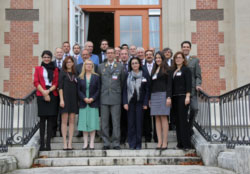 On 6-8 November, 2014, the PfPC and the Austrian National Defense Academy jointly organized the 10th Workshop of the RSSC SG at “Schloss Rothschild” in Reichenau (Austria). This workshop offered a platform for constructive dialogue among government and academic experts on the prospective roles of the EU and the Eurasian Economic Union (EEU) in breaking the current deadlocks in the resolution of the protracted conflicts in Abkhazia, South Ossetia and Nagorno-Karabakh. During this workshop, a panel moderated by George Niculescu, the Head of Research of EGF, examined the background and the potential implications from the perspectives of South Caucasus (SC) states of having to make undesirable choices between the EU and the EEU. The panelists’ presentations and the ensuing discussion highlighted that, against the backdrop of the Ukrainian crisis, maintaining freedom of choice on the ways and levels of engagement with both the EU and the EEU is a critical interest for each SC state, and a prerequisite for effective conflict resolution. In this context, Mr Niculescu thought that “the EU might work towards developing options for harmonizing the European and Eurasian integration normative systems. One of the options to be explored might involve sustaining post-conflict regional economic cooperation as a way to circumvent the dilemma of the states caught in-between competing European and Eurasian integration processes.” READ MORE. Please see the relevant post on Facebook here. On 6-8 November, 2014, the PfPC and the Austrian National Defense Academy jointly organized the 10th Workshop of the RSSC SG at “Schloss Rothschild” in Reichenau (Austria). This workshop offered a platform for constructive dialogue among government and academic experts on the prospective roles of the EU and the Eurasian Economic Union (EEU) in breaking the current deadlocks in the resolution of the protracted conflicts in Abkhazia, South Ossetia and Nagorno-Karabakh. During this workshop, a panel moderated by George Niculescu, the Head of Research of EGF, examined the background and the potential implications from the perspectives of South Caucasus (SC) states of having to make undesirable choices between the EU and the EEU. The panelists’ presentations and the ensuing discussion highlighted that, against the backdrop of the Ukrainian crisis, maintaining freedom of choice on the ways and levels of engagement with both the EU and the EEU is a critical interest for each SC state, and a prerequisite for effective conflict resolution. In this context, Mr Niculescu thought that “the EU might work towards developing options for harmonizing the European and Eurasian integration normative systems. One of the options to be explored might involve sustaining post-conflict regional economic cooperation as a way to circumvent the dilemma of the states caught in-between competing European and Eurasian integration processes.” READ MORE. Please see the relevant post on Facebook here.
- February 20, 2015 18:32PM
The "Global Swing States" thesis and the Future of the Black Sea Regional Order  By George Niculescu, By George Niculescu,
Head of Research, The European Geopolitical Forum
In November 2012, the German Marshall Fund of the United States and the Center for a New American Security published a series of papers built upon the "global swing states" concept launched by Daniel Kliman and Richard Fontaine in a report on: "Global Swing States: Brazil, India, Indonesia, Turkey and the Future of International Order". READ MORE
The Security of the South Caucasus States and NATO With the support of the Public Diplomacy Division of NATO Headquarters (Brussels) the Region Research Center (Armenia) has started the implementa- tion of the project " The Security of the South Caucasus and NATO" (December 2011 - March 2012). READ MORE
- February 28, 2012 04:08AM
Algeria: The Risks of slipping into deeper political crisis By Eugen Iladi, Independent Expert
The dramatic events in Tunisia and Egypt, where long-serving presidents have been ousted within weeks of each other by “street-led people’s revolts”, are inspiring demonstrators in other Muslim countries to demand structural political change. Libya is currently gripped by deep political crisis, as is the tiny Gulf Monarchy of Bahrain, whilst revolts are ongoing in Yemen, Morocco and Iran. Furthermore, Algeria seems to be one of the next countries possibly hanging in the balance, where the prospect of regime change must now be a question of serious concern. READ MORE
|
|




 In Progress

 Paul Pryce