NATO and Georgian–American Military Relations 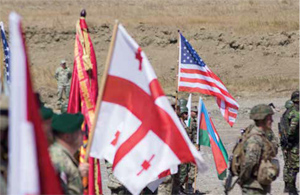 By Eugene Kogan, Tbilisi-based defence and security expert By Eugene Kogan, Tbilisi-based defence and security expert
Since the 2003 Rose Revolution, Georgia has become a staunch and dependable non-NATO ally of the United States in the South Caucasus. Georgian-American bilateral military relations have become stronger and have climaxed in November 2017. With 870 soldiers per capita, Georgia is the leading donor of troops in Afghanistan. This is highly appreciated by the United States. READ MORE
- September 9, 2019 22:26PM
Romania Faces the Militarization of the Black Sea Region  By Greta K. Wagner, Student, University of Glasgow, Intern, The European Geopolitical Forum By Greta K. Wagner, Student, University of Glasgow, Intern, The European Geopolitical Forum
Russia’s annexation of Crimea in 2014 has profoundly impacted the military balance in the Black Sea. Amidst mutual distrust and conflicting insecurity perceptions, militarization has become the dominant security paradigm. Both Moscow and the NATO members in the region are steadily building up their military capacities and engaging in tit-for-tat defense enhancements. READ MORE
Security Trends in the Arctic Region and their Impact on Contemporary World Politics  By Nika Chitadze, PhD, Director, Center for International Studies, International Black Sea University, Tbilisi By Nika Chitadze, PhD, Director, Center for International Studies, International Black Sea University, Tbilisi
The melting of the Arctic ice cap in combination with developments elsewhere concerning future of energy and military security are creating scenarios that range from low level friction to potential conflict between the Arctic littoral states. Much attention has been devoted to maritime boundary disputes involving the Arctic states: Canada, Denmark, Norway, Russia, and the US. In addition to this, the emerging interest of non-Arctic states in shipping, polar research and non-living resources exploitation also adds uncertain elements to the Arctic geopolitical development. READ MORE
Armenian-Azerbaijani Talks on Karabakh Appear Positive Even as Conflict Continues to Simmer Underneath  By Eduard Abrahamyan, Wider Black Sea & Central Asia regional security analyst By Eduard Abrahamyan, Wider Black Sea & Central Asia regional security analyst
The foreign ministers of Armenia and Azerbaijan held four-hour-long consultations in Paris, on January 16, under the auspices of the Organization for Security and Cooperation in Europe’s (OSCE) Minsk Group. The joint statement to come out of the meeting included telling language. In particular, the two sides acknowledged the need for “concrete measures to prepare the populations for peace”. READ MORE
Withdrawal of the US Troops from Syria and its Impact on the Security Environment in the Black Sea Region By Nika Chitadze, PhD, Director, Center for International Studies, International Black Sea University, Tbilisi
As it is known, US President Donald Trump recently adopted a decision on the withdrawal of about two thousands American military serviceman from Syria. It is possible that one of the main purposes of the American contingent’s withdrawal is the restoration of closer relations between USA and Turkey and the prevention of strengthening cooperation between Moscow and Ankara. READ MORE
- February 23, 2019 21:51PM
Can Major non-NATO Ally Status Temporarily Solve Georgia’s Security Dilemma? By Eduard Abrahamyan, Wider Black Sea & Central Asia regional security analyst
Despite almost two decades of fanfare regarding Georgia’s pursuit to join NATO, the North Atlantic Alliance has yet to adopt a common position on the concrete timeframe of Georgia’s eventual membership. Given NATO’s protracted, uneven handling of Georgia’s enrolment process, might Georgia be better off seeking closer bilateral relations with the United States? READ MORE
- February 14, 2019 20:24PM
The Realities Against Armenia’s "Nagorno-Karabakh Strategy of Pre-emption"  By professor Sadi Sadiyev Saleh, War College of the Armed Forces, Republic of Azerbaijan By professor Sadi Sadiyev Saleh, War College of the Armed Forces, Republic of Azerbaijan
An Armenian author, Benyamin Poghosyan, blamed Azerbaijan for lingering Nagorno-Karabach conflict in his recently published paper on “Armenia’s Karabakh Strategy, from Status Quo to Pre-emption”. It is abundantly clear that he hadn’t referred to any legal or reliable documents when he developed that paper. In order to come to grips with this issue we should hark back to the origin of the conflict. We will be focusing on three stages to let you digest the whole information: Where did this issue emanate from? What is the current situation? What are the prospects of future detente? READ MORE
- December 11, 2018 06:39AM
What Next in Iran?  By Benyamin Poghosyan, PhD, Executive Director, Political Science Association of Armenia By Benyamin Poghosyan, PhD, Executive Director, Political Science Association of Armenia
On May 8, US President Donald Trump made the decision to pull the US out of the Iran nuclear deal (JCPOA). This was done despite all efforts of European leaders to convince Trump to stay in. The President of France and German Chancellor Merkel visited Washington late April and UK Foreign Secretary Johnson was in DC on May 6-7. However, all failed to reach an agreement with the US President. READ MORE
The Regional Security Situation Remains Challenging in the South Caucasus
By Benyamin Poghosyan, PhD, Executive Director, Political Science Association of Armenia
The South Caucasus is facing multiple security challenges with no clear path to overcome them in the foreseeable future. The conflicts in Nagorno-Karabakh, Abkhazia and South Ossetia are hampering any efforts to have an inclusive regional cooperation, and are the key reasons for the strained Russia - Georgia relations and absence of relations between Armenia, Turkey and Azerbaijan. Meanwhile, there are no immediately apparent ways to move towards the settlement of these conflicts. Russia deployed military bases in both Abkhazia and South Ossetia, and demanded from Georgia to accept the geopolitical facts on the ground. READ MORE
Expect No Changes on the Karabakh Issue in the Next Year or Two By Benyamin Poghosyan, PhD, Executive Director, Political Science Association of Armenia
On April 11, the incumbent President of Azerbaijan lham Aliyev was re-elected for his fourth term in office. Despite a boycott by the Azerbaijani opposition, as well as a tough assessment on elections from western observers, very few doubt that Aliyev will continue to rule in Azerbaijan. On April 9, Armenia finalized its transformation from semi-presidential system of government to a parliamentary one. The Parliament elected a new President - former Armenian ambassador in the UK Armen Sarkissian. His role defined by the new constitution is purely ceremonial. READ MORE
Russian-Turkish Relations and their Impact on NATO and the EU 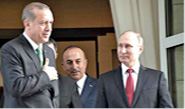 By Eugene Kogan, Tbilisi-based defence and security expert By Eugene Kogan, Tbilisi-based defence and security expert
The Black Sea region is one of the regions in which Turkey has lost its influence to Russia. NATO and the EU have no influence on relations between Russia and Turkey, as NATO has no mechanism for excluding Turkey as a member state, while the EU, although it has implicitly suspended negotiations on Turkey's possible membership, it is not prepared to make a clear statement that Turkey will not join the Union in the foreseeable future. READ MORE
Iran and the US are slowly heading towards collision By Benyamin Poghosyan, PhD, Executive Director, Political Science Association of Armenia
US attempts to change the provisions of the nuclear deal with Iran will intensify over the next months, but things are only likely to come to a head in 2019.
Since the election of President Trump, US-Iran relations have deteriorated significantly. The new US administration has ratcheted up pressure against Tehran threatening to withdraw from the 2015 nuclear deal, also known as JCPOA. The key members of President Trump national security team have accused Iran of supporting terrorism, sowing chaos in the Middle East, and creating a vast network of non-state actors vehemently countering US interests in the region. READ MORE
Armenia, the Turkish Threat, and the Russian Antidote  By Benyamin Poghosyan, PhD, Executive Director, Political Science Association of Armenia By Benyamin Poghosyan, PhD, Executive Director, Political Science Association of Armenia
The Afrin events are being used to assert the notion that without Russian military guarantees, and a Russian military base deployed in Armenia, Yerevan will be under a constant threat from a potential Turkish offensive.
Turkey's military operation in Afrin proved once more that in the current geopolitical situation in the Middle East nothing can be excluded. Obviously, Turkey had made its own calculations when it launched the offensive, and the muted reaction of the main players of the region can be perceived as a proof that some preliminary discussions had taken place before the start of the operation. The nonlinear relations between powers involved in the Middle East makes it really complicated to understand what lies beneath the surface in terms of motives and assessments. READ MORE
- February 10, 2018 07:51AM
Georgian Military Modernisation: Two Steps Forward, One Step Back 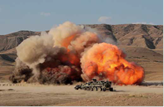 By Eugene Kogan, Tbilisi-based defence and security expert By Eugene Kogan, Tbilisi-based defence and security expert
At a press conference on 7 November 2016, Georgia’s minister of defence Levan Izoria announced plans to reform the country's armed forces, air force and air defence, but concluded that the construction of a new naval capacity was too costly. The Navy was disbanded in 2009 and merged with the Coast Guard, which is part of the Border Guard Division and reports to the Ministry of the Interior (MIA). It should also be emphasised that Izoria's reform plans were not the first and probably will not be the last ones. READ MORE
Kurdish region in turmoil By Benyamin Poghosyan, PhD, Executive Director, Political Science Association of Armenia
There is uncertainty in Iraq's Kurdish Region after President Barzani's independence gamble misfires.
On September 25, 2017 Iraq's Kurdistan Regional Government (KRG) held an independence referendum with the overwhelming majority voting in favour of independence. The referendum was organized despite strong opposition from neighbouring Turkey and Iran, as well as Iraq's central Government, which called it illegal. Iraqi Kurdistan's decision to hold the referendum also in disputed territories, including the oil rich city of Kirkuk that have been under Kurdish control after the Iraqi army abandoned those territories as a result of ISIS advancements, caused further irritation in Baghdad. READ MORE
The New End Game (Part 1)  By Mehmood-Ul-Hassan Khan, EGF Affiliated Expert
The new “end game” has been started by the national, regional and international power brokers. Shahid Khaqan Abbasi, who has been sworn in as the new Prime Minister of Pakistan, has already announced his priorities. He said there would be no load-shedding after November this year, and he pointed out that ten thousands megawatts of additional electricity will be added to the national grid. The completion of the ongoing mega-projects of energy in different parts of Pakistan would also be one of his national priorities. READ MORE
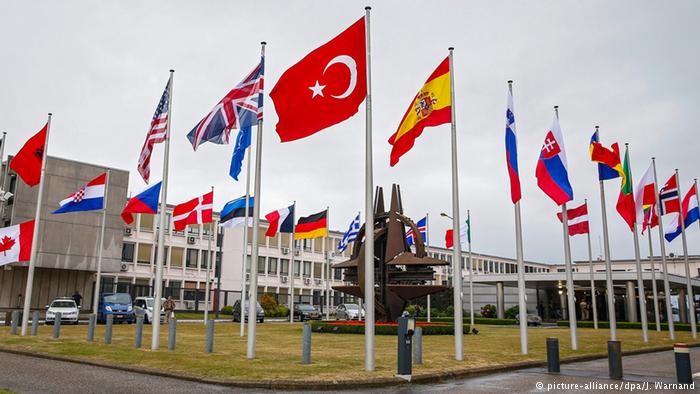
Turkey's Relations with and Relevance for NATO
 By Eugene Kogan, Tbilisi-based defence and security expert By Eugene Kogan, Tbilisi-based defence and security expert
It should be remembered that Turkey’s relations with NATO were not as smooth as perhaps some experts wished to think, even before the failed coup on 15 July 2016. For instance, back in November 2009 the AKP government was adamant that despite Turkish soldiers’ participation in the ISAF mission they were not combat troops. Turkey's position at the time irked allies in NATO and the US in particular, and it has not changed since then. READ MORE
- September 14, 2017 20:25PM
New Russian Order in the Middle East? 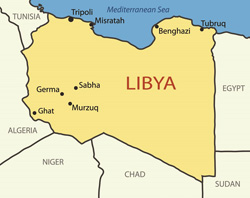 By Dr.Cyril Widdershoven, EGF Affiliated Expert, Military geopolitics By Dr.Cyril Widdershoven, EGF Affiliated Expert, Military geopolitics
Military environment in the Mediterranean is changing according to the chess plans of Russia’s leader Vladimir Putin. After bridging the immense opposition Russia was encountering during and after the demise of the USSR, a new Russian influence sphere has been built up of unforeseen order. It how the situation is perceived by Western leaders and military experts.
Re-emergence of Russian military assets and bilateral and multilateral relations with Arab countries is now being substantiated by the set-up of new military alliances in and around the Mediterranean. READ MORE
Uzbekistan President Karimov’s long-term vision of a Central Asian Nuclear Weapons Free Zone is now much closer to realisation 
 Snapshot analysis by Ben McPherson, Principal Editor, European Geopolitical Forum
In May 2014 an important initiative, the Central Asian Nuclear Weapon Free Zone, or CANWFZ, was enshrined by the actions of five nuclear states—the United States, the United Kingdom, France, China and Russia—as they signed a Protocol agreeing to respect the non-proliferation framework. The idea has been discussed since at least 1993, when the President of Uzbekistan, Islam Karimov, proposed it at the UN General Assembly. READ MORE
“Towards Europe?! Straddling Fault Lines and Choosing Sides in the South Caucasus” 10th Workshop of the PfP Consortium’s “Regional Stability in the South Caucasus” Study Group (RSSC SG)
 On 6-8 November, 2014, the PfPC and the Austrian National Defense Academy jointly organized the 10th Workshop of the RSSC SG at “Schloss Rothschild” in Reichenau (Austria). This workshop offered a platform for constructive dialogue among government and academic experts on the prospective roles of the EU and the Eurasian Economic Union (EEU) in breaking the current deadlocks in the resolution of the protracted conflicts in Abkhazia, South Ossetia and Nagorno-Karabakh. During this workshop, a panel moderated by George Niculescu, the Head of Research of EGF, examined the background and the potential implications from the perspectives of South Caucasus (SC) states of having to make undesirable choices between the EU and the EEU. The panelists’ presentations and the ensuing discussion highlighted that, against the backdrop of the Ukrainian crisis, maintaining freedom of choice on the ways and levels of engagement with both the EU and the EEU is a critical interest for each SC state, and a prerequisite for effective conflict resolution. In this context, Mr Niculescu thought that “the EU might work towards developing options for harmonizing the European and Eurasian integration normative systems. One of the options to be explored might involve sustaining post-conflict regional economic cooperation as a way to circumvent the dilemma of the states caught in-between competing European and Eurasian integration processes.” READ MORE. Please see the relevant post on Facebook here. On 6-8 November, 2014, the PfPC and the Austrian National Defense Academy jointly organized the 10th Workshop of the RSSC SG at “Schloss Rothschild” in Reichenau (Austria). This workshop offered a platform for constructive dialogue among government and academic experts on the prospective roles of the EU and the Eurasian Economic Union (EEU) in breaking the current deadlocks in the resolution of the protracted conflicts in Abkhazia, South Ossetia and Nagorno-Karabakh. During this workshop, a panel moderated by George Niculescu, the Head of Research of EGF, examined the background and the potential implications from the perspectives of South Caucasus (SC) states of having to make undesirable choices between the EU and the EEU. The panelists’ presentations and the ensuing discussion highlighted that, against the backdrop of the Ukrainian crisis, maintaining freedom of choice on the ways and levels of engagement with both the EU and the EEU is a critical interest for each SC state, and a prerequisite for effective conflict resolution. In this context, Mr Niculescu thought that “the EU might work towards developing options for harmonizing the European and Eurasian integration normative systems. One of the options to be explored might involve sustaining post-conflict regional economic cooperation as a way to circumvent the dilemma of the states caught in-between competing European and Eurasian integration processes.” READ MORE. Please see the relevant post on Facebook here.
- February 20, 2015 18:32PM
What Kind of Sovereignty? Examining Alternative Governance Models in the South Caucasus 8th Workshop of the PfP Consortium Study Group “Regional Stability in the South Caucasus”
On 07-09 November 2013, Mr. George Niculescu, the Head of Research of the European Geopolitical Forum, attended the 8th Workshop of the PfP Consortium Study Group “Regional Stability in the South Caucasus”, held in Reichenau (Austria). Mr. Niculescu moderated the panel on “Alternative Models of Sovereignty in Practice” aiming to propose practical solutions for “joint political and administrative” governance in the South Caucasus. Distinguished panelists from Armenia, Azerbaijan, Germany and the United Kingdom put forward their thoughts on the subject, while the audience consisting of officials and experts from regional and international think tanks, education institutions, and civil society actively debated panelists’ proposals. Mr. Niculescu concluded that: “Rather than trying to impose unilateral solutions involving the final status of the unrecognized political entities in the South Caucasus, regional states and relevant international actors should rather focus creative energies on setting up transitional processes aimed at achieving multilateral governance over the regional commons. Moreover, as suggested by lessons learned in the Western Balkans, region building strategies should effectively complement international efforts for conflict transformation. However, a champion for regional integration is still missing in the South Caucasus. Potentially, the EU could revitalize its involvement in strengthening regionalism in the South Caucasus in strategic coordination with Russia and Turkey“. Click here to see an outline of the workshop and here to see the ensuing policy recommendations.
The Security of the South Caucasus States and NATO With the support of the Public Diplomacy Division of NATO Headquarters (Brussels) the Region Research Center (Armenia) has started the implementa- tion of the project " The Security of the South Caucasus and NATO" (December 2011 - March 2012). READ MORE
- February 28, 2012 04:08AM
The Deadlock in the Karabakh Negotiations: A Possible Way Forward 
Dr Beniamin Poghosyan
Deputy Director, Institute for National Strategic Studies, MOD, Armenia
Executive Director, Political Science Association of Armenia
The Karabakh conflict negotiation process is in an obvious stalemate after the apparent failure of the Kazan summit which took place last June. Three-years of mediation efforts by Russian President Dmitry Medvedev accompanied by efforts of the Minsk Group’s two other Co-chair-state-leaders have delivered no results. The much anticipated breakthrough which should have taken place at the Kazan trilateral summit was transformed into a half page statement with no concrete steps and decisions. President Medvedev’s further efforts to move the process through bilateral meetings with Azerbaijani and Armenian Presidents did not bring any meaningful results. Meanwhile, the situation in the front line is deteriorating mainly due to Azerbaijani snipers deadly attacks and retaliatory actions of Karabakh Armed Forces. READ MORE
The Changing Dynamics of the Wider-Black Sea in Regional Security and External Relations Executive Summary
On Monday, May 16, 2011, The European Geopolitical Forum staged a roundtable discussion on the
“Changing Dynamics of the Wider Black Sea in Regional Security and External Relations” at the Brussels
School of International Studies, University of Kent. The roundtable featured key international speakers: Dr.
Andrej Kreutz (Canada), renowned international relations specialist and author of the recent book, “Russia
in the Middle East: Friend or Foe?”; and Igor Muradyan (Armenia), an acclaimed public commentator on
the geopolitics and geo-economics of the Black Sea-Caucasus-Caspian area. The roundtable discussion also
drew participation of officials from the Turkish Embassy in Belgium, NATO International Staff Political
Affairs and Security Policy Division (IS PASP), the Mission of Ukraine to European Union, the Permanent
Mission of the Russian Federation to NATO, the Energy Charter Secretariat, TUSIAD, the Armenian
Federation of Europe, the Centre for East European and Asian Studies (Romania) and several other
interested stakeholders. READ MORE
|
|




 In Progress
