Iran calls for a “Wake-Up Call” to Moscow in South Caucasus  By Yeghia TASHJIAN, Beirut-based regional analyst and researcher, columnist, "The Armenian Weekly” By Yeghia TASHJIAN, Beirut-based regional analyst and researcher, columnist, "The Armenian Weekly”
The post-November 10, 2020 geopolitical reality in the South Caucasus and the shift of balance of power have created not just an unfavourable situation for Armenia, but for Iran as well, which felt isolated from the region. Despite Tehran’s pro-active engagement towards the region, Iranian experts and politicians felt their legitimate concerns were being unheard in Moscow. Many even publicly criticized the Russian leadership for working against Iranian interests in the region by cooperating closely with Turkey.
On what issues have Russia and Iran diverged in the region?
Iranian expert on the South Caucasus Vali Kaleji, in his article “Russia and Iran Diverge in the South Caucasus,” argued that despite the similarities in Iran’s and Russia’s approaches towards the conflict between Armenia and Azerbaijan in the South Caucasus, after November 10, 2020, the countries have diverged when it comes to the “Zangezur Corridor,” its impact on the Armenian-Iranian border and Israel’s relations with Azerbaijan. Moreover, after the war in Ukraine, Russia distanced itself from the developments in the region leaving Armenia alone in resisting the Turkish-Azerbaijani-Israeli axis. This factor has created a security and strategic dilemma for Iran along its entire northwestern border.
READ MORE
Iran Policy in the Context of Armenia – Azerbaijan Peace Negotiations  By Benyamin POGHOSYAN, PhD, Chairman, Center for Political and Economic Strategic Studies By Benyamin POGHOSYAN, PhD, Chairman, Center for Political and Economic Strategic Studies
As Armenia and Azerbaijan come closer to signing an agreement by the end of 2023, and competition grows between Russia and the West to lead the process and take the prize of the main pacifier, other regional actors take steps to clarify their positions. In this context, Iran stands out as one of the primary buffers against the growing role of the West in the South Caucasus.
Being engaged with the US in continuing negotiations to revive the 2015 nuclear deal in full or at least partly, Iran is simultaneously concerned by the US efforts to reduce Russian influence in the South Caucasus. This is not because Iran loves or trusts Russia but because Iran understands the dangers of being encircled by the US, including from the north. Moreover, for Iran, US influence does not mean US military bases or US direct investments.
READ MORE
Russia Determined Not to Be Marginalised in the Armenia-Azerbaijan Negotiations By Benyamin POGHOSYAN, PhD, Chairman, Center for Political and Economic Strategic Studies
Russian demands to include in the peace agreement the issue of rights and security of the Armenians of Nagorno-Karabakh may allow Armenia to take a more flexible position during the upcoming negotiations and seek to create minimally acceptable conditions for Armenians living in Nagorno Karabakh.
In recent months it appeared that the US and the EU had taken the lead in pushing forward Armenia – Azerbaijan negotiations. In May and June, the US organized two meetings of the foreign ministers with their respective teams to work on the text of the peace agreement, while the President of the European Council brought together President Aliyev and Prime Minister Pashinyan in May and July. The Russian President organized a summit of Armenian and Azerbaijani leaders in late May 2023. However, besides the public debate between President Aliyev and Prime Minister Pashinyan on the 'Zangezur corridor", that meeting brought no other tangible results. Given that Russia has shifted its focus to Ukraine since February 2022, the recent increase in US and the EU engagement with Armenia and Azerbaijan seemed quite natural; Russia started to lose its influence, and the West sought to use the momentum. After the Washington and Brussels meetings, there is increased talk that Armenia and Azerbaijan may sign a peace agreement by the end of 2023 due to the intensive dialogue facilitated by the West.
READ MORE
Iran and Saudi Arabia in SCO: A Strategic Shift in Gulf Alliances
 By Fuad SHAHBAZOV, Baku-based independent regional security and defence analyst By Fuad SHAHBAZOV, Baku-based independent regional security and defence analyst
Despite international pressure and sanctions, Iran has leveraged its strategic alliances with Russia and China to secure membership in the SCO, providing an additional platform to mitigate isolation and strengthen ties. This development, coupled with the potential inclusion of Saudi Arabia following its diplomatic normalization with Iran, signifies a strategic shift in Eurasian alliances with broader implications for global geopolitics and the balance of power.
On July 4, 2023, the Shanghai Cooperation Organization (SCO) leaders held a virtual summit focusing on multipolarity and territorial sovereignty. A significant summit highlight was Iran’s induction into the organization after months of negotiations. Iran had been keen to join the SCO despite escalating international pressure and sanctions due to its failure to finalize a new nuclear deal and its open alignment with Russia during the Ukraine invasion. Although not officially involved in the military offensive, Iran supported Russia by providing indigenously manufactured Shaheed loitering munitions known as kamikaze drones.
Iran’s support for Russia arrived at a pivotal time, considering Russia’s tactical setbacks in Ukraine. However, this assistance placed Tehran under increased strain from Western powers, significantly impacting ongoing nuclear negotiations. Despite this, the strong partnership between Moscow and Tehran facilitated Iran’s full membership in the SCO.
READ MORE
How Will Hakan Fidan’s Appointment Shift Turkish Diplomacy?
By Fuad SHAHBAZOV, Baku-based independent regional security and defence analyst
After winning re-election, Turkish President Recep Tayyip Erdogan significantly reshuffled his ministerial cabinet. Unlike in previous terms, this time, Erdogan decided to make significant changes to his cabinet while signaling upcoming reforms amid economic difficulties at home and political disputes abroad. In addressing domestic needs, the Turkish president appointed internationally respected ex-banker Mehmet Şimşek as the new minister of finance and Cevdet Yilmaz, former minister of development and deputy prime minister in charge of the economy, as vice president. Although the cabinet members are newly appointed bureaucrats, they are not completely “new faces” as they were heavily engaged in Turkish politics before their appointments. READ MORE
Voices from the Saint Petersburg International Economic Forum 2023 By Yeghia TASHJIAN, Beirut-based regional analyst and researcher, columnist, "The Armenian Weekly”
I had the opportunity to participate in a program organized by the “Friends for Leadership” to attend the 2023 Saint Petersburg International Economic Forum. Thousands of delegates mostly from Latin America, Africa, and Asia attended the forum alongside heads of state, diplomats, and businessmen. Interestingly, the UAE had the “special guest” status and anyone could feel its cultural, economic, and political presence in the forum. Delegates were anxious to be informed of the details of the new agreements signed between Russia and other countries, Russia’s President Vladimir Putin’s remarks and attend dozens of sessions and panels related to the BRICS, Eurasian Economic Union (EAEU), International North-South Transport Corridor, and North-South trade. I had the opportunity to closely identify Russia’s post-Ukraine war foreign policy priorities, its geo-economic interests in the Middle East, and the challenges of the emerging multipolar world system.
READ MORE
Escalation of Water Conflict: Iran and Afghanistan on the Brink
By Fuad SHAHBAZOV, Baku-based independent regional security and defence analyst
Rising tensions between Iran and Afghanistan, sparked by territorial and water disputes, are at a critical juncture following a border incident resulting in deaths on both sides. While armed conflict seems unlikely due to the two nations’ relative military strength and political instability, the water scarcity problem, and the possible intervention of external actors like China underscore the necessity for diplomatic dialogue.
On May 27, 2023, a volatile situation erupted along the Iran-Afghanistan border, leading to the unfortunate deaths of two Iranian border guards and one Taliban fighter. This incident, near a border post, drastically intensified the already burgeoning tensions between these two nations Following contentious border incidents, both sides voiced solid and bitter accusations. However, several experts have interpreted this ongoing discord’s root cause as territorial and water disputes. The issue of water scarcity has steadily morphed into a significant challenge for Iran, causing friction with its neighbours. READ MORE
Russia, INSTC and Regional Trade Interconnectivity By Yeghia TASHJIAN, Beirut-based regional analyst and researcher, columnist, "The Armenian Weekly”
The International North-South Transport Corridor (INSTC), a 7,200 kilometre model of ship network, rail and road project, was initiated in 2000 by Russia, Iran and India to facilitate trade between India, Russia and Europe. Azerbaijan, Armenia and other countries joined the initiative in 2005. This transport corridor aims to reduce the delivery time of cargo from India to Russia and Northern Europe to the Persian Gulf and beyond. Compared to the sea route via the Suez Canal, this route’s distance shrinks by more than half, which brings the term and cost of transportation down. If the present delivery time on this route is over six weeks, it is expected to decrease to three weeks through this corridor.
In my March 2021 analysis “Armenia and India’s Vision of ‘North-South Corridor’: A Strategy or a ‘Pipe Dream?’” I warned that Armenia’s inability to play an active transit role between Russia/Europe and Iran/India will isolate the republic from regional trade. Between 2005-2018, Armenia did little to finalize the north-south strategic highway connecting its northern border to the southern border, mainly due to public corruption and carelessness.
READ MORE
What Next after Erdogan’s Victory? By Benyamin POGHOSYAN, PhD, Chairman, Center for Political and Economic Strategic Studies
The presidential and parliamentary elections in Turkey were perhaps the most anticipated political events of 2023. There was a feeling among politicians, experts, and academicians that the 21-year rule of Erdogan may end. Given the transition of the global order, the Russia–West confrontation, and the prominent role of Turkey in shaping the balance of power in multiple regions stretching from the Middle East to Central Asia and the Eastern Mediterranean, the foreign policy choices of Turkey are of utmost importance for all global actors.
Erdogan’s efforts to pull Turkey out from its usual role of junior partner of the US and transform the country into an independent regional player has significantly deteriorated Turkey – West relations. The US support to Kurdish forces in northeastern Syria, the purchase of Russian S-400 air defense systems, the suspicions in Turkey about potential American involvement in the July 2016 botched military coup attempt, rejection of Turkey’s request to extradite Fethullah Gülen, and Turkey’s reluctance to agree to the NATO membership of Sweden and Finland, brought US–Turkey relations to their lowest point since the end of the Cold War. Turkey’s position on the Russia – Ukraine war also did not fully satisfy the Americans. Turkey supports Ukraine economically and militarily, but Turkey rejects calls to decrease its economic relationship with Russia, while playing a crucial role simultaneously in organizing exports to Russia.
READ MORE
Azerbaijan’s energy diplomacy pivots to the Balkans
By Fuad SHAHBAZOV, Baku-based independent regional security and defence analyst
Azerbaijan has adjusted its foreign policy agenda to target the Balkan region that is more vulnerable to the energy crisis than the states of Central and Western Europe.
Energy has long been the core element of Azerbaijan's pragmatic foreign policy, and recently it gained more impetus as European nations sought additional energy suppliers to replace Russian fossil fuel exports. Although the EU’s leading member countries are able to compensate for energy shortages by using energy reserves, employing alternative energy sources and importing additional gas volumes from alternative suppliers, the less developed Balkan states are struggling to adapt to the energy deficit. Azerbaijan has adjusted its foreign policy agenda to target the Balkan region that is more vulnerable to the energy crisis than the states of Central and Western Europe. READ MORE
Israel and Azerbaijan: Trusted Friends and Reliable Partners 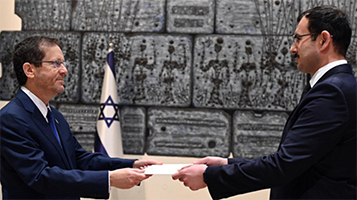 By Eugene KOGAN, Tbilisi-based defence and security expert By Eugene KOGAN, Tbilisi-based defence and security expert
Israeli-Azerbaijani relations are based on two main pillars: patient and cordial political relations as well as defence cooperation and arms sales. While the former reached a more intensive level this year, with the opening of an Azerbaijani embassy in Tel Aviv in late March, the latter pillar of the relationship was well developed long before, as Israel became Azerbaijan’s largest weapons supplier.
After decades of keeping a low diplomatic profile vis-à-vis Israel, in November 2022 the Azerbaijani parliament approved a bill on opening an embassy in Tel Aviv. This was a historic decision as, until then, Azerbaijan had consistently rejected Israeli overtures to send a permanent ambassador, despite the opening of an Israeli embassy in Baku in August 1993. It took almost 30 years for Azerbaijan to reciprocate since the country’s leadership did not want to alienate other Muslim-majority states or provoke the Iranian authorities, who blamed Israel for worsening relations along the Baku-Tehran axis. However, in the wake of the 2020 signing of the Abraham Accords on diplomatic normalization between Israel and Bahrain, Morocco, Sudan, and the United Arab Emirates, followed by the exchange of Israeli and Turkish ambassadors two years later, Azerbaijan’s President Ilham Aliyev felt that the time was right to follow suit. READ MORE
A Political DEPREM? The Impact of the Earthquake on Turkiye’s Domestic Politics By Yeghia TASHJIAN, Beirut-based regional analyst and researcher, columnist, "The Armenian Weekly”
2023 marks the centennial of the establishment of the Republic of Turkey, when the Turkish Grand National Assembly led by Mustafa Kemal Atatürk proclaimed the establishment of the republic and the abolishment of the Caliphate that ruled Ottoman Turks for six centuries. For decades, the Kemalists and military-backed governments ruled Türkiye with a secular iron hand. It wasn’t until 2002, when the conservative Justice and Development Party (AKP) came to power that Kemalists’ monopoly on power was challenged, ending decades of unstable coalition governments. AKP’s early years were relatively peaceful, as the country experienced fast economic growth and continued openness to the West. However, as the authorities began facing domestic and regional challenges, illiberal democracy started to consolidate itself in Türkiye. In 2013, protests erupted in opposition to building a shopping mall in Istanbul’s Gezi Park. The government violently cracked down on the movement and began limiting civil liberties and curtailing press freedoms. Moreover, a failed coup attempt in 2016 consolidated authoritarianism in the country.
READ MORE
Azerbaijan’s Efforts to Digitalize the Middle Corridor  By Vusal GULIYEV, Visiting Research Fellow at the Asian Studies Center of Boğaziçi University By Vusal GULIYEV, Visiting Research Fellow at the Asian Studies Center of Boğaziçi University
Located at a key geopolitical and geo-economic point in the Silk Road region, Azerbaijan has been a main initiator in the development of technologically advanced and economically viable trans-border logistics and transit services. This is largely due to Baku’s embrace of a wide spectrum of digitalization and innovation initiatives within the broad-based connectivity framework of the Middle Corridor Initiative (MCI) and other similar such projects. This IDD analytical policy brief will examine various aspects of this important topic as it relates to MCI.
Seizing new opportunities in the digital era whilst developing better measures to boost the digital economy and trade with embedded innovation and emerging technologies has become one of Azerbaijan’s top priorities in the past few years. In the wake of significant government-backed digital transformation efforts, special attention is now being placed on enhancing the variety of logistics services on offer, building cutting-edge infrastructure, and upgrading domestic communication systems.
READ MORE
The Political Future of the Armenian Community in a Fractured Lebanon By Yeghia TASHJIAN, Beirut-based regional analyst and researcher, columnist, "The Armenian Weekly”
Armenians in Lebanon are a deeply institutionalized and politicized community. Given its transnational nature, the community is affected by international, regional, and local developments. For this reason, the political parties and the community leadership analyse local events and position themselves in the Lebanese political space based on local, regional, and sometimes pan-Armenian calculations or interests. Hence the community, like other transnational ethno-religious groups, absorbs from its surroundings and reacts accordingly to preserve itself from security threats. […] This policy brief will also raise a few recommendations regarding new strategies and the need to adopt a vision for the future of the community amid the wave of uncertainties surrounding Lebanon.
READ MORE
The Georgian Perspective on Geopolitical Changes in the Caucasus  By Eugene KOGAN, Tbilisi-based defence and security expert By Eugene KOGAN, Tbilisi-based defence and security expert
Georgia borders Armenia, Azerbaijan, Russia, and Turkey. It remains a transit hub for oil and gas pipelines originating in Azerbaijan and a road hub for goods coming from Iran via Armenia to the European Union (EU), from Armenia and travelling to Russia, and from Turkey and travelling to Russia and Azerbaijan. As a result, changes that are taking place in the Caucasus due to the Russian war against Ukraine are directly affecting Georgia. Russia as a gatekeeper in the South Caucasus is less able to defend its interests in the region and that results in the ongoing skirmishes between Armenia and Azerbaijan, Iranian military exercises on the border with Azerbaijan, and reciprocal Azerbaijani-Turkish exercises. Thus far, Georgia has kept itself out of the conflict and has even tried to play the role of mediator in the conflict between Armenia and Azerbaijan, but to no avail, since Georgia is not considered a powerful enough conflict mediator. READ MORE
The Draft Law on Foreign Agents Contradicted Georgia’s European Aspirations  By Nika CHITADZE, PhD, Director of the Center for International Studies, Tbilisi By Nika CHITADZE, PhD, Director of the Center for International Studies, Tbilisi
At the beginning of March 2023, the Parliament of Georgia discussed and supported by the first hearing (with 76 votes) two draft laws regarding the “agents of foreign influence”. The discussion took place against the background of fierce protests both inside and outside the Parliament building. The bills were submitted by the political party “People’s Power”, which is a satellite of the Georgian Dream ruling party. Initially, the draft law “On transparency of foreign influence” was registered in the Parliament. To “ensure transparency”, the new law required the registration of non-entrepreneurial (non-commercial) legal entities and media means which received more than 20% of their income from abroad as “agents of foreign influence”.
READ MORE
Uzbekistan’s April 30 Constitutional Referendum Is Set To Deliver Results 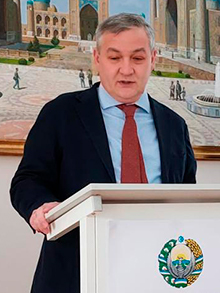 By Ambassador Dilyor KHAKIMOV, Ambassador of the Republic of Uzbekistan in Belgium By Ambassador Dilyor KHAKIMOV, Ambassador of the Republic of Uzbekistan in Belgium
Over the past year, under the leadership of President Shavkat Mirziyoyev, Uzbekistan has embarked upon a national dialogue. Input, feedback, and affirmations from tens of thousands of Uzbek citizens have guided the drafting of a revised Constitution. In recent days, a flurry of activity has occurred that may soon make this draft official and usher in a fresh era for our country as we build a “New Uzbekistan.” Last week, the draft Constitution was considered in the Legislative Chamber and was approved for submission to a referendum on April 30. Then, on Monday, March 13, the Constitutional Court of Uzbekistan ruled that the decision by the Legislative Chamber to hold a referendum was in constitutional compliance. Finally, the Senate, just yesterday, March 14, confirmed this decision and approved the draft for submission to a constitutional referendum that will take place on April 30. READ MORE.
Baku-Tbilisi-Kars Railway: An Example of “Matching Model Relations”  By Nuray Alekberli, Researcher, Strategic Studies Consulting Company, Baku By Nuray Alekberli, Researcher, Strategic Studies Consulting Company, Baku
In August 2022, Azerbaijan, Turkey and Georgia have signed an "Agreement amongst three countries on preliminary information exchange for the facilitation of transit customs procedures within the framework of the Baku-Tbilisi-Kars (BTK) railway project" (az.trend.az, 19 August). This agreement aimed at simplifying customs procedures and accelerating border crossing procedures within the framework of the BTK railway project through organizing an electronic exchange of initial information about goods (report.az, 18 August 2022). Therefore, somehow it plays the role of a new breath from a technical point of view to remove obstacles and speed up trade and economic relations between Asian markets and Europe. READ MORE.
Lachin Remains an Obstacle for the Resumption of Armenia-Azerbaijan Negotiations By Benyamin POGHOSYAN, PhD, Chairman, Center for Political and Economic Strategic Studies
For the last weeks Armenia-Azerbaijan negotiations on a peaceful normalisation of relations appeared stalled. The stand-off with Azerbaijani activists on the Lachin Corridor continues to hinder progress. The US initiative to organize a Pashinyan – Aliyev meeting at the latest Munich Security Conference was "a step in the right direction". It gave a new breath of life to the negotiation process, and efforts are underway to revive the Brussels format and organize the fifth Pashinyan – Aliyev meeting in Brussels with the participation of the President of the European Council, Charles Michel.
After the brief momentum in Armenia – Azerbaijan negotiations in late September - early October 2022, the peace process seemed to stall. Assessing what went wrong after the 6 October 2022 Prague meeting is challenging. However, the Sochi summit held on 31 October and the meeting between foreign ministers held in Washington on 7 November did not add optimism to the future of the negotiation process. […]
Nevertheless, Armenia and Azerbaijan continued to work on the draft of the peace treaty, exchanging suggestions and ideas, and Yerevan sent its version of the final document to Azerbaijan and the OSCE Minsk Group co-chair states in mid-February. READ MORE
Beyond the Blocking of the Lachin Corridor By Yeghia TASHJIAN, Beirut-based regional analyst and researcher, columnist, "The Armenian Weekly”
On December 12, under the pretext of environmentalism, dozens of Azerbaijani state-backed “eco-activists” blocked the only land corridor in the Stepanakert-Shushi section connecting Armenia to Nagorno-Karabakh. As anticipated, the “environmental” slogans were soon politicized, and political demands were raised by enforcing a blockade. A humanitarian disaster was created for the 120,000 Armenians living in Nagorno-Karabakh. The real question is why Azerbaijan went for such a provocation and at what risk? Hence, in this article, I will shed light on the current crisis based on my meetings with Azerbaijani experts (keeping their identities anonymous) on the sidelines of several international conferences and online interviews I have conducted to analyze the Azerbaijani perspective and highlight the threats, arguing that the current humanitarian crisis is much deeper than the conflict in Nagorno-Karabakh, and it is related with the “battle of corridors” and beyond. READ MORE
Persian Gulf – Black Sea Transport Corridor By Benyamin POGHOSYAN, PhD, Chairman, Center for Political and Economic Strategic Studies
The COVID–19 and the war in Ukraine have triggered the disruption of global supply chains forcing states to look for alternative transport routes to conduct trade and other economic activities. As one of the rising stars of the global economy, which just passed the UK to become the fifth largest economy in the world, India has looked for ways to expand its connections within Greater Eurasia even before the Pandemic and the Ukraine war. Given the increasing volume of cargo passing through the Suez channel, and the 2021 incident that blocked that waterway, India's primary task is establishing new routes to circumvent Suez while reaching Europe. In September 2000, India, Russia, and Iran declared their intention to establish an International North-South Transport Corridor (INSTC) to connect India with Russia and Northern Europe via Iran. Several other countries joined the project later, and currently, three routes are being discussed as a part of that corridor. The western route will pass via Iran and Azerbaijan, Trans-Caspian route will connect the Caspian Sea ports of Russia and Iran, and the Eastern Route will pass via Iran, Turkmenistan, and Kazakhstan. READ MORE
Will Earthquake Diplomacy Change Armenia-Turkey Relations? By Benyamin POGHOSYAN, PhD, Chairman, Center for Political and Economic Strategic Studies
The devastating earthquakes of 7.8 and 7.5 magnitudes struck southern Turkey on February 6, 2023. As of February 12, the death toll passed 30,000, while the number of wounded reached almost 100,000. More than 12,000 buildings were destroyed, and large-scale rescue operations are underway. Besides the immense human tragedy, the earthquake will have domestic and foreign policy implications for Turkey. The country faces crucial presidential and parliamentary elections scheduled for May 14. After the earthquake, discussions started about possibly postponing the elections, given the scale of destruction.
Turkey’s authorities have declared a three-month emergency in provinces affected by the earthquake. Many wonder about the possibility of pursuing an election campaign in the current circumstances. According to Turkey’s constitution, elections should occur by June 18, 2023. Only the start of a war gives authorities a legal option to postpone elections for one year. However, some experts argue that the government may apply to the Constitutional court asking for a one-year postponement claiming that the current emergency equals the launch of military activities. READ MORE
- February 25, 2023 07:42AM
The Closure of the Lachin Corridor Is in No One's Interest By Benyamin POGHOSYAN, PhD, Chairman, Center for Political and Economic Strategic Studies
Azerbaijan has closed the Lachin corridor since December 12, 2022. There are different interpretations of why Azerbaijan did it, and why Baku continues the blockade despite calls from the international community to change its course. Azerbaijan, Armenia, Russia, and the West, in one way or another, all suffer from the blockade. Ultimately, it is up to the Azerbaijani leadership to decide to re-open the road.
Azerbaijan has closed the Lachin corridor since December 12, 2022. Azerbaijani official rhetoric rejects the very existence of a blockade, sometimes claiming that the road is open for humanitarian cargo, and sometimes saying that it was the Russian troops that closed the corridor. The official line from Azerbaijan is the narrative that those blocking the corridor are "independent eco-activists exercising their civil rights to protest." However, the situation is apparent to anyone with a basic understanding of the Nagorno Karabakh conflict – Azerbaijan imposed a blockade on the self-proclaimed Nagorno Karabakh Republic. READ MORE
- February 16, 2023 11:45AM
Armenia - India Relations: Time is Right to Develop a Strategic Partnership By Benyamin POGHOSYAN, PhD, Chairman, Center for Political and Economic Strategic Studies
The defeat in the 2020 Nagorno Karabakh war shocked Armenia and Armenians all around the world. It ruined many perceptions deeply entrenched in political elites, expert and academic communities, and broader society: including that the Armenian army was the strongest in the South Caucasus, that Russia would not allow Turkey's involvement in Azerbaijan's war against Armenia, and that the West would not allow authoritarian Azerbaijan and Turkey to attack democratic Armenia. All these assumptions were crushed within 44 days, leaving Armenia facing a much harsher geopolitical reality. Despite this terrible outcome, many in Armenia believed that the November 10, 2020, trilateral statement would foment a new status quo. READ MORE
After Samarkand Summit, the OTS Charts a More Independent Course
By Fuad SHAHBAZOV, Baku-based independent regional security and defence analyst
On November 11, a summit of the leaders of the Organization of Turkic States (OTS) convened in Samarkand, Uzbekistan. This major gathering came amid the OTS’s re-emerging significance as a key regional organization and a critical platform for rapprochement between the Central Asia and Caucasus regions. The official Samarkand Declaration, which was signed as a final accord by the attendees, paves the way for a comprehensive partnership format among the OTS member states. The Samarkand meeting represented the major political gathering for the Turkic nations in 2022, and it will further facilitate dialogue and regional interconnectivity between the OTS member states—independent of Russian and Western influence. READ MORE
|
|




 In Progress
