By Vusal GULIYEV, Policy Advisor at the Center of Analysis of International Relations and Head of Shanghai Office at AZEGLOB Consulting Group
Azerbaijan is embarking on ambitious reforms and collaborations within its transport and logistics sector, driven by the opportunities presented by the Middle Corridor trade route. Initiatives such as the integration of Azerbaijan’s railway and port systems and the establishment of international partnerships signal a push toward greater efficiency and connectivity in trade infrastructure. On April 25, Azerbaijani Foreign Minister Jeyhun Bayramov, during a press conference with Kaja Kallas, EU High Representative for Foreign Affairs and Security Policy, stated that work is underway to increase the cargo capacity at the Port of Baku from 15 million tons to 25 million tons. Efforts such this underscore Baku’s vision of transforming the country into a critical node of global trade routes, reinforcing regional connectivity and contributing to economic diversification READ MORE
EGF Editor |
Опубликовано на EGF: 19.05.2025
| Markets
Dr. Marat Terterov, Co-founder of the European Geopolitical Forum, discusses the current situation of the European Union’s relations with the South Caucasian countries - Armenia, Azerbaijan, and Georgia. He also explains his vision for regional cooperation in the South Caucasus, and the steps needed to discourage conflict and foster stability.
WATCH MORE
EGF Editor |
Опубликовано на EGF: 07.05.2025
| External Relations
By Fuad Shahbazov, Baku-based independent regional security and defence analyst
On April 22, Azerbaijani President Ilham Aliyev conducted a state visit to the People’s Republic of China (PRC), meeting with President Xi Jinping to cement the bilateral partnership that began in 2024. During the visit, Aliyev and Xi signed an agreement to establish a Comprehensive Strategic Partnership between Azerbaijan and the PRC. The visit came at a tense time for the PRC as an intensifying trade war with the United States motivates Beijing to seek alternative transit routes and destinations for exports. Azerbaijan’s role as a viable transit hub between the PRC, Central Asia, and Europe positions it to cultivate partnerships with nearly all regional states. Baku accordingly plays a role in both the PRC-led “One Belt One Road” (OBOR) initiative and the Middle Corridor, underscoring Azerbaijan’s growing of ties with the PRC and European Union. READ MORE
EGF Editor |
Опубликовано на EGF: 06.05.2025
| External Relations
By Benyamin POGHOSYAN, PhD, Senior Research Fellow at the APRI Armenia
Since Armenia gained independence from the Soviet Union in 1991, normalizing relations with Turkey has been one of the country’s top foreign-policy priorities. The rationale behind this has been both economic, to end the blockade and facilitate access to Turkish Mediterranean ports, and political, to drive a wedge in the Azerbaijan–Turkey strategic partnership. Armenia took steps towards normalization in 2008 and 2009. As a result of intensive negotiations, Armenia and Turkey signed two protocols in Zurich in 2009 to open their borders and establish diplomatic relations. However, Turkey did not ratify them, under intense pressure from Azerbaijan.
READ MORE
EGF Editor |
Опубликовано на EGF: 06.05.2025
| External Relations
By Vasif HUSEYNOV, PhD, Head of Department, AIR Center, Adjunct Lecturer, ADA and Khazar Universities, Baku
On April 15–16, the newly elected President of Georgia, Mikheil Kavelashvili, paid an official visit to Azerbaijan. The visit was of notable symbolic importance since it was Kavelashvili’s first foreign visit as president. The Azerbaijani side appreciated this gesture, as Azerbaijani President Ilham Aliyev stated in the joint press conference with Kavelashvili, “It once again reflects the essence of Azerbaijan-Georgia relations and the friendship and brotherhood between our peoples”. Earlier on January 17, the re-elected Georgian Prime Minister Irakli Kobakhidze also paid his first official visit to the Azerbaijani capital after the elections. Aliyev characterized this as the emergence of a “wonderful tradition” and underlined its symbolic importance of the relations between the two countries. READ MORE
EGF Editor |
Опубликовано на EGF: 06.05.2025
| External Relations
By Vusal GULIYEV, Policy Advisor at the Center of Analysis of International Relations and Head of Shanghai Office at AZEGLOB Consulting Group
In December 2024, Azerbaijani President Ilham Aliyev authorized a $12 million investment into the Port of Baku to initiate the second phase of its expansion. This phase aims to increase the port’s annual cargo capacity from 15 million to 25 million tons. The region’s ongoing geopolitical instability, largely due to Russia’s full-scale invasion of Ukraine and the ensuing Western sanctions, has disrupted its established trade routes. These geopolitical upheavals underline the importance of Azerbaijan’s position between Europe and Asia as a transit state via the Port of Baku. Azerbaijan’s flagship port is capitalizing on its strategic location along the Silk Road to become a key hub for east–west connectivity. READ MORE
EGF Editor |
Опубликовано на EGF: 06.05.2025
| Markets
Interview with Eugene KOGAN, Tbilisi-based defence and security expert
In a wide-ranging conversation with Radio Free Europe Georgian service, Kogan offers a stark assessment of the much-hyped Armenia–Azerbaijan peace deal. Though labelled “historic”, the agreement remains stalled. Baku, holding the stronger hand, is in no rush to finalize it—using the drawn-out process to pressure Armenia into further concessions, including the Zangezur corridor and constitutional changes on Nagorno-Karabakh. Meanwhile, Armenia, increasingly isolated and eager to sign, lacks meaningful alternatives or strong international backing. Without a neutral mediator and amid shifting regional alliances—especially Georgia’s pivot toward Moscow—the deal looks more like a tool of leverage than a step toward lasting peace.
READ MORE
EGF Editor |
Опубликовано на EGF: 06.05.2025
| External Relations
By Vusal GULIYEV, Policy Advisor at the Center of Analysis of International Relations and Head of Shanghai Office at AZEGLOB Consulting Group
Over the past three decades, Turkish investment in China has steadily expanded, covering sectors such as energy, manufacturing, retail, and food. Despite certain market challenges, companies like Aksa and TAB Gıda have found scalable success. Backed by institutional frameworks, Türkiye’s strategic pivot to Asia continues to strengthen and diversify its economic relationship with China’s vast and growing market.
Economic relations between Türkiye and China have expanded considerably over the past three decades, evolving beyond trade to encompass mutual investment. While Chinese investments in Türkiye have typically drawn more attention, Turkish capital flowing into China has also steadily increased. Although Turkish investments remain less diversified and extensive than their Chinese counterparts, several Turkish companies have made notable contributions across multiple sectors. Nevertheless, China’s vast consumer base and industrial ecosystem have long been seen as a strategic target for Turkish businesses seeking to enhance their global reach. READ MORE
EGF Editor |
Опубликовано на EGF: 04.04.2025
| Markets
By Elkhan NURIYEV, PhD, Senior Fellow at the Mathias Corvinus Collegium Foundation in Budapest and Senior Fellow at the Alexander von Humboldt Foundation in Berlin
Just over two months into U.S. President Donald Trump’s second term, new uncertainties have begun to reshape the West’s approach toward the war in Ukraine. As the conflict grinds through its third year, signs of strategic drift have emerged across Western capitals. With battlefield momentum stalled, political divisions deepening, and public fatigue rising, the West now faces a narrowing window to reassess its goals—or risk drifting toward a scenario of prolonged stalemate and fractured unity. While former president Joe Biden framed the war as a broader fight for democracy and pledged open–ended support to Kyiv, Trump’s foreign policy instincts emphasize burden sharing, cost efficiency, and transactional diplomacy. These principles are already shaping Washington’s posture. Military aid packages have slowed, public rhetoric has shifted toward ending the war “quickly,” and U.S. diplomatic overtures increasingly hint at conditional support rather than blank checks. READ MORE
EGF Editor |
Опубликовано на EGF: 27.03.2025
| Security
By Benyamin POGHOSYAN, PhD, Senior Research Fellow at the APRI Armenia
The promise to end the war in Ukraine quickly was one of Donald J. Trump’s main campaign pledges. Upon returning to the White House in January 2025, the president began taking steps toward this goal. The world witnessed a whirlwind of negotiations: face-to-face meetings between Mr. Trump’s envoy, Steven Witkoff, and Russian President Vladimir Putin; multiple phone calls between Mr. Trump and Presidents Putin and Volodymyr Zelensky; direct US–Russia and US–Ukraine talks in Saudi Arabia; and a tense meeting in the Oval Office with Mr. Zelensky.
As a result, Russia and Ukraine agreed to suspend attacks on each other’s energy infrastructure for one month. Negotiations are now underway for a broader ceasefire. It is too early to assess the likelihood of a complete and lasting ceasefire — let alone the prospects for a comprehensive peace agreement between Russia and Ukraine.
READ MORE
EGF Editor |
Опубликовано на EGF: 27.03.2025
| External Relations
Dr. Marat Terterov, Co-founder of the EGF, and Dr. George Vlad Niculescu, Head of Research, contributed to a newly published volume on: “Building Resilience against Human Security Threats and Risks: From Best Practices to Strategies” The volume was produced by the National Defence Academy of Austria in collaboration with the PfP Consortium of Defence Academies and Security Studies Institutes. It brought up multi-disciplinary arguments explaining how education fostered resilience by equipping people with the knowledge and skills to navigate risks and adapt to new challenges. This Handbook addressed risks and threats associated with climate change, energy, demographic, food, water, medical and financial security, human trafficking, cyber security, hybrid threats, psychological manipulation, violence in the digital domain, ethnic violence in unresolved conflicts, economic fragmentation, and trade disruptions in the South Caucasus and beyond. Regional cooperation is essential for building resilience against human security risks and threats, since effectively addressing many of them, including conflicts, environmental crises, pandemics, and transnational crime, require collective action that transcends national borders. READ MORE
EGF Affiliated Expert Yeghia TASHJIAN has recently co-authored a Policy Brief on “Lebanon’s Foreign Policy: Challenges and Recommendations”. The Brief called for a shift toward positive neutrality and pro-active diplomacy, with concrete reforms to strengthen Lebanon’s diplomatic role and global standing. The authors wondered in a conclusive way: “Can Lebanon reclaim its place on the international stage?” READ MORE
EGF Affiliated Expert Dr. Shanthie Mariet D’SOUZA has contributed to the collection published by Rosa Luxemburg Stiftung in Central Asia on: “Central Asia Facing the Challenges of Global Economic Transformation: Assessment and Forecasting”. Her report addressed “Evolving Trends in the Global Economy: Impact on India’s Long-Term Interests” She concluded that: “The global economy is changing in ways that unveils both opportunities and risks for India. The rise of protectionism, a splitting digital world, and competition over environmental policies are reshaping how countries work together. […] To adapt to the changing world order and help shape the emerging global economic order, India has to invest in its industries, strengthen partnerships, and create opportunities for its people. READ MORE (pp13-20)
EGF Affiliated Expert Benyamin POGHOSYAN has been interviewed by CAUCASUS WATCH on “U.S.–Armenian Relations Amid Shifting Power Dynamics: Expectations and Challenges”. He noted that “after the loss of Artsakh, Armenia could not have denied Azerbaijan a significantly facilitated route to Turkey. Otherwise, Azerbaijan could have taken it by force”. Therefore, he assumed that Armenians would likely prefer any facilitated route to involve a major external player, rather than the occupation of territory: "The question is which major player is involved: initially assumed to be Russia per the 2020 trilateral statement, while the August 2025 Washington declaration envisions U.S. involvement. But the world is changing rapidly; in a few years, Russian involvement could return, or U.S. involvement could remain." READ MORE
Between 07-10 November 2024, Dr Marat TERTEROV and Dr George Vlad NICULESCU participated in the 28th workshop of the Regional Stability in the South Caucasus Study Group of the PfP Consortium of Defence Academies and Security Studies Institutes on “Connectivity Risks and Opportunities in the South Caucasus”, held in Reichenau a/d Rax (Austria). Please click here for the programme and agenda outline, here for George’s speaking points, here for the policy recommendations, and here for the proceedings of the workshop
Between 10-13 April 2025, Dr George Vlad NICULESCU participated in the 29th workshop of the Regional Stability in the South Caucasus Study Group of the PfP Consortium of Defence Academies and Security Studies Institutes on “Emerging Technologies in Conflict Prevention: Leveraging Technology for Peacebuilding in the South Caucasus”, held in Istanbul (Turkey). Please click here for the programme and agenda outline, and here for George’s speaking points.
On June 3, 2025, Dr. George Vlad Niculescu gave a short brief on the outcomes and potential implications of Romania’s 2025 presidential elections to the “Neighbourhoods” Working Group of the Institute of European Studies de l’Université UCLouvain, site de Saint-Louis-Brussels. Read here his briefing.








 By Vusal GULIYEV, Policy Advisor at the Center of Analysis of International Relations and Head of Shanghai Office at AZEGLOB Consulting Group
  By Fuad Shahbazov, Baku-based independent regional security and defence analyst
 By Benyamin POGHOSYAN, PhD, Senior Research Fellow at the APRI Armenia
 By Vasif HUSEYNOV, PhD, Head of Department, AIR Center, Adjunct Lecturer, ADA and Khazar Universities, Baku
 Interview with Eugene KOGAN, Tbilisi-based defence and security expert
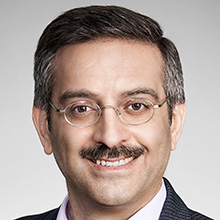 By Elkhan NURIYEV, PhD, Senior Fellow at the Mathias Corvinus Collegium Foundation in Budapest and Senior Fellow at the Alexander von Humboldt Foundation in Berlin